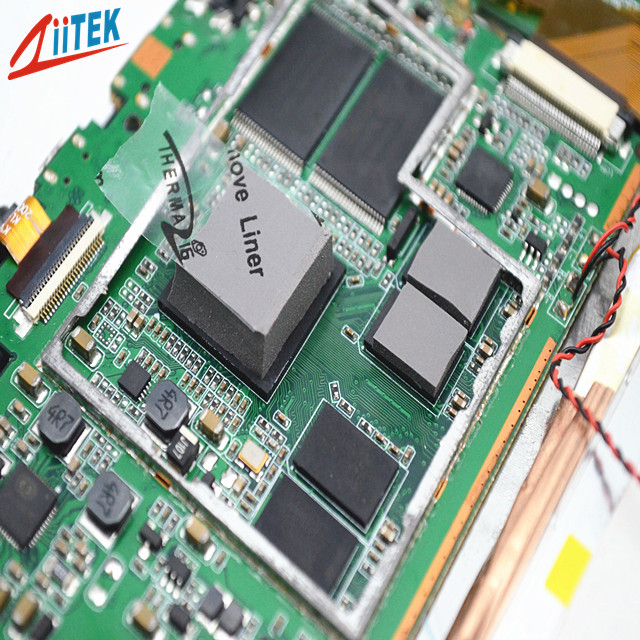
Z-PASTER 100-6060-11 Pulvinus Thermicus Sine Silicone
- Thermal Conductivity (W/mK)
- 6.0
- Hardness (Shore oo)
- 60
- Density (g/cm³)
- 3.3
- Robur Disruptionis (V/mm)
- ≥5500
- Thickness range (inch/mm)
- 0.040~0.200/1.00~5.00
- Recommended Operating Temperature (℃)
- -45~125
Z-PASTER 100-6060-11 6.0W/m·K Non-Silicone Thermal Pad
Z-PASTER 100 6060-11 series is a siloxane-free thermally conductive interface material applied to fill the air gaps between the heating elements and the heat dissipation fins or the metal base. Their flexibility and elasticity make them suited to coat very uneven surfaces. Heat can transmit to the metal housing or dissipation plate from the heating elements or even the entire PCB,which effectively enhances the efficiency and life-time of the heat-generating electronic components.
Z-PASTER 100-6060-11 — what to validate in production
Great thermal conductivity
Non-Silicone and oil-bleed
Available in different thickness options
High compliance adapts to various pressure application environments
Ubi hic gradus adhibetur
Typical uses for this non-silicone thermal pad line include the following industries and applications.
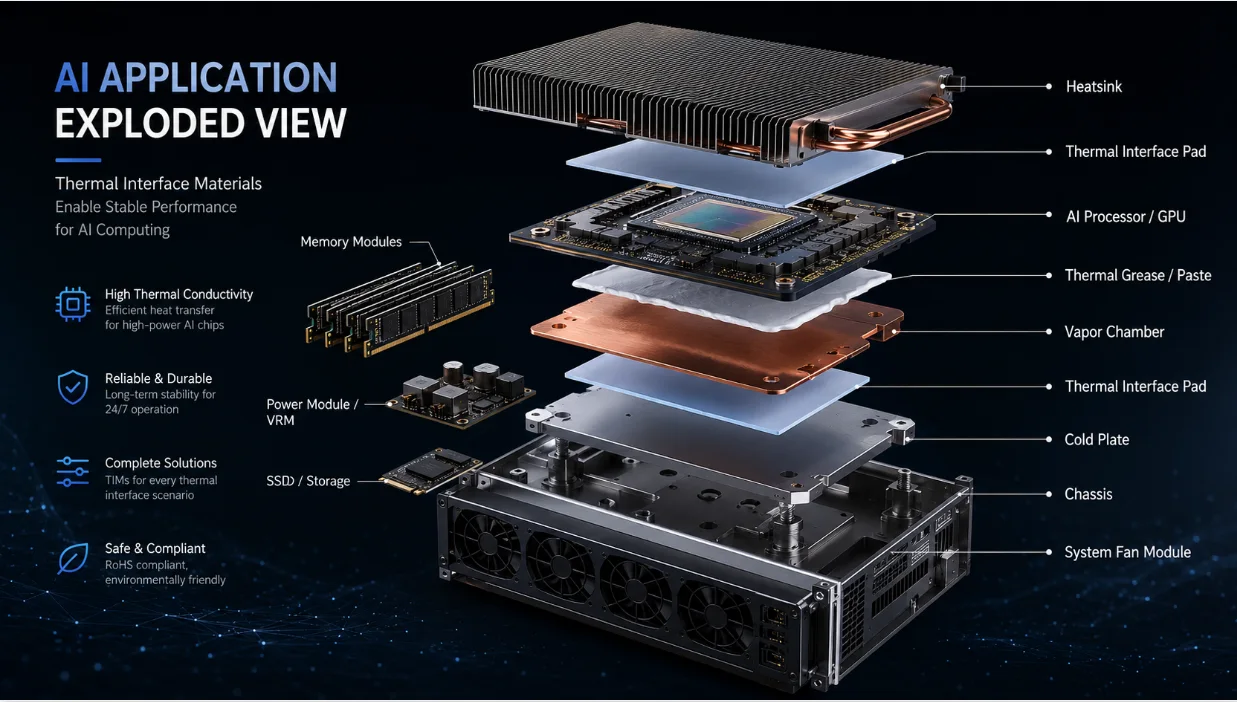
GPU, ASIC, refrigeratio liquida
Centra Datorum & Ministri AI
Metallum liquidum pro chipset GPU · Pulvini traditionis potentiae verticales · Refrigeratio moduli DIMM · Solutiones GPU liquido refrigeratae
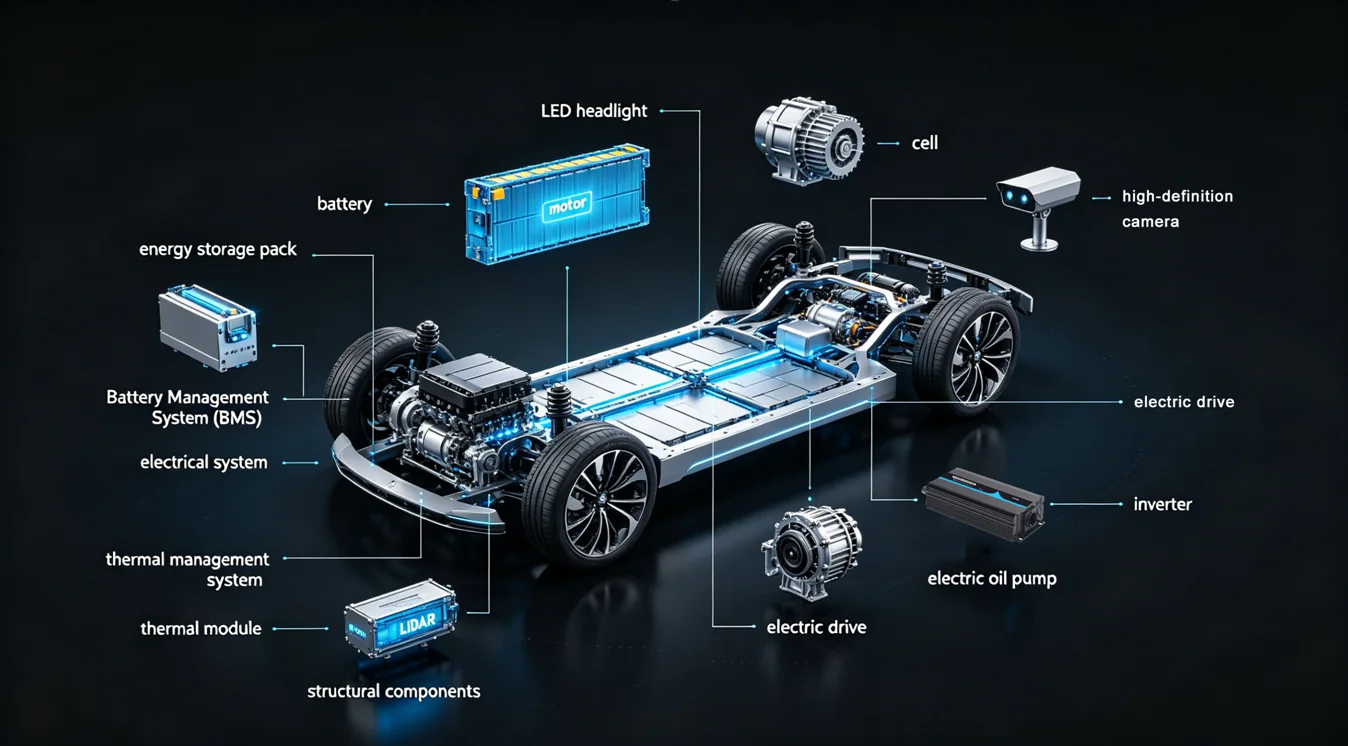
Fasciculi obsignatio, refrigeratio & calefactio
Nova Energia & Accumulator EV
Sigillatio cum Z-foam 800 · Gela a cellula ad laminam frigidam · Calefactores pelliculares · Conventus automatus
Z-PASTER 100-6060-11 — specificationes folii
Valores infra ex folio specificationum officiali transcripti sunt. Utere PDF nexo ad approbationem et CoA proprium lotis.
Auxilium machinatorium pro applicatione roga| Parametrum | Valor (usitatus / ut declaratum) | Methodus / nota |
|---|---|---|
| Color | Griseus Obscurus | Aspectus |
| Constructio | Non-silicone resin | — |
| Thickness range (inch/mm) | 0.040~0.200/1.00~5.00 | ASTM D374 |
| Hardness(Shore oo) | 60 | ASTM 2240 |
| Density(g/cm³) | 3.3 | ASTM D792 |
| Recommended Operating Temperature(℃) | -45~125 | — |
| Breakdown Strength(V/mm) | ≥5500 | ASTM D149 |
| Constans dielectrica @1MHz | 9.0 | ASTM D150 |
| Volume Resistivity(Ohm·meter) | >1.0x10¹² | ASTM D257 |
| Thermal Conductivity(W/m·K) | 6.0 | ASTM D5470 /ISO22007 |
| Gradus Flammae | V-0 | UL94 (E331100) |
* Adaequate valores ad recognitionem PDF citatam in ordine emptionis vestro.
Exemplaria Pulvillus thermicus sine silicone affinia
| Exemplar | λ (W/m·K) | Duritia | Vide |
|---|---|---|---|
| Z-PASTER-100-15-02F | 1.5 W/m·K | 65 Shore 00 | Particularia |
| Z-PASTER-100-20-11F | 2 W/m·K | 65 Shore 00 | Particularia |
| Z-PASTER-100-20-11S | 2 W/m·K | 50 Shore 00 | Particularia |
| Z-PASTER-100-20-11UF | 2 W/m·K | 75 | Particularia |
| Z-PASTER-100-30-10F | 3 W/m·K | 65 Shore 00 | Particularia |
| Z-PASTER-100-30-10UF | 3 W/m·K | 75 | Particularia |
Z-PASTER 100-6060-11 — quaestiones communes
TIM alterius venditoris substituis vel recensione strati eges? Mitte designationes — sectio applicationum celeriter respondet.
Colloquere cum machinatoreWhat is Thermal Conductivity?
Thermal conductivity indicates a material's ability to conduct heat and is typically measured in W/m·K. Under the same testing conditions, a higher thermal conductivity generally indicates better heat-conduction capability.
What is Thermal Resistance?
Thermal resistance indicates the resistance to heat flow through a material or interface and is typically expressed in K/W or °C/W. Lower thermal resistance generally means that heat can pass through the material more efficiently.
How do I choose the right thermal interface material?
The selection of a suitable TIM typically requires consideration of heat source power, gap thickness, target thermal resistance, operating temperature, assembly pressure, electrical insulation requirements, flame-retardant requirements, reliability, and cost.

Proxima solutio thermalis tua hic incipit.
A prototypo rapido ad productionem plenam — ingeniarii nostri parati sunt ad solutionem thermalem personalizatam pro applicatione tua designandam. Confisum a 7,000+ clientibus per EV, 5G, et electronica consumptoria.