Epoxy potting compound
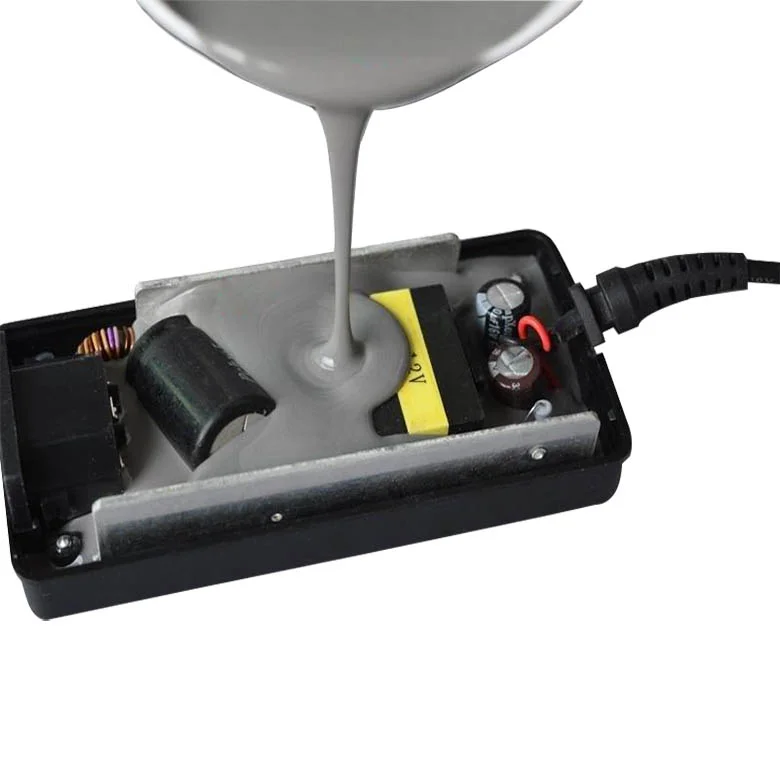
Two-component room-temperature-cure thermally conductive epoxy for permanent encapsulation of PCBs, power modules, sensors and EV battery packs. Through-plane conductivity 1.2–2.5 W/m·K across 3 TIE280-AB grades — 1:1 mix ratio, rigid post-cure (Shore D 70+), and IP67-class moisture and chemical isolation in a single pour.
3
TIE280-AB-Typen
1.2–2.5 W/m·K
Wärmeleitfähigkeit (λ)
1 : 1
Mischungsverhältnis (nach Gewicht)
RT 24 h / 70 °C 3 h
Aushärteprofil
Shore D 70+
Starre Nachhärtung
Auswahlbasis
Beginnen Sie mit dem Aufbau, nicht mit dem Produktnamen.
Eine belastbare Vorauswahl beginnt mit Wärmeweg und Montagebedingungen. Mit diesen Angaben kann Ziitek passende Typen und Datenblätter eingrenzen.
Schnittstelle & Geometrie
Nennen Sie Kontaktfläche, Spalt oder Ziel-Bondline sowie ebene oder unebene Oberflächen.
Thermisches Ziel
Geben Sie Leistung oder Wärmestrom, zulässigen Temperaturanstieg und Kühlkörper- oder Gehäusegrenzen an.
Elektrik & Produktion
Markieren Sie Isolations-, Compliance-, Montage-, Nacharbeits- und Mengenanforderungen.
Every Epoxy potting compounds grade, one table
All 3 epoxy potting compounds part numbers with thermal conductivity (W/m·K), colour notes, and PDF datasheets. Click a model name with a link for full specs, photos, and application guidance.
| Photo | Model | λ (W/m·K) | Härte | PDF & next step |
|---|---|---|---|---|
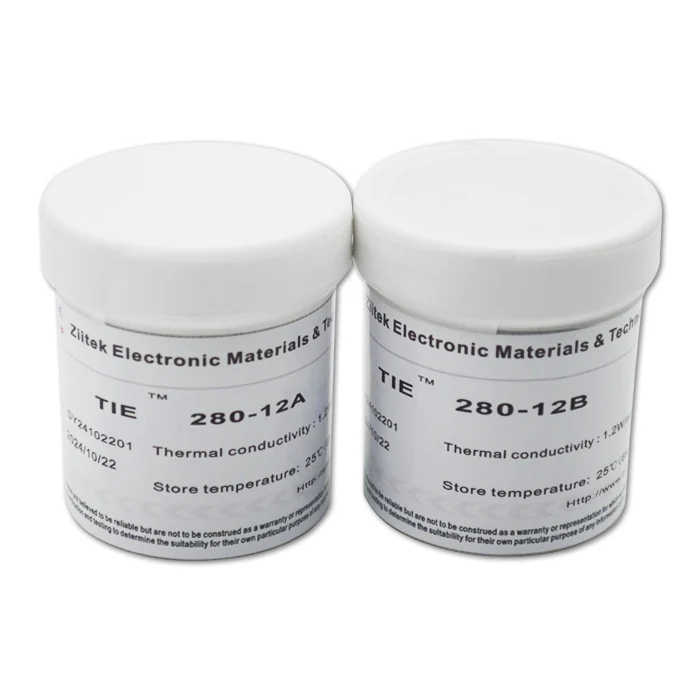 | TIE280-12AB | 1.2 W/m·K | 85 Shore D | |
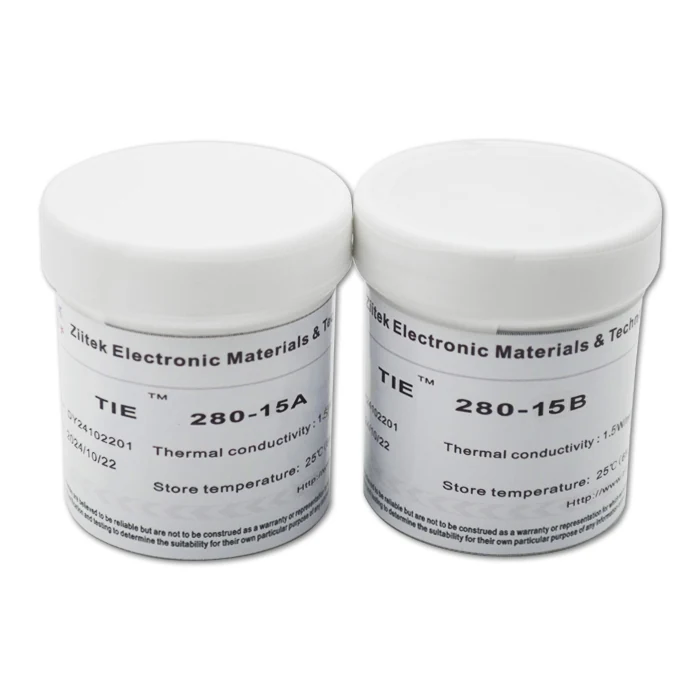 | TIE280-15AB | 1.5 W/m·K | 75 Shore D | |
 | TIE280-25AB | 2.5 W/m·K | 85 Shore D |
Einsatzgebiete für Epoxidharzverguss
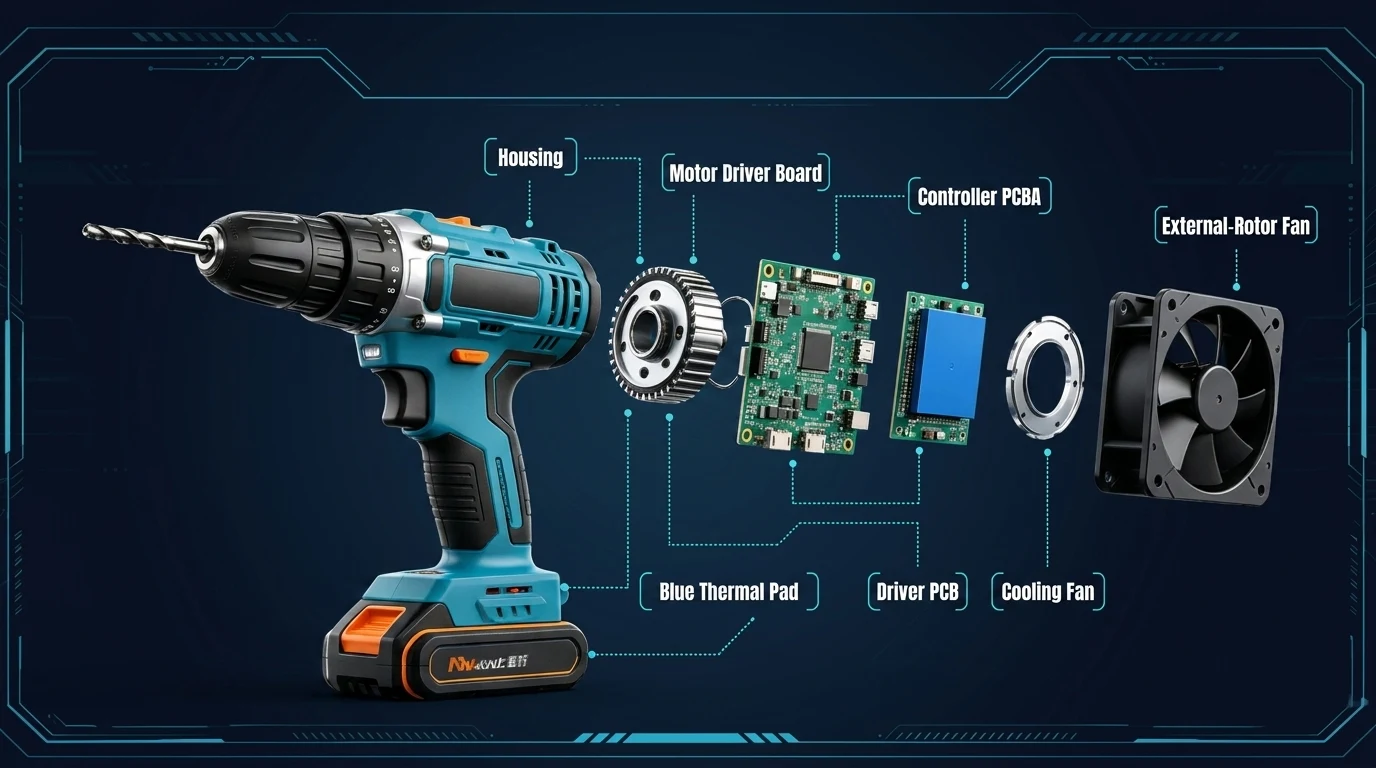
Antriebe · IGBT · Steuerungen · Sensoren
Elektrowerkzeuge & Steuerungssysteme
Industrielle Steuerungen, Motorantriebe, Leistungsstufen-IGBTs und robuste Module – thermische Interfaces, Abdichtung und Verkapselung für wartungsfreundliche Baugruppen und raue Umgebungen.
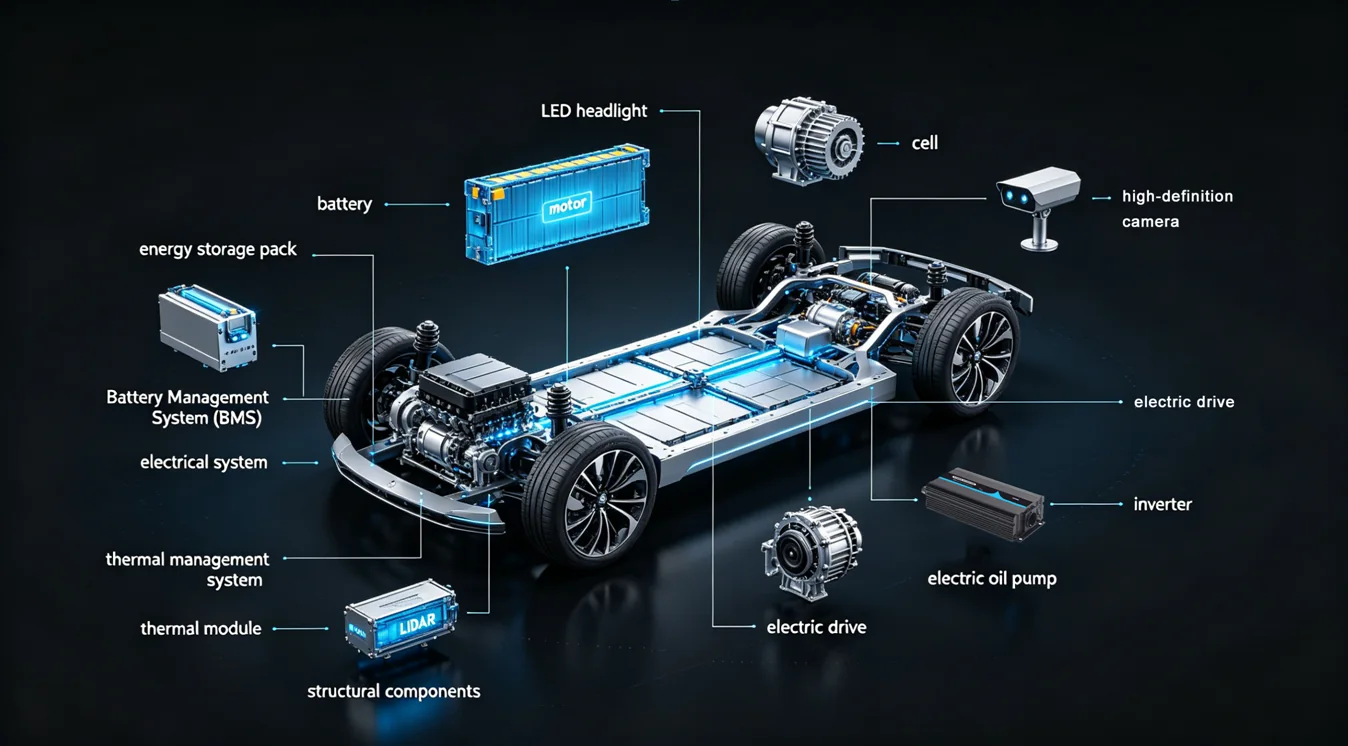
EV-Akkupacks · OBC · Wechselrichter · BMS
Neue Energien
Batteriemodule für E-Fahrzeuge, Traktionswechselrichter, On-Board-Ladegeräte und die Umwandlung erneuerbarer Energien — Wärmemanagement für Lasten mit hohen Stromzyklen und Anforderungen an die HV-Isolierung.
Typisches Spezifikationsfenster (Epoxid-Vergussmasse)
| Parameter | Typischer Bereich / Hinweis | Method |
|---|---|---|
| Wärmeleitfähigkeit | Gefülltes Epoxid – Güteklasse | ASTM D5470 |
| Mischungsverhältnis & Aushärtung | A:B + Härtungsplan | DSC / Exotherm |
| Glasübergang Tg | Starre Systeme – Optionen mit hoher Tg | DMA |
| WAK vs. Substrat | Passend für Cu-/Al-Sammelschienen in kritischen Anwendungen | TMA |
| Durchschlagsfestigkeit | kV/mm – dickenspezifisch | ASTM D149 |
| Härte / Modul | Starre Vergussmasse | Shore D |
| Betriebstemperatur | Umgebungstemperatur (Motorklasse) + interner Temperaturanstieg | UL746B |
| UL-Entflammbarkeit | Systemabhängig – Validierung erforderlich | UL94 |
| Nacharbeit | Im Allgemeinen härter als Silikon | — |
Epoxy potting compounds — common questions
Need help shortlisting or cross-referencing? Talk to a Ziitek thermal engineer — 2-hour response SLA.
Talk to an engineerEpoxy vs silicone potting — which family is right?
How is a 1:1 two-component epoxy applied in production?
Will the cured epoxy crack under thermal cycling?
Can I cure faster than the listed RT 24 h schedule?
Is TIE280 RoHS / REACH / UL-94 compliant?
How does this compare to TIE380 thermal epoxy adhesive?
Adjacent thermal management lines
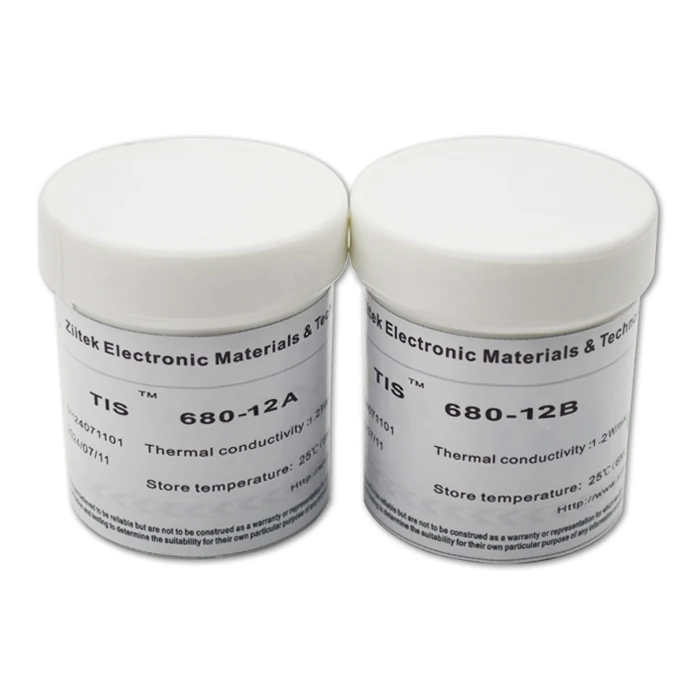
TIG / TIS 680
Silikon-Vergussmasse
Weiche, elastische Alternative – bessere Temperaturwechselbeständigkeit, Nachbesserungsfähigkeit, höhere Betriebstemperatur. Ideal für Anwendungen mit starken Vibrationen oder breiten Zyklen.
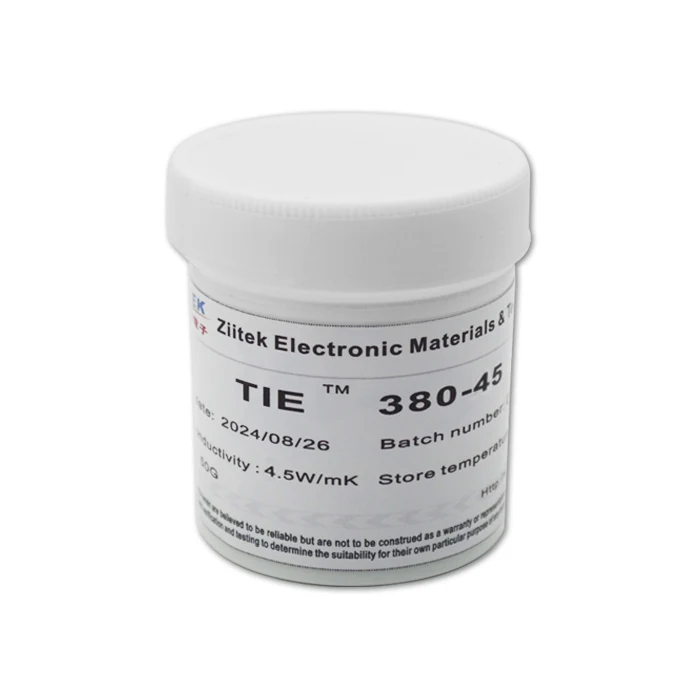
TIE380
Wärmeleitfähiger Epoxidharzklebstoff
Einkomponentiger, warmaushärtender Strukturklebstoff – pastöse Viskosität für dünne Klebefugen, nicht für den großvolumigen Verguss.
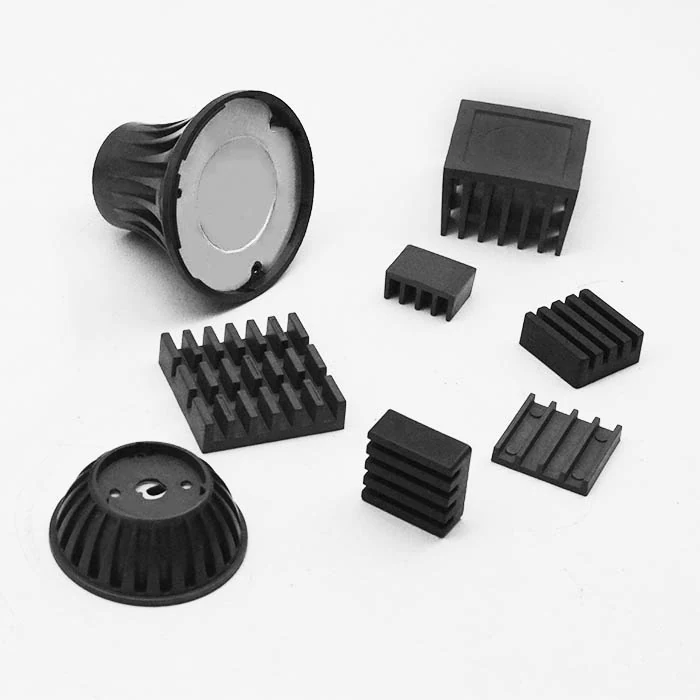
TCP
Wärmeleitfähiger Kunststoff
Spritzgießbarer Thermoplast – ersetzen Sie maschinell bearbeitetes Aluminium durch ein leitfähiges Gehäuse mit komplexer Geometrie.
Muster
Kontaktieren Sie unsere technische Abteilung
Gießhöhenbegrenzungen, Mischverhältnistoleranzen, Vakuum-Entgasungsprozess oder UL-Prüfberichte? Antwort innerhalb von 2 Stunden.
Ihre nächste thermische Lösung beginnt hier.
Vom Rapid Prototyping bis zur Serienproduktion – unsere Ingenieure sind bereit, eine maßgeschneiderte thermische Lösung für Ihre Anwendung zu entwickeln. Über 7.000 Kunden aus den Bereichen Elektrofahrzeuge, 5G und Unterhaltungselektronik vertrauen auf uns.