Epoxy potting compound
Two-component room-temperature-cure thermally conductive epoxy for permanent encapsulation of PCBs, power modules, sensors and EV battery packs. Through-plane conductivity 1.2–2.5 W/m·K across 3 TIE280-AB grades — 1:1 mix ratio, rigid post-cure (Shore D 70+), and IP67-class moisture and chemical isolation in a single pour.
3
TIE280-AB grades
1.2–2.5 W/m·K
Thermal conductivity (λ)
1 : 1
Mix ratio (by weight)
RT 24 h / 70 °C 3 h
Cure schedule
Shore D 70+
Rigid post-cure
Every Epoxy potting compounds grade, one table
All 3 epoxy potting compounds part numbers with thermal conductivity (W/m·K), colour notes, and PDF datasheets. Click a model name with a link for full specs, photos, and application guidance.
| Photo | Model | λ (W/m·K) | Hardness | PDF & next step |
|---|---|---|---|---|
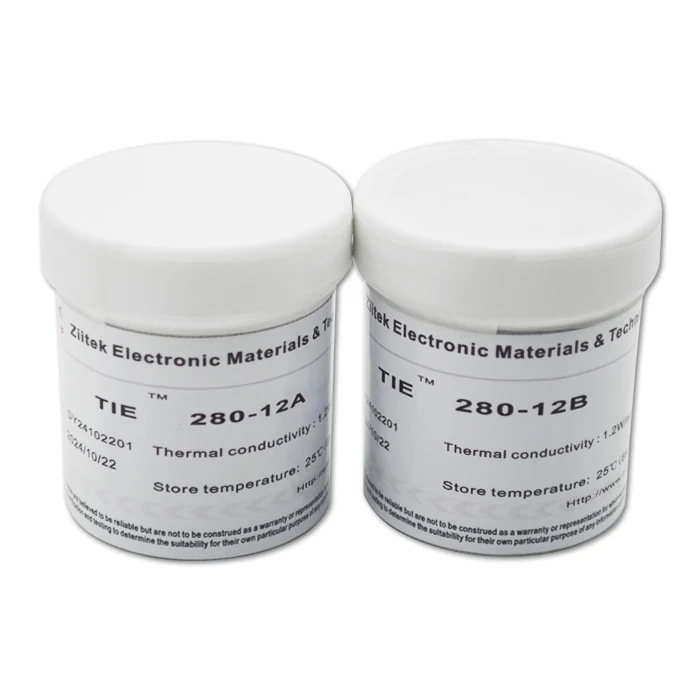 | TIE280-12AB | 1.2 W/m·K | 85 Shore D | |
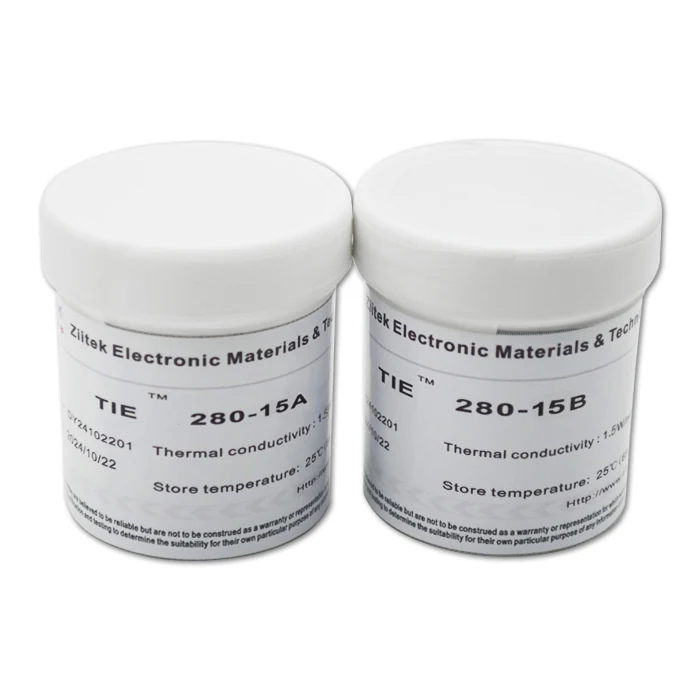 | TIE280-15AB | 1.5 W/m·K | 75 | |
 | TIE280-25AB | 2.5 W/m·K | 85 |
Where epoxy potting fits
Rigid epoxy systems anchor components, resist chemicals, and transfer heat through the pot — common in EV battery modules, chargers, and heavy industrial power.
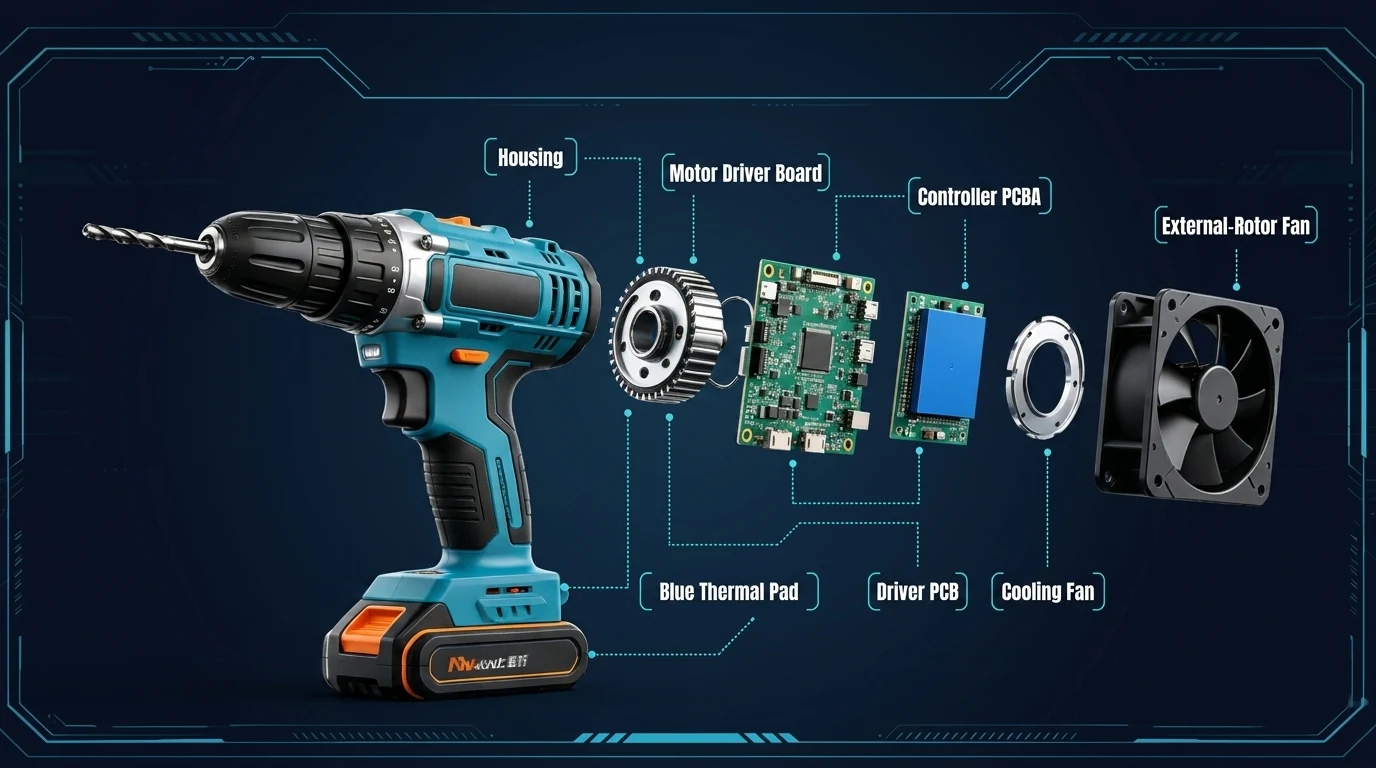
Drives · IGBT · controllers · sensors
Power Tools & Control Systems
Industrial controls, motor drives, power-stage IGBTs, and rugged modules — thermal interfaces, sealing, and encapsulation built for serviceable assemblies and harsh environments.
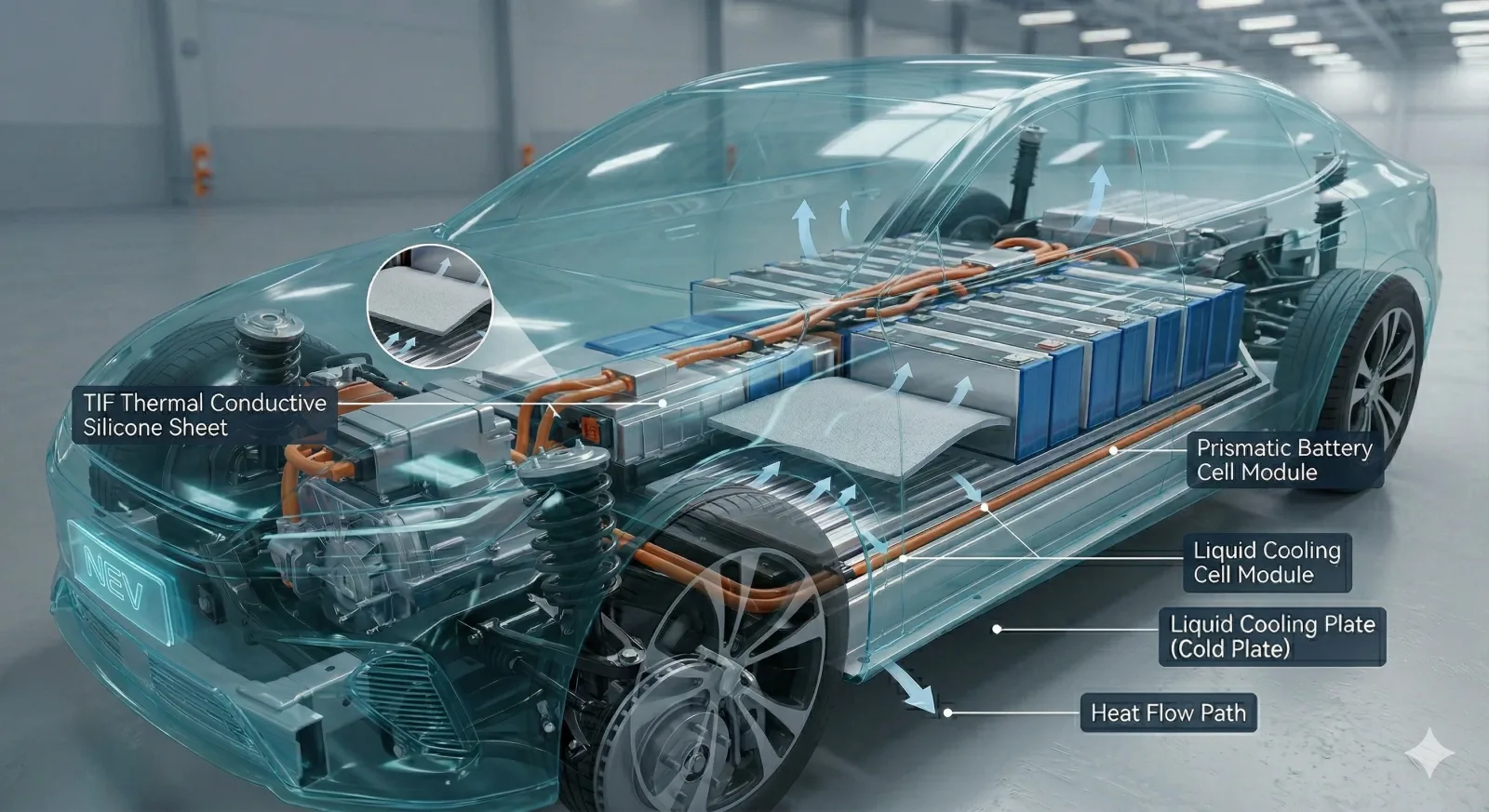
EV packs · OBC · inverters · BMS
New energy
EV battery modules, traction inverters, on-board chargers, and renewable power conversion — thermal management for high-current cycling loads with HV isolation requirements.
Typical specification window (epoxy potting)
| Parameter | Typical range / note | Method |
|---|---|---|
| Thermal conductivity | Filled epoxy — grade band | ASTM D5470 |
| Mix ratio & cure | A:B + cure schedule | DSC / exotherm |
| Glass transition Tg | Rigid systems — high Tg options | DMA |
| CTE vs substrate | Match Cu / Al busbars where critical | TMA |
| Dielectric strength | kV/mm — thickness-specific | ASTM D149 |
| Hardness / modulus | Rigid encapsulant | Shore D |
| Operating temperature | Motor-class ambient + internal rise | UL746B |
| UL flammability | System-dependent — validate | UL94 |
| Rework | Generally harder than silicone | — |
* Representative grades. Request a lot-specific datasheet or CoA for your exact part number.
Epoxy potting compounds — common questions
Need help shortlisting or cross-referencing? Talk to a Ziitek thermal engineer — 2-hour response SLA.
Talk to an engineerEpoxy vs silicone potting — which family is right?
Pick TIE280-AB epoxy potting when the assembly needs a rigid, high-modulus pour (mechanical reinforcement of the PCB, top-class moisture barrier, chemical resistance to fuels/solvents). Pick silicone potting (TIG680 / TIS680) when thermal cycling, vibration absorption, or reworkability matter — silicone is softer and more elastic but lets in more humidity and is harder to bond to over-mold steps. Operating range also differs: epoxy is rated to about 160 °C continuous, silicone goes to 200 °C and beyond.
How is a 1:1 two-component epoxy applied in production?
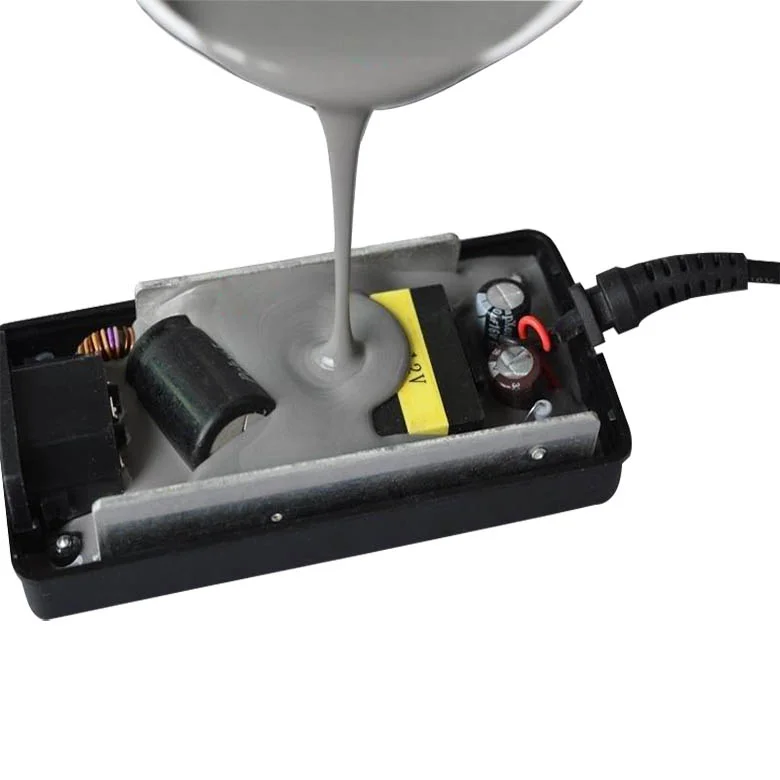
Open the A and B containers (Part A is the resin + filler, Part B is the curing agent), weigh out 1:1 by weight, mix thoroughly under low shear for 3 – 5 minutes (a planetary centrifugal mixer is ideal — manual mixing risks air entrapment and uneven cure), degas under vacuum if the application is dielectric-critical, and pour into the cavity. Working life (pot life) is typically 30 – 60 minutes at 25 °C — see the per-grade datasheet. For high-volume lines, a meter-mix-dispense machine is recommended.
Will the cured epoxy crack under thermal cycling?
Rigid epoxy (Shore D 70+) does have a higher CTE mismatch with copper and aluminum than silicone, so deep pours over large copper planes can crack on −40 ↔ +130 °C cycling. Mitigations: keep pour depth ≤ 10 mm where possible, design stress-relief features into the housing, or step up to a silicone potting compound (TIG680 / TIS680) for cycle-heavy applications. The TIE280 family is best when the operating temperature is steady or has a narrow swing window (≤ 50 K typical).
Can I cure faster than the listed RT 24 h schedule?
Yes — TIE280-12AB and TIE280-15AB datasheets list a 70 °C / 3 h accelerated cure, and TIE280-25AB lists 80 °C / 1 h. Faster oven cures yield slightly higher cross-link density and a narrower modulus distribution. Confirm that none of the embedded components have a thermal limit below the cure temperature, and avoid cures above 100 °C as they can drive off un-reacted curing agent before full cross-linking is reached.
Is TIE280 RoHS / REACH / UL-94 compliant?
All three TIE280-AB grades are RoHS / REACH compliant. UL-94 ratings vary by grade and pour depth — TIE280-15AB and -25AB datasheets call out V-0 at sample thickness 3 mm. If your application requires UL-Yellow-Card listing on the finished assembly, contact engineering with the part geometry and we can arrange a sample-to-burn test report.
How does this compare to TIE380 thermal epoxy adhesive?
TIE380 (1K heat-cure) is for bonding two parts together — thin-bondline structural adhesive. TIE280-AB (2K room-temp-cure) is for filling a cavity around components — bulk encapsulation. Different paste viscosity, different application workflow, and different mechanical role. They share the same chemistry family but are not interchangeable.
Adjacent thermal management lines
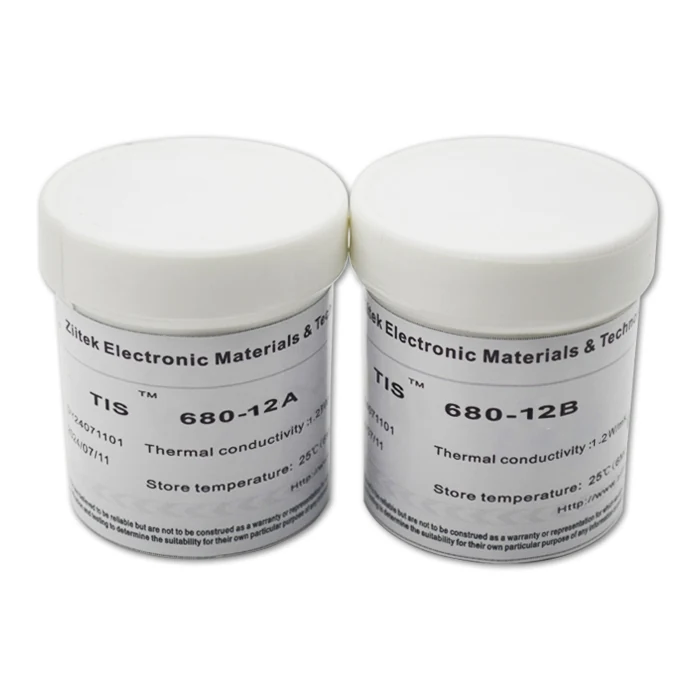
TIG / TIS 680
Silicone potting compound
Soft elastic alternative — better thermal cycling, reworkability, higher service temp. Pick for vibration-heavy or wide-cycle applications.
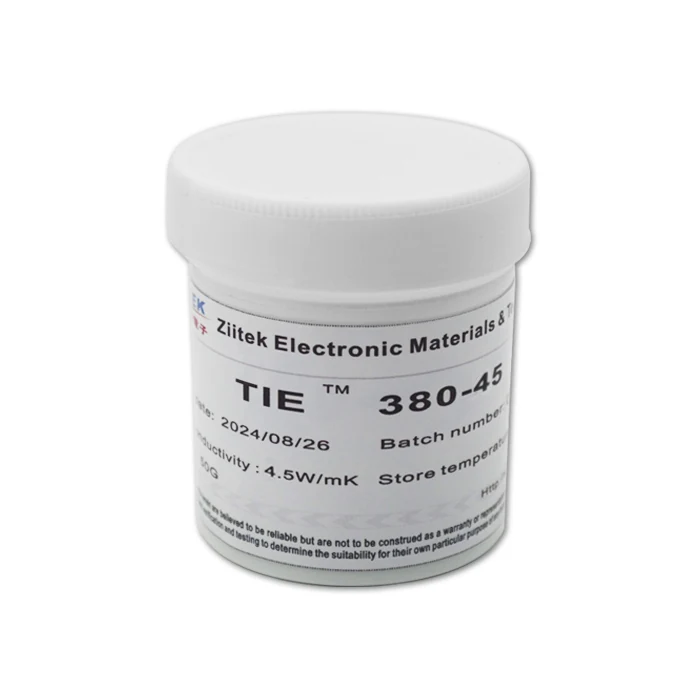
TIE380
Thermal epoxy adhesive
Single-part heat-cure structural adhesive — paste viscosity for thin bondlines, not bulk pour.
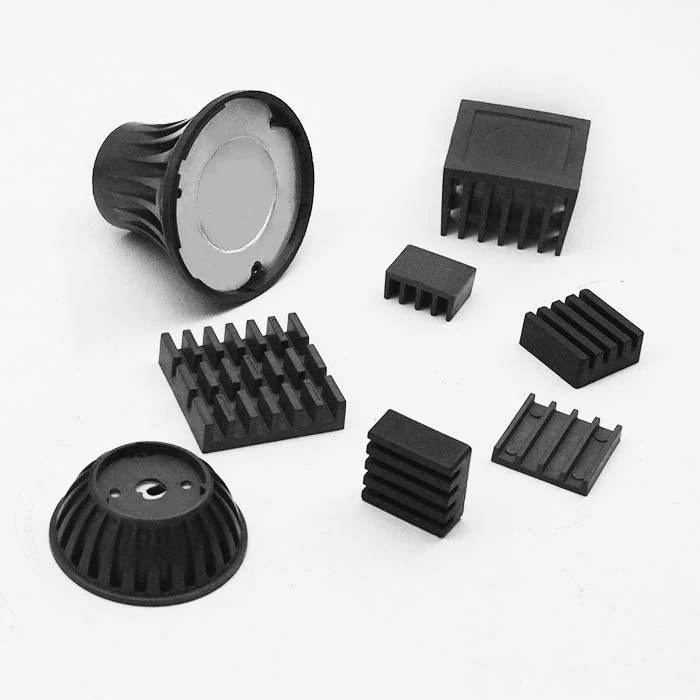
TCP
Thermally conductive plastic
Injection-mouldable thermoplastic — replace machined aluminum with a complex-geometry conductive housing.
Sample
Talk to engineering
Pour-depth limits, mix-ratio tolerances, vacuum-degas process, or UL test reports? 2-hour response.

Your next thermal solution
starts here.
From rapid prototyping to full-scale production — our engineers are ready to design a custom thermal solution for your application. Trusted by 5,000+ clients across EV, 5G, and consumer electronics.