Flexible film heating element
Thin, flexible film heaters that bond directly to the surface they need to warm. 2 KHEAT families: polyimide etched-foil for fast-response and tight-radius applications, and silicone-rubber wire-wound for higher watt-density and continuous high-temperature service. PSA-backed, custom cut shapes, voltages from 1 V DC to 380 V AC.
2
Heater families
1.0 – 2.0 W/cm²
Watt density (max)
1 – 380 V
Voltage range (AC/DC)
0.1 – 5.0 mm
Thickness range
200 – 300 °C
Max continuous temp
Every Kapton and polyimide heating films grade, one table
All 2 kapton and polyimide heating films part numbers with thermal conductivity (W/m·K), colour notes, and PDF datasheets. Click a model name with a link for full specs, photos, and application guidance.
| Photo | Model | Power Density | Operating Temp | PDF & next step |
|---|---|---|---|---|
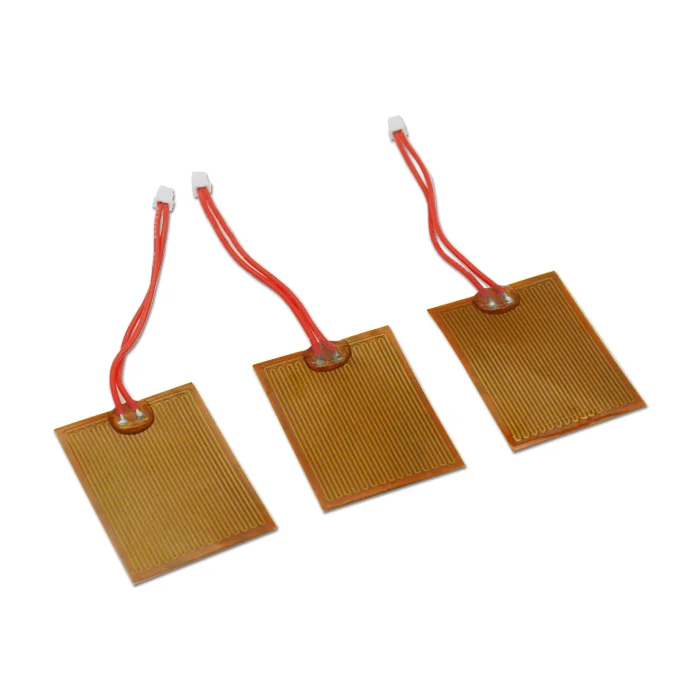 | KHEAT-PI | 0.1-0.6W/cm² | 200°C (it depends on temperature stability of the adhesive if customer needs adhesive.) | |
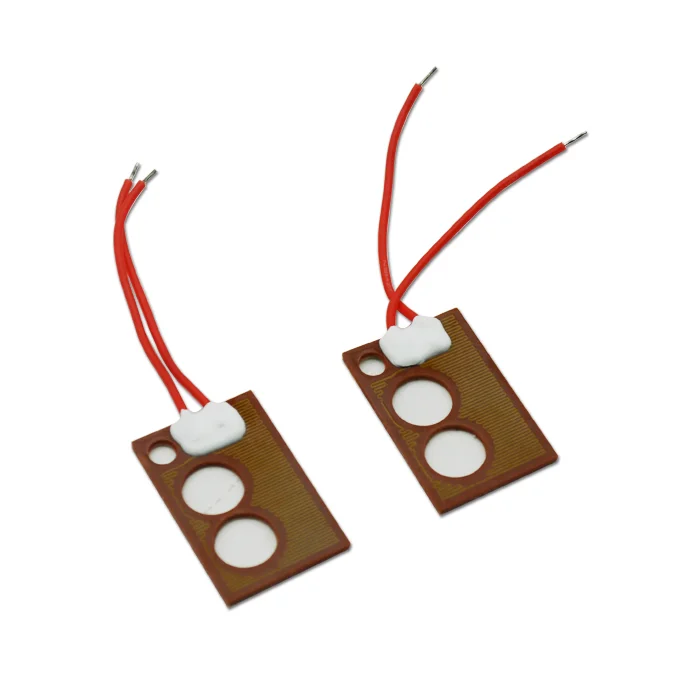 | KHEAT-SP | 0.1-0.6W/cm² | 200°C (it depends on temperature stability of the adhesive if customer needs adhesive) |
Where polyimide heaters fit
Flexible PI (Kapton-style) heaters bond to plates, tubes, and chassis for robotics, medical, and industrial temperature control.
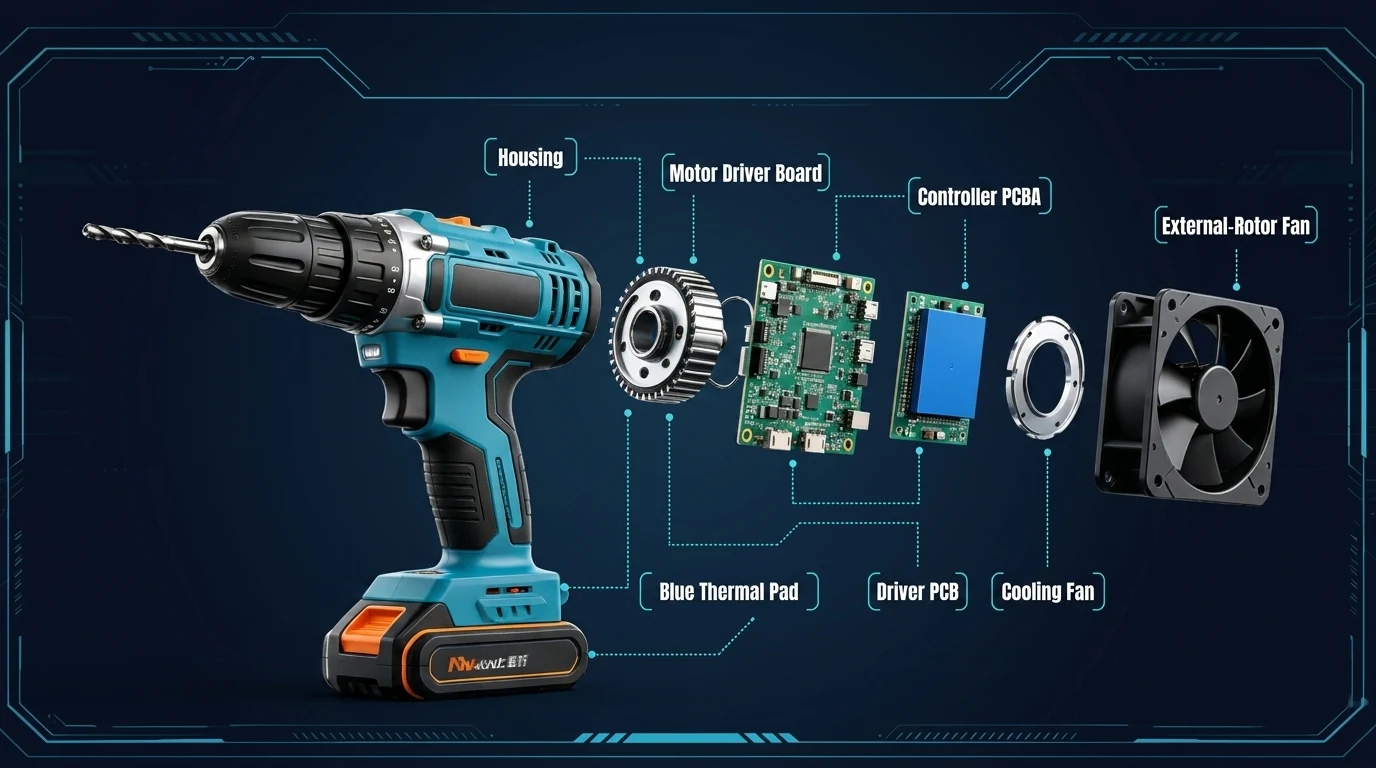
Typical specification window (film heating element)
| Parameter | Typical range / note | Method |
|---|---|---|
| Watt density | W/cm² — design-bound | — |
| Operating voltage | AC/DC classes — custom | IEC / OEM |
| Max exposure temperature | Polyimide construction limit | TDS |
| Thermal uniformity | Trace layout + bus design | Imaging |
| Adhesive mounting | PSA to metal / ceramic | — |
| Thickness | Thin-film builds | Caliper |
| Insulation resistance | Hi-pot / insulation class | IEC |
| UL / safety | Appliance-dependent | UL / EN |
| Outline | Custom etch — DXF | — |
* Representative grades. Request a lot-specific datasheet or CoA for your exact part number.
Kapton and polyimide heating films — common questions
Need help shortlisting or cross-referencing? Talk to a Ziitek thermal engineer — 2-hour response SLA.
Talk to an engineerWhat is a film heating element and where does it fit?
A film heating element is a thin flexible heater that bonds directly to the surface needing warmth — substituting for cartridge heaters, ceramic heaters, or hot-air systems where space, response time, or uniform watt-density matters. The heating circuit is either an etched metal foil sandwiched between two polyimide films (KHEAT-PI) or a resistance wire encapsulated in silicone rubber (KHEAT-SP). Watt density is uniform across the trace pattern, so heat is generated exactly where you place the heater rather than from a single hot point.
KHEAT-PI vs KHEAT-SP — how do I pick?
Pick KHEAT-PI (polyimide etched-foil) for thin profile (0.1 – 0.5 mm), tight bend radii (down to 0.8 mm), fast thermal response, low thermal mass, and applications below 200 °C. Pick KHEAT-SP (silicone-rubber wire-wound) when you need higher watt density (up to 2.0 W/cm² vs 1.0 for PI), continuous service above 200 °C (up to 300 °C without PSA backing), higher voltage (up to 380 V AC), or rugged handling — KHEAT-SP is thicker (1 – 5 mm) and more abrasion-tolerant.
How is the heater bonded to my product?
Both KHEAT-PI and KHEAT-SP can be supplied with a one-side pressure-sensitive adhesive (PSA) backing — peel the liner and apply, no curing required. With PSA, both heaters are rated to 200 °C continuous. Without PSA (mechanical clamping or external bonding), KHEAT-PI is rated to 200 °C and KHEAT-SP to 300 °C continuous. For permanent bonding to metals or composites, the PSA option is the simplest production workflow.
What voltages and watt densities are available?
Both families cover a wide voltage range: KHEAT-PI from 1 V to 220 V AC or DC, KHEAT-SP from 1 V to 380 V AC or DC — pick the voltage that matches your control source. Watt density is application-engineered: KHEAT-PI delivers up to 1.0 W/cm² (recommended cruise 0.5 W/cm²), KHEAT-SP up to 2.0 W/cm² (recommended 1.0 W/cm²). Above the recommended density, expect a derating in service life. Resistance tolerance is typically ±10 % per heater.
Can I get custom shapes, cut-outs, or built-in temperature sensing?
Yes — both heater families are custom-cut to your CAD outline (rectangles, circles, complex polygons with holes for screws or wires). Lead-wire location, length, gauge, and termination (bare end, ring lug, JST connector) are configured per project. Built-in NTC or PT100 thermistors are available for closed-loop temperature control; specify mounting position relative to the heated zone. Minimum order quantity is application-dependent — contact engineering with a CAD file for a quote.
How does a film heater compare to a cartridge or ceramic heater?
Cartridge heaters are point sources — they deliver high wattage in a small drilled hole and rely on the substrate to spread the heat. Ceramic plate heaters are flat but rigid and have a slow thermal response. Film heaters are flexible, conform to any surface (flat, cylindrical, curved), and apply uniform watt density across their full footprint — heat goes exactly where the heater is, with low thermal mass for fast warm-up. The trade-off: maximum operating temperature is lower than ceramic (200 – 300 °C vs 600+ °C), and watt density is bounded by the dielectric layer.
Adjacent thermal management lines
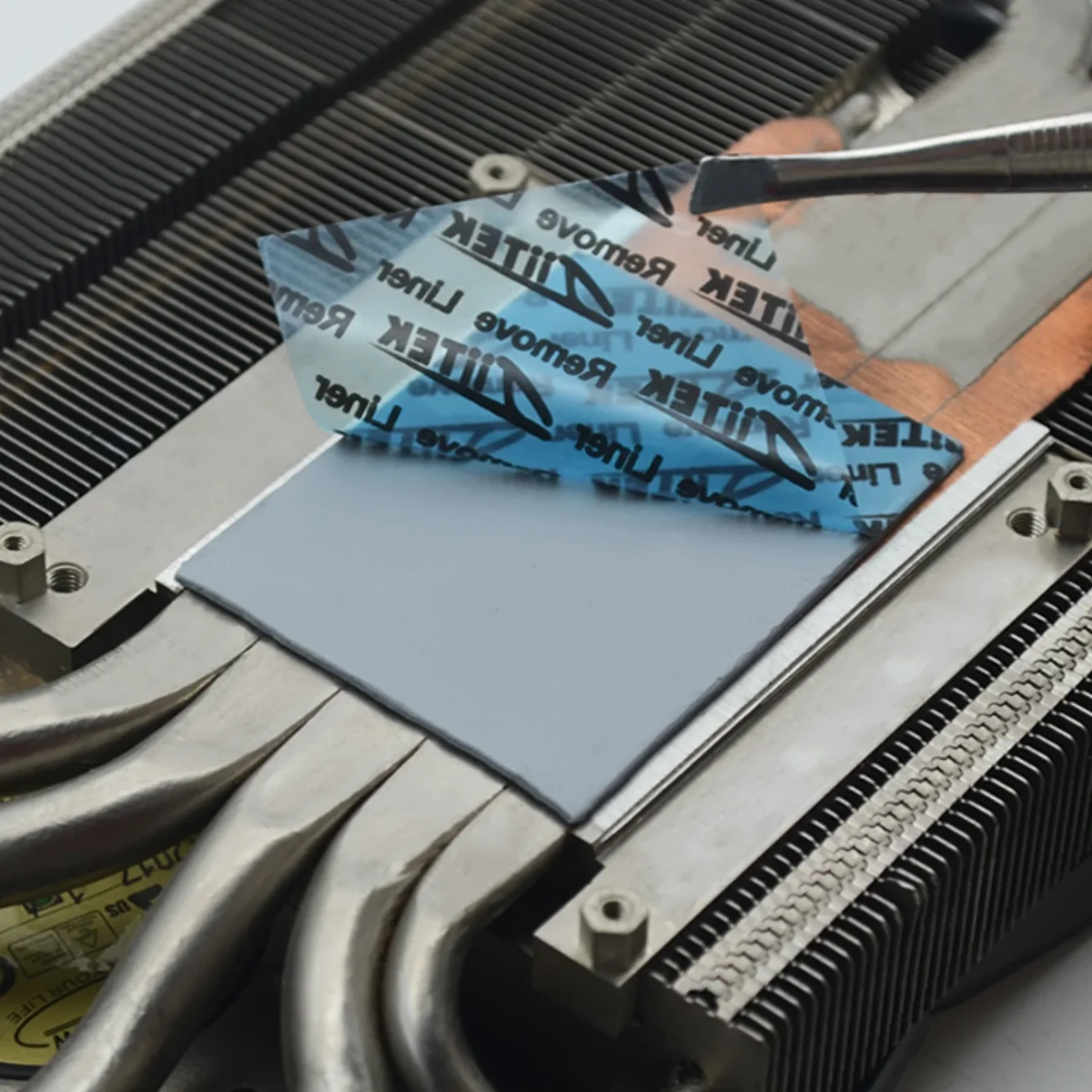
TIF
Silicone thermal pad
When the goal is heat removal (not heat input) — pads couple a hot component to a cold sink with low contact resistance.
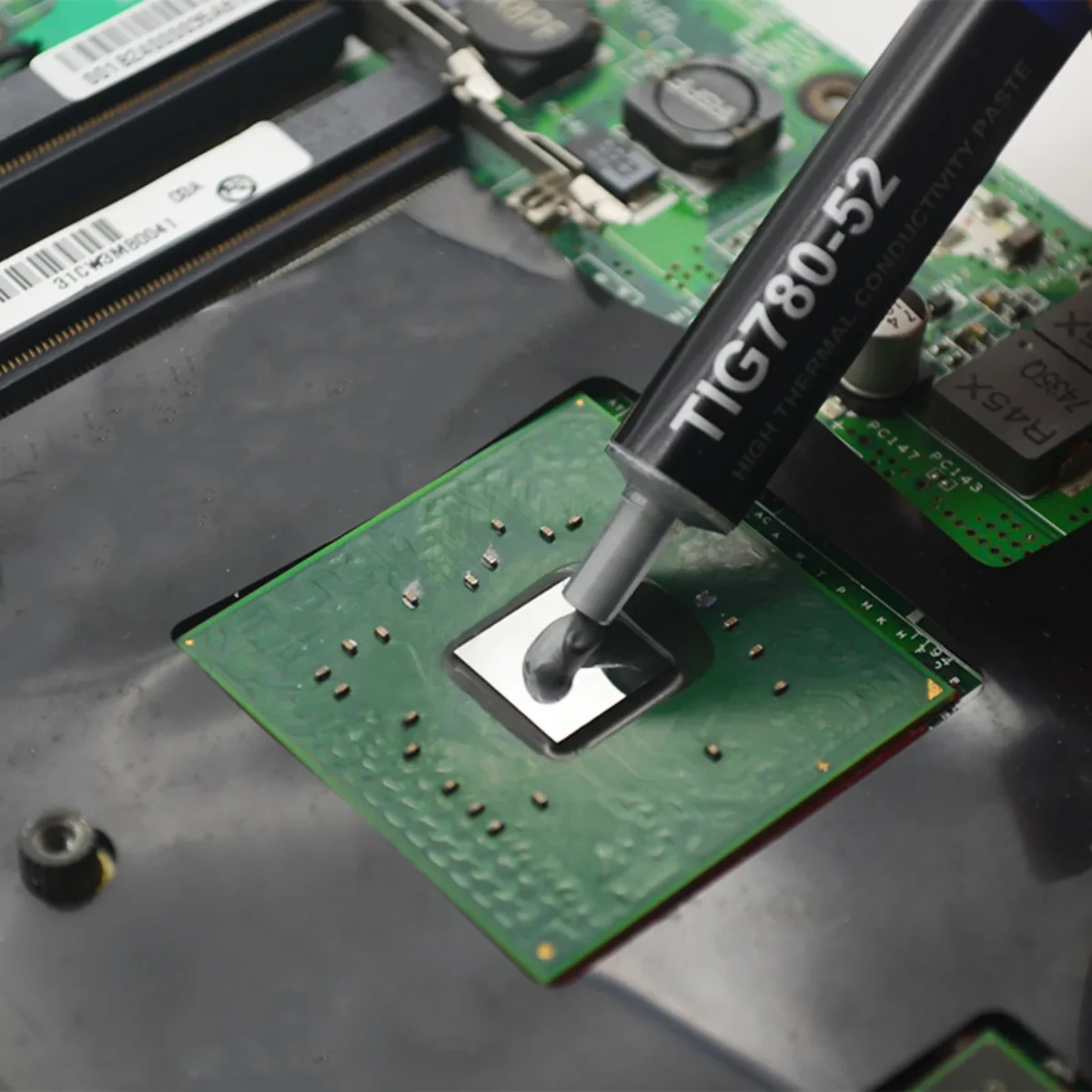
TIG
Thermal grease
Pump-able thermal interface for thin bondlines beneath the heater — ensures even heat transfer to the substrate.
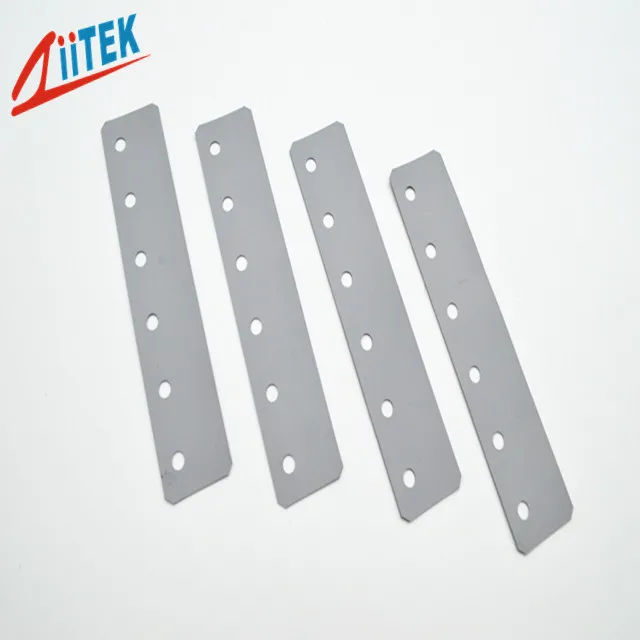
TIS
Conductive insulator
Dielectric isolation for heaters mounted on bare-metal substrates that can't tolerate hi-pot leakage.
Sample
Talk to engineering
Custom cut-shape CAD, voltage / watt-density sizing, NTC or PT100 sensor integration? 2-hour response.
Your next thermal solution
starts here.
From rapid prototyping to full-scale production — our engineers are ready to design a custom thermal solution for your application. Trusted by 5,000+ clients across EV, 5G, and consumer electronics.