Thermal adhesive tape
Dry double-sided pressure-sensitive thermal tape for instant heat-sink and component bonding — peel the liner, place the part, done. Through-plane conductivity 0.8–1.6 W/m·K across 6 TIA grades, with carrier options spanning all-adhesive, fiberglass-reinforced, polyester, and aluminum-foil for the workflow that fits your line.
6
Qualités TIA
0.8–1.6 W/m·K
Conductivité thermique (λ)
Acrylique / Silicone
Chimie de l'adhésif
0.13 – 0.30 mm
Plage d'épaisseur totale
Instantané
Aucun durcissement / aucun four
Préparation à la sélection
Commencez par l’empilage, pas par le nom du produit.
Une présélection utile commence par le chemin thermique et les contraintes d’assemblage. Ces informations permettent à Ziitek de cibler les grades et documents pertinents.
Interface et géométrie
Indiquez la surface de contact, l’entrefer ou l’épaisseur de liaison visée, ainsi que l’état des surfaces.
Objectif thermique
Ajoutez la puissance ou le flux thermique, l’élévation de température admissible et les contraintes de refroidissement.
Électrique et production
Précisez l’isolation, la conformité, l’assemblage, la reprise et les volumes prévus.
Two adhesive families across four carrier choices
Toutes les qualités de Thermal tapes dans un seul tableau
Les 6 références de thermal tapes avec conductivité thermique (W/m·K), notes de couleur et fiches techniques PDF. Cliquez sur le nom d'un modèle avec un lien pour obtenir les spécifications complètes, les photos et les conseils d'application.
| Photo | Modèle | λ (W/m·K) | Couleur | PDF et étape suivante |
|---|---|---|---|---|
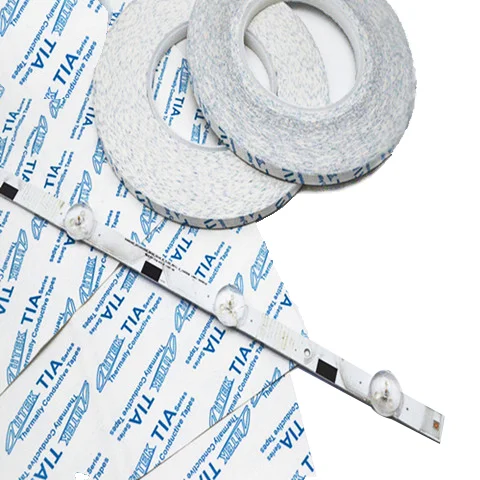 | TIA600P | 0.8 W/m·K | Blanc | |
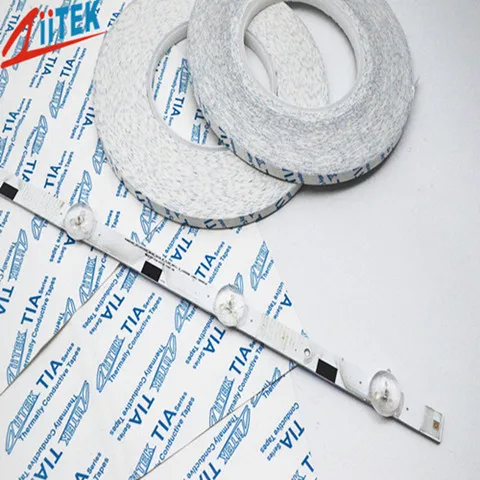 | TIA600 | 0.9 W/m·K | Blanc | |
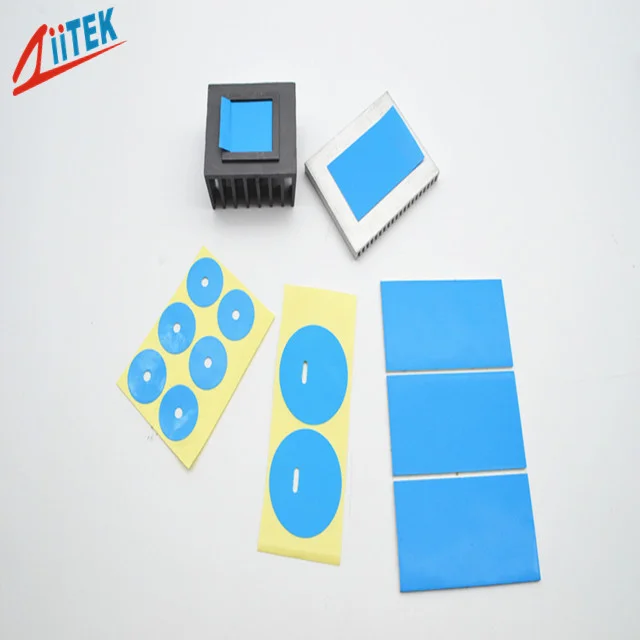 | TIA600FG | 0.8 W/m·K | Blanc | |
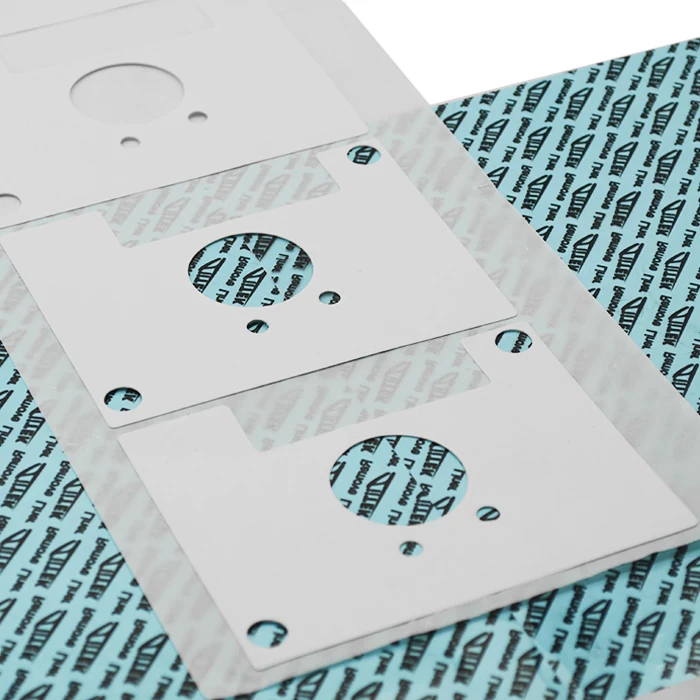 | TIA800 | 0.8 W/m·K | Blanc | |
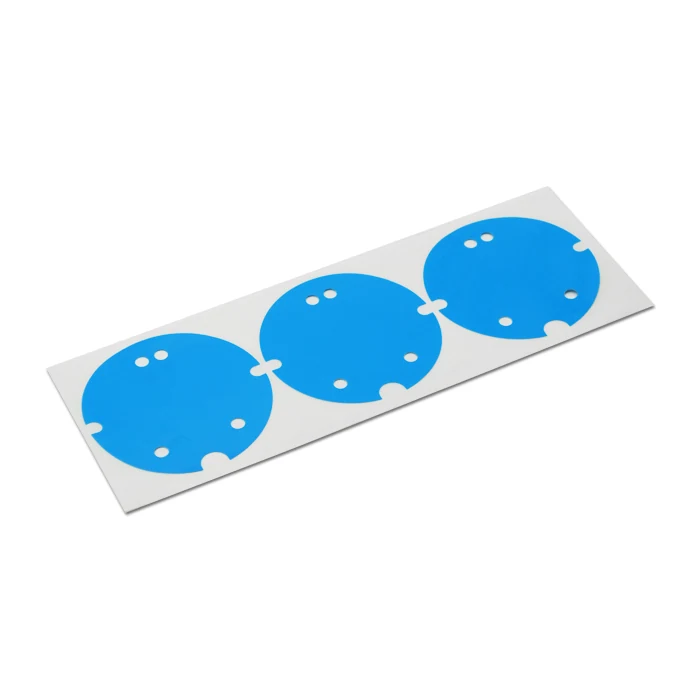 | TIA800FG | 0.8 W/m·K | Blanc | |
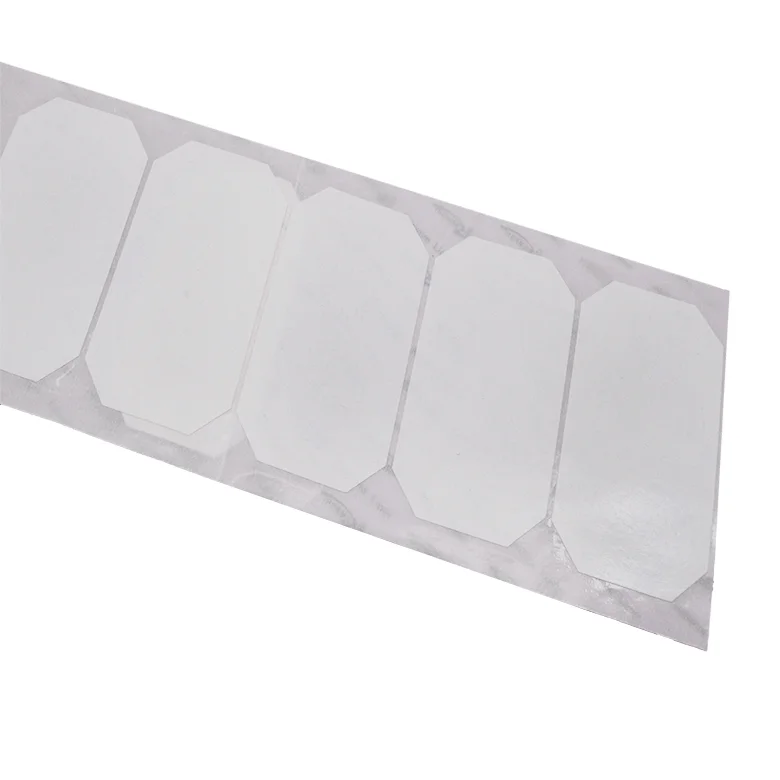 | TIA800AL | 1.6 W/m·K | Blanc |
Cas d'utilisation des rubans thermiques
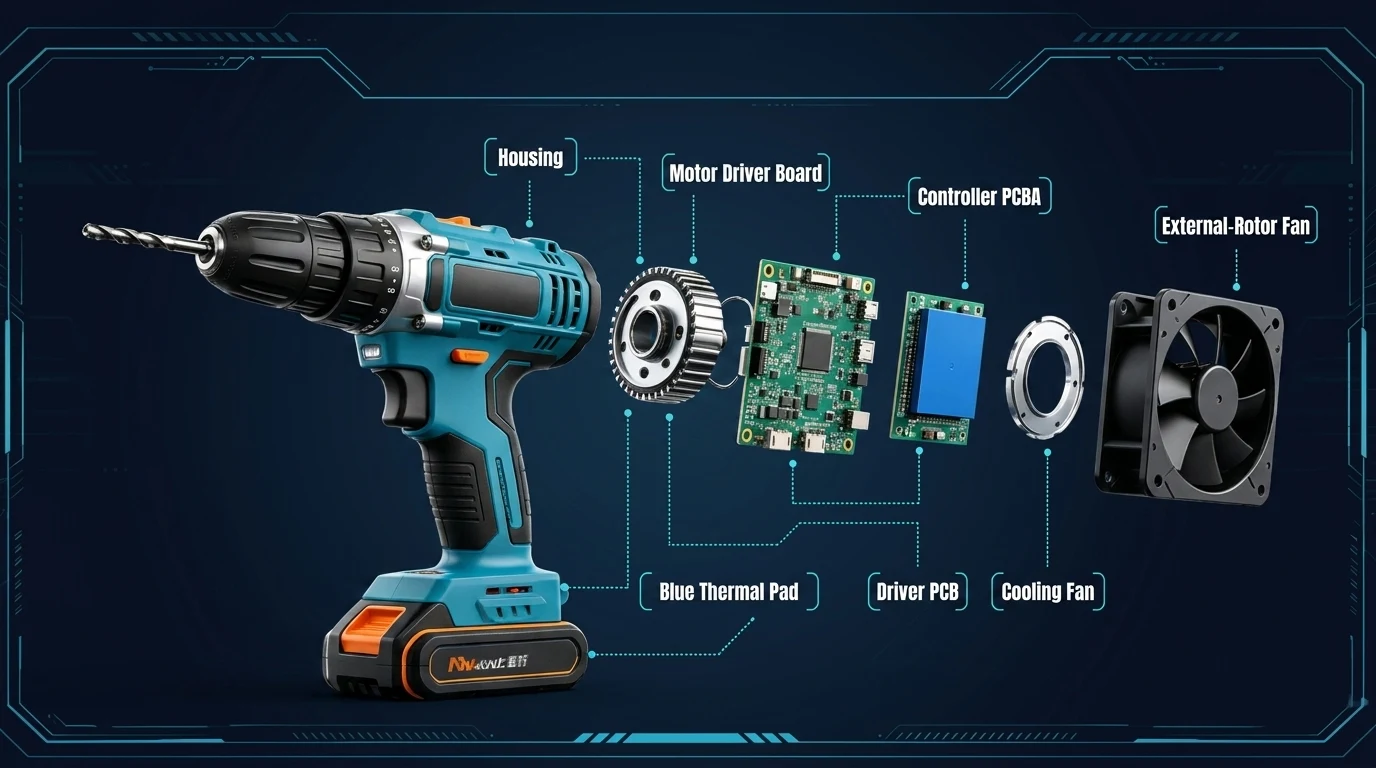
Fenêtre de spécifications typiques (ruban adhésif thermique)
| Paramètre | Plage typique / note | Méthode |
|---|---|---|
| Construction | TIM PI / feuille / acrylique — spécifique à la série | — |
| Impédance thermique | Empilement sensible à la pression | ASTM D5470 |
| Temp. d'utilisation continue | Classe de construction 150 – 260 °C | UL510 / TDS |
| Adhésion | Adhérence dépendant du substrat | PSTC / OEM |
| Rigidité diélectrique | Constructions isolantes | ASTM D149 |
| Épaisseur | Épaisseurs de µm à mm | Pied à coulisse |
| Inflammabilité | Constructions reconnues UL | UL |
| Positionnement RoHS / REACH | Demander la déclaration | — |
| Sous forme de rouleau / feuille | Largeurs de fente — MOQ | — |
Thermal tapes — questions fréquentes
Besoin d'aide pour présélectionner ou trouver une équivalence ? Contactez un ingénieur thermicien Ziitek — SLA de réponse en 2 heures.
Parler à un ingénieurWhen does thermal adhesive tape beat thermal grease or RTV silicone?
TIA600 vs TIA800 — what's the difference?
What does the carrier (-FG, -P, -AL) actually do?
How thick is the typical bondline and what's the thermal resistance?
Can I peel the tape off and re-bond?
What surfaces does TIA tape bond to?
Autres gammes de gestion thermique
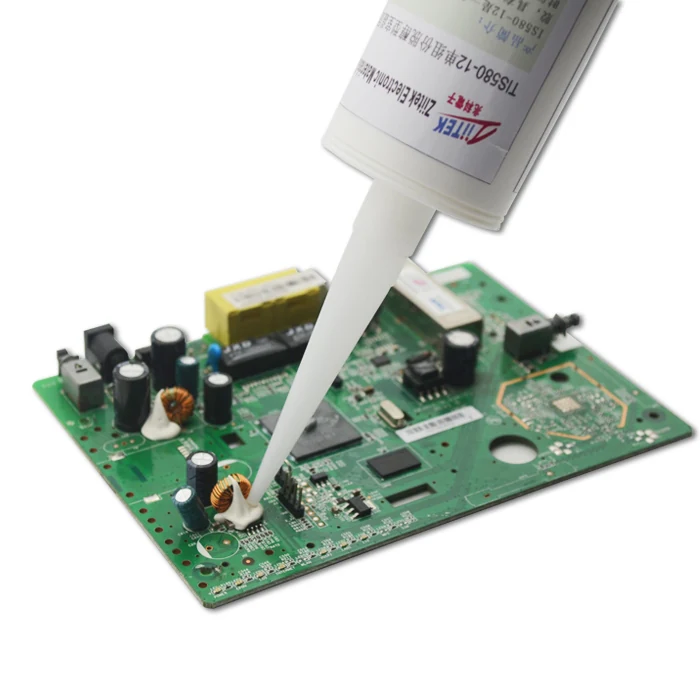
TIS580
Adhésif silicone RTV
Silicone dispensable durcissant en place — lorsque la géométrie n'est pas plane ou que l'interstice varie. Température de service plus élevée.
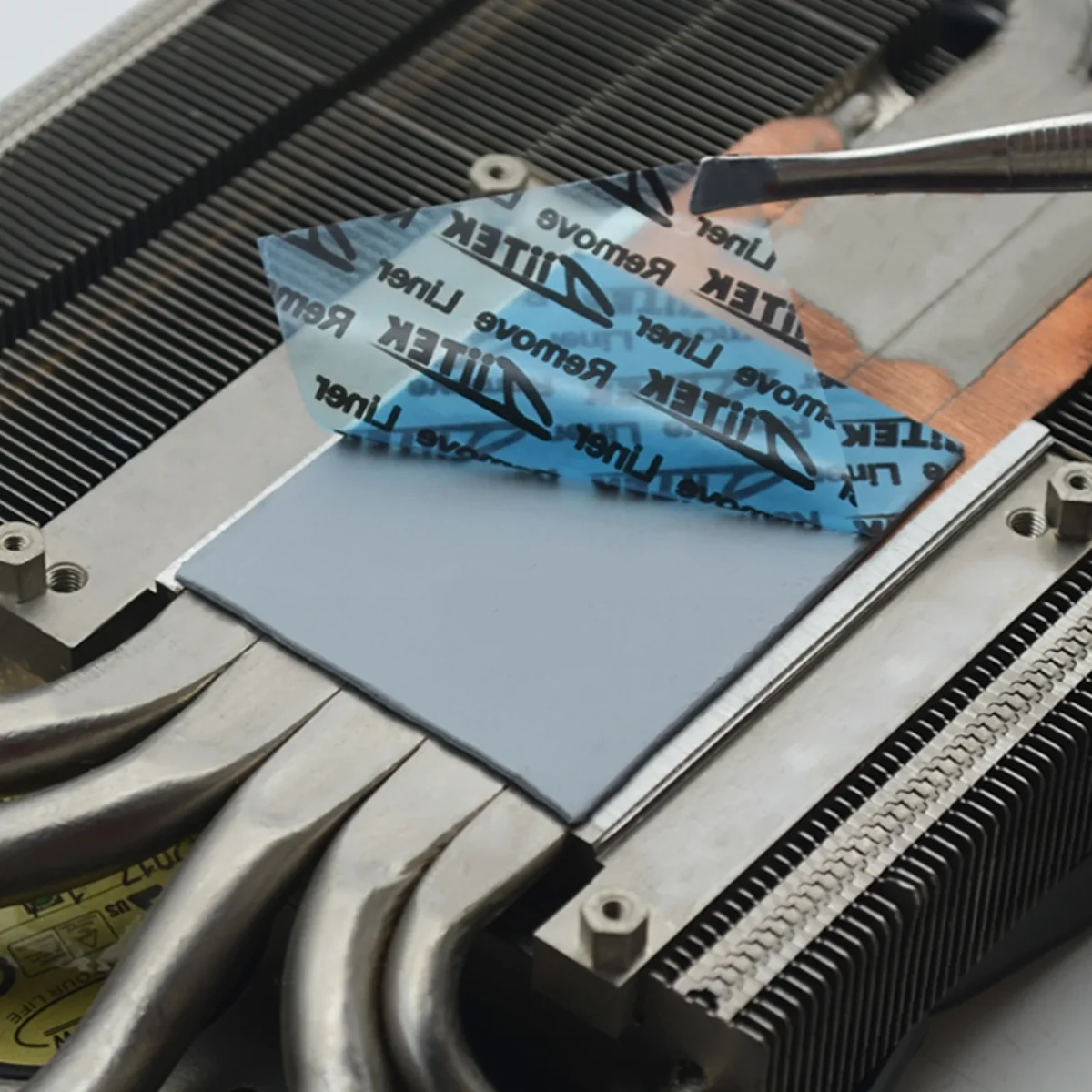
TIF
Pad thermique en silicone
Pad non adhésif (maintenu par pression) — utilisé lorsque le plan de joint est trop large pour un ruban adhésif ou qu'un assemblage entièrement remaniable est requis.
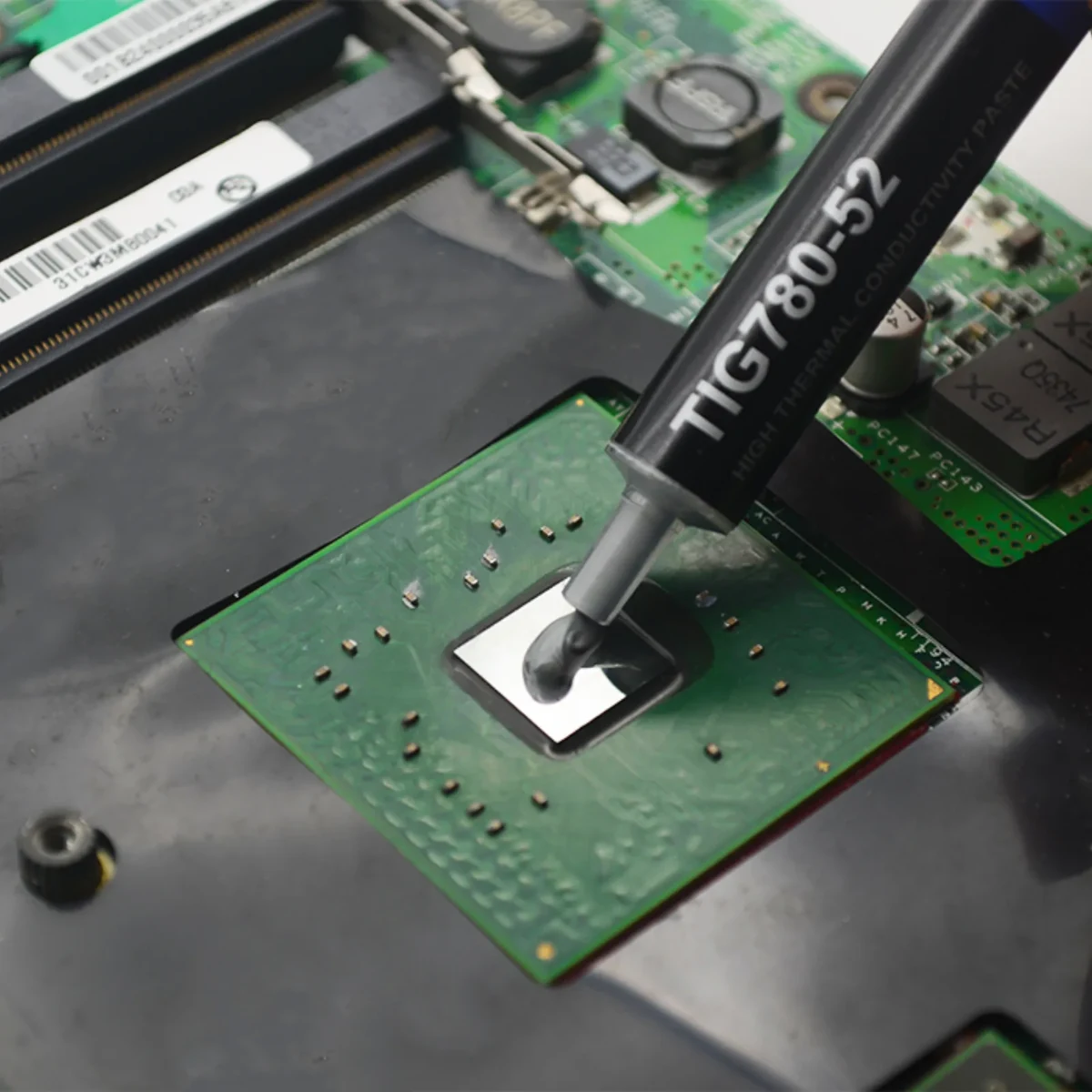
TIG
Graisse thermique
Composé de qualité pompable lorsque la résistance thermique la plus faible possible est requise et qu'un serrage est en place.
Échantillon
Contactez notre service d'ingénierie
Choix du support, outillage de découpe, préparation de surface ou données de test de pelage et de cisaillement ? Réponse en 2 heures.

Votre prochaine solution thermique commence ici.
Du prototypage rapide à la production à grande échelle, nos ingénieurs sont prêts à concevoir une solution thermique sur mesure pour votre application. Approuvé par plus de 7 000 clients dans les secteurs des véhicules électriques, de la 5G et de l'électronique grand public.