Thermal epoxy adhesive

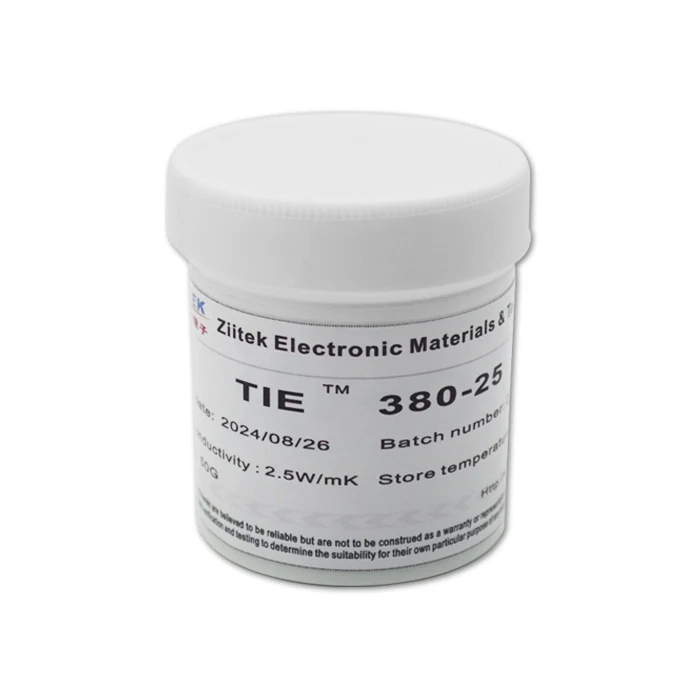
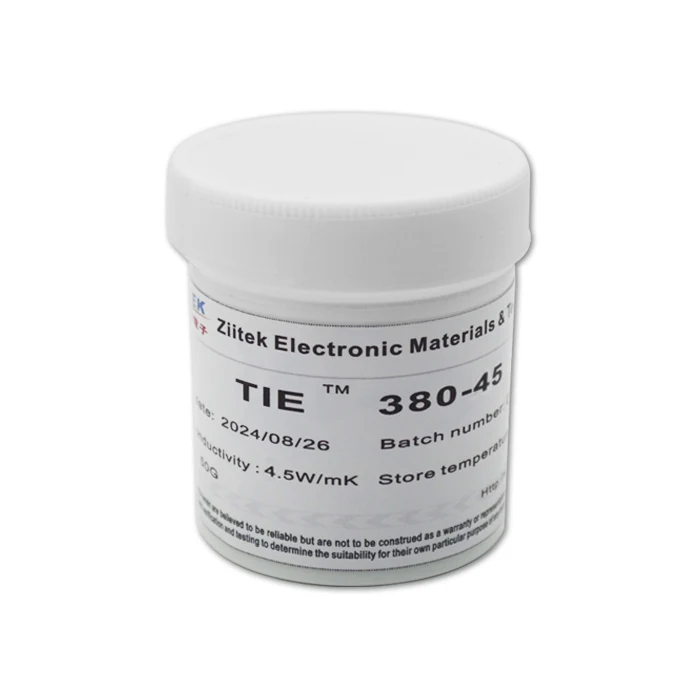
Single-part heat-cure thermal epoxy for permanent structural bonding plus thermal management in one compound. Through-plane conductivity 2.5–4.5 W/m·K across 2 TIE380 grades — the entry 2.5 W/m·K 380-25 for general electronics adhesion and the high-λ 4.5 W/m·K 380-45 for power-semiconductor and EV battery thermal joints.

2

TIE380 グレード

2.5–4.5 W/m·K

熱伝導率 (λ)

1液性

混合不要 — 熱硬化

≥ 130 °C / 30分

硬化条件

−40 – 150 °C

動作範囲

選定準備

製品名ではなく、熱設計の構成から選定を始めます。

適切な候補選定には、熱経路と組立条件の確認が必要です。以下の情報を共有いただければ、Ziitek が適したグレードと資料を絞り込みます。

界面・形状

接触面積、ギャップまたは目標ボンドライン、表面の平坦性をご提示ください。

熱的な目標

電力または熱流束、許容温度上昇、ヒートシンクや筐体の制約をご提示ください。

電気・量産条件

絶縁、規格、組立方法、リワーク、想定数量の要件をお知らせください。

品番とデータシート

すべてのThermal epoxy adhesivesグレードを一覧表で

全2種のthermal epoxy adhesives品番を熱伝導率(W/m·K)、色の注記、PDFデータシートとともに掲載しています。リンク付きのモデル名をクリックすると、詳細な仕様、写真、応用ガイダンスをご覧いただけます。

モデル選択のサポート
代表的な用途

熱伝導性エポキシが適する用途

2液性接着エポキシは、構造的な強度でヒートシンクや筐体を接着します — 完全なポッティングとは異なりますが、化学的性質は重複します。
技術パラメーター

代表的な仕様範囲(熱伝導性エポキシ接着剤)

Typical specification envelope for this product category
パラメーター代表的な範囲/備考試験方法
熱伝導率接着グレード λ — 詳細はTDSをご覧くださいASTM D5470
ラップせん断強度金属 / セラミック基板ASTM D1002
混合比とポットライフ2液性 — シリーズごと—
硬化常温 + 加熱硬化オプションTDS
ガラス転移リジッドな接着層DMA
体積抵抗率グレードごとの電気的挙動ASTM D257
動作温度電子部品グレードUL746B
保存期間冷暗所での保管が必要な場合があります—
用途手動、自動塗布—
* 代表的なグレードです。お客様の正確な部品番号については、ロット固有のデータシートまたはCoAをご請求ください。
よくあるご質問

Thermal epoxy adhesives — よくあるご質問

製品の選定やクロスリファレンスでお困りですか?Ziitekの熱対策エンジニアにご相談ください。2時間以内の応答をお約束します。

エンジニアに相談する
What is thermal epoxy adhesive and how does it differ from RTV silicone adhesive?
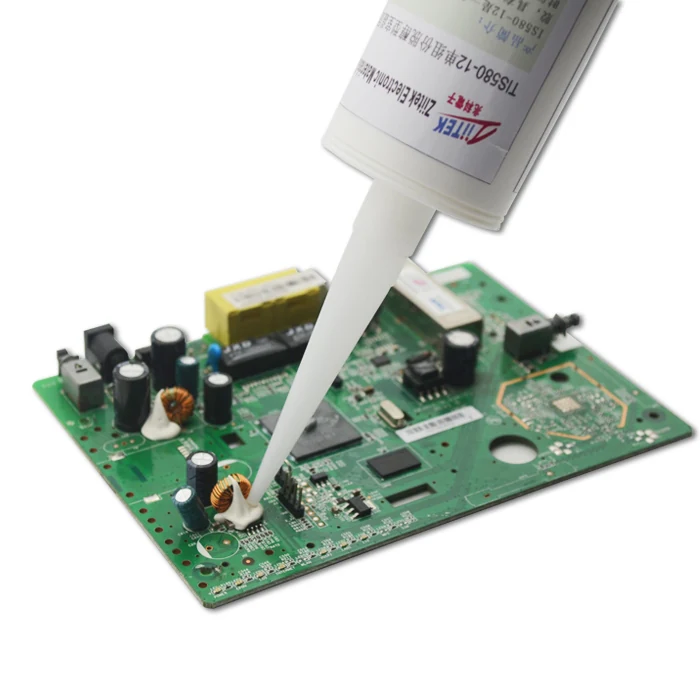
Thermal epoxy is a thermosetting polymer loaded with metal-oxide or ceramic filler that, once cured, becomes a rigid, high-modulus structural bond with dual function — mechanical fastening plus a thermal conduction path. Compared to RTV silicone adhesive (TIS580), epoxy gives higher lap-shear strength (typical 8 – 20 MPa vs 1 – 3 MPa for RTV silicone), stiffer post-cure modulus, and better moisture resistance, at the cost of brittleness under thermal cycling and the need for a heat cure step. Pick epoxy when the joint must replace a screw or rivet; pick silicone when the joint must absorb mechanical or thermal-cycle stress.
Single-part heat cure vs two-part epoxy — which TIE grade do I want?
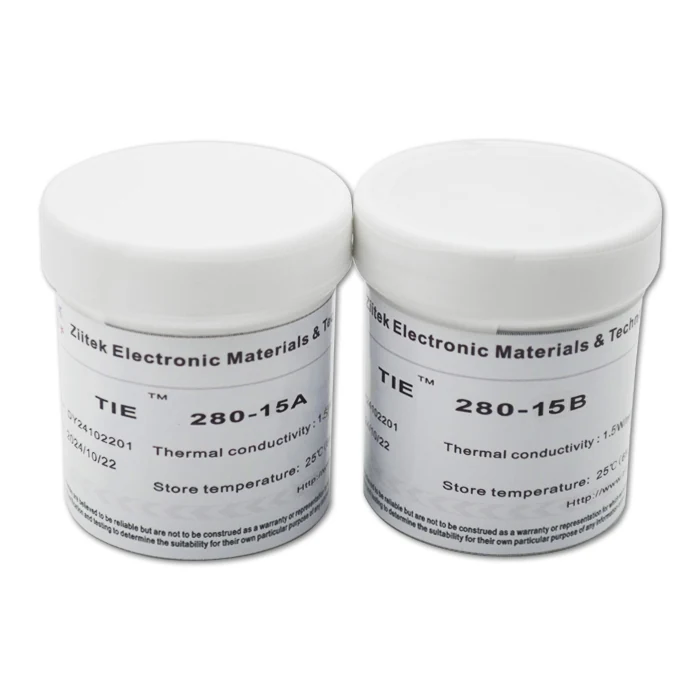
Both TIE380-25 and TIE380-45 are single-part (1K) heat-cure formulations — pre-mixed, ready to dispense from cartridge or syringe, no Part-A/Part-B mixing required. They cure on a heated platen or in a reflow oven (typical 130 °C / 30 min). For two-component room-temp-cure structural bonding our two-part TIE280-AB potting epoxy line gives a longer pot-life with no oven needed; see the epoxy-potting-compound family for that workflow.
Is the bond conductive — can it short out a metal-can SMD?
TIE380 series is electrically insulating (volume resistivity ≥ 10¹³ Ω·cm typical) — the ceramic filler provides thermal conduction without forming a continuous metal path, so a thin bondline between an LED can and a copper heatsink will not short. Verify the dielectric strength on the datasheet for the specific grade if your bondline is operating above 100 V; some grades will derate at very thin bondlines under high-voltage conditions.
How thick should the bondline be?
For maximum thermal performance, target the thinnest bondline that still gives full coverage and tolerates the part-to-substrate flatness — typically 50 – 200 µm. Thinner bondlines reduce thermal resistance linearly with thickness, so 50 µm at 2.5 W/m·K gives lower interface resistance than 200 µm at 4.5 W/m·K. Use a controlled clamp pressure or shim during cure to lock the bondline; once cured, the joint is permanent and cannot be reworked without breaking the substrates.
Can I rework or remove a TIE380 joint after cure?
Cured TIE380 epoxy is a permanent structural bond — by design, it cannot be peeled or melted off. Removal requires either mechanical fracture (chisel, ultrasonic) or solvent attack (chlorinated or strong polar solvents) which usually damages the substrate. If reworkability is on the spec, switch to TIA800 thermal adhesive tape (peel-and-replace) or TIS580 RTV silicone adhesive (can be cut and re-bonded).
What's the operating temperature range?
TIE380-25 and TIE380-45 are rated −40 °C to +150 °C continuous service. Above 150 °C the epoxy backbone will gradually oxidise (Tg around 110 – 120 °C means modulus softens before chemical degradation begins). For silicone-class continuous-service ranges (−50 to +200 °C and beyond) use TIS580 RTV silicone adhesive or one of the silicone potting compounds.

次世代の熱対策ソリューションを ここから。

ラピッドプロトタイピングから量産まで、当社のエンジニアがお客様の用途に合わせたカスタム熱対策ソリューションを設計します。EV、5G、コンシューマーエレクトロニクス分野で7,000社以上のお客様から信頼されています。