Thermal adhesive tape
Dry double-sided pressure-sensitive thermal tape for instant heat-sink and component bonding — peel the liner, place the part, done. Through-plane conductivity 0.8–1.6 W/m·K across 6 TIA grades, with carrier options spanning all-adhesive, fiberglass-reinforced, polyester, and aluminum-foil for the workflow that fits your line.
6
TIA grades
0.8–1.6 W/m·K
Thermal conductivity (λ)
Acrylic / Silicone
Adhesive chemistry
0.13 – 0.30 mm
Total thickness range
Instant
No cure / no oven
Two adhesive families across four carrier choices
Every Thermal tapes grade, one table
All 6 thermal tapes part numbers with thermal conductivity (W/m·K), colour notes, and PDF datasheets. Click a model name with a link for full specs, photos, and application guidance.
| Photo | Model | λ (W/m·K) | Colour | PDF & next step |
|---|---|---|---|---|
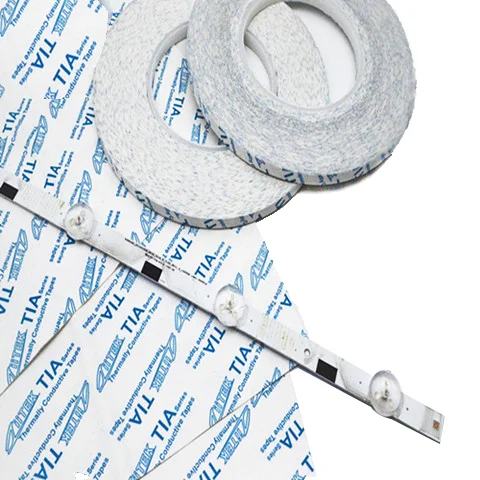 | TIA600P | 0.8 W/m·K | White | |
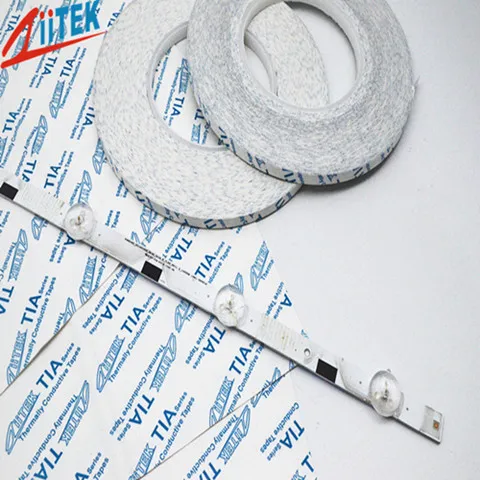 | TIA600 | 0.9 W/m·K | White | |
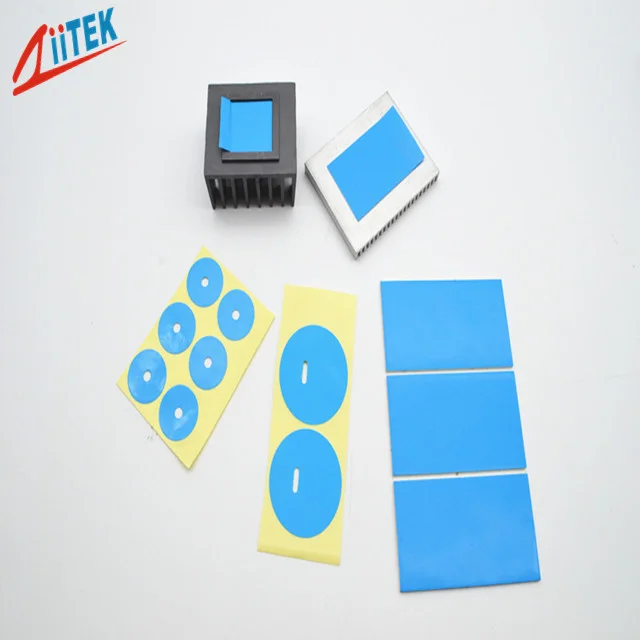 | TIA600FG | 0.8 W/m·K | White | |
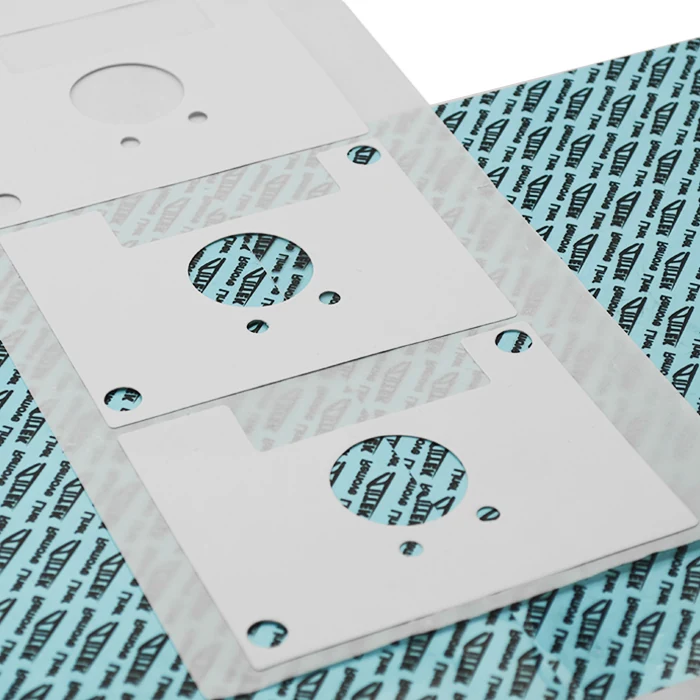 | TIA800 | 0.8 W/m·K | White | |
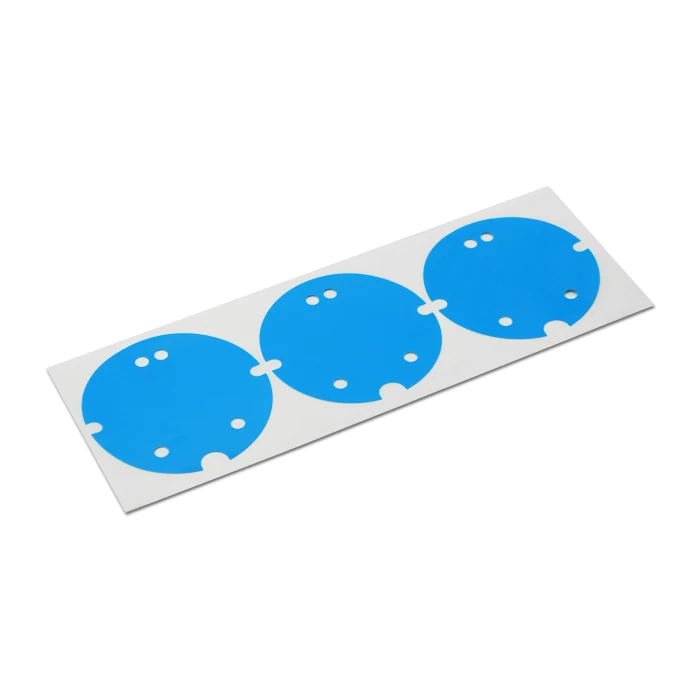 | TIA800FG | 0.8 W/m·K | White | |
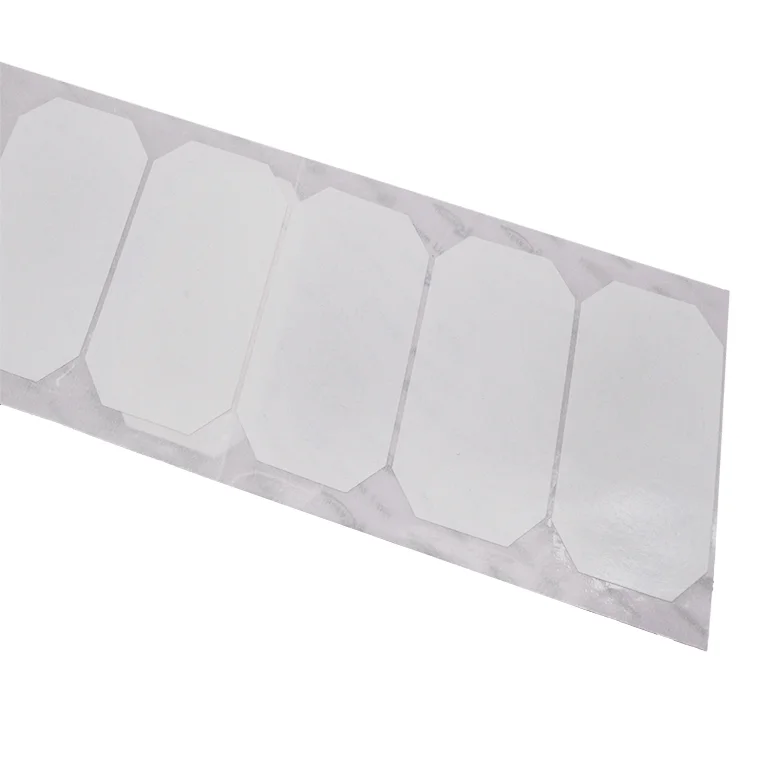 | TIA800AL | 1.6 W/m·K | White |
Where thermal tapes fit
Tapes bring mechanical fixturing together with a thermal or spreading layer — polyimide masking, foil spreading, or double-sided TIM hold-down.
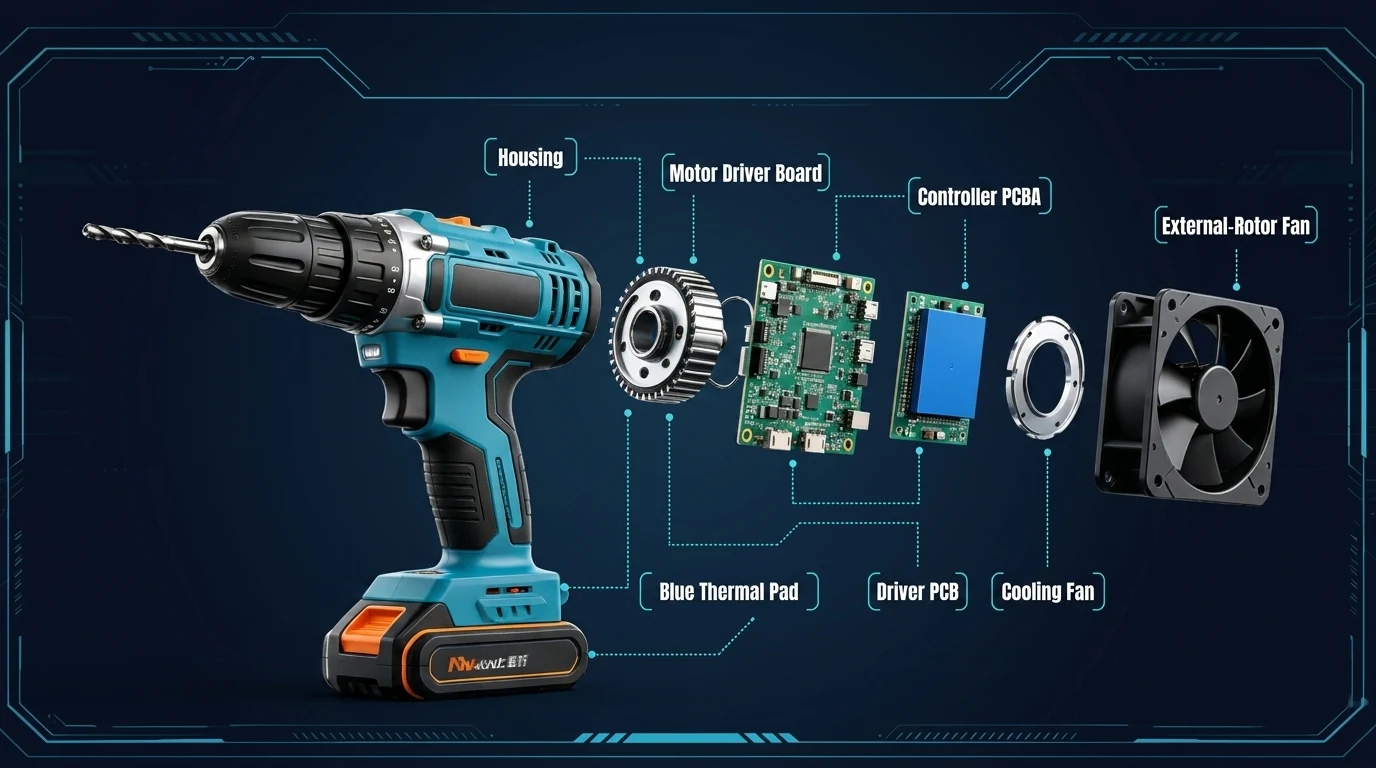
Typical specification window (thermal adhesive tape)
| Parameter | Typical range / note | Method |
|---|---|---|
| Construction | PI / foil / acrylic TIM — series-specific | — |
| Thermal impedance | Pressure-sensitive stack | ASTM D5470 |
| Continuous-use temp. | 150 – 260 °C class by construction | UL510 / TDS |
| Adhesion | Substrate-dependent peel | PSTC / OEM |
| Dielectric strength | Insulating constructions | ASTM D149 |
| Thickness | µm–mm builds | Caliper |
| Flammability | UL recognised constructions | UL |
| RoHS / REACH posture | Ask for declaration | — |
| Roll / sheet form | Slit widths — MOQ | — |
* Representative grades. Request a lot-specific datasheet or CoA for your exact part number.
Thermal tapes — common questions
Need help shortlisting or cross-referencing? Talk to a Ziitek thermal engineer — 2-hour response SLA.
Talk to an engineerWhen does thermal adhesive tape beat thermal grease or RTV silicone?
Tape wins on assembly speed and reworkability — peel the liner, place the part, no cure time, no mess, no cleanup. It's the right choice for high-volume lines where a drop of grease would be slow to dispense or when the assembled product needs to be repaired (a tape-bonded heatsink can be peeled off and re-attached). Tape is NOT the right choice for the lowest possible thermal resistance (grease at 5+ W/m·K or 50 µm bondline beats the best 1.6 W/m·K tape on most metrics) or for rough / non-flat surfaces (tape only seats on what it touches).
TIA600 vs TIA800 — what's the difference?
TIA600 family uses acrylic adhesive, rated for sustained service around 100 – 110 °C with quick tack and excellent bond strength on plastics and painted metals. TIA800 family uses silicone adhesive, rated for sustained service to 150 – 180 °C with better high-temp tack retention but slightly lower instant bond strength. λ across both families is similar (0.8 – 0.9 W/m·K) for all-adhesive and fiberglass variants; the standout is TIA800AL with an aluminum-foil carrier that lifts λ to 1.6 W/m·K by adding a metal heat-spreading layer.
What does the carrier (-FG, -P, -AL) actually do?
The carrier is the substrate sandwiched between two adhesive layers. -FG (fiberglass) adds dimensional stability and tear strength — easier to die-cut and handle, especially on long thin strips. -P (polyester / PET) is the thinnest carrier, halfway between all-adhesive and FG in robustness, used where total stack-up thickness is tight. -AL (aluminum foil) is a heat-spreading layer that lifts λ but blocks dielectric performance — only use TIA800AL where electrical isolation is provided by another layer. No-suffix grades (TIA600, TIA800) are all-adhesive — lowest thermal resistance but most fragile to handle.
How thick is the typical bondline and what's the thermal resistance?
Total tape thickness runs 0.13 – 0.30 mm depending on grade. Thermal resistance scales linearly with thickness divided by λ — a 0.13 mm tape at 0.9 W/m·K gives roughly 1.4 °C·in²/W, while a 0.20 mm tape at 1.6 W/m·K gives roughly 1.6 °C·in²/W. The thinnest stack-up is usually the all-adhesive grade; the FG and AL carriers add 30 – 70 µm. Specify the per-grade datasheet for exact thermal impedance figures (ASTM D5470 method).
Can I peel the tape off and re-bond?
Yes for short re-work (within hours of placement) — the PSA stays tacky and a fresh tape can be applied if the original is removed cleanly. Long-term reworkability degrades as the adhesive flows and forms permanent bonds, especially under thermal cycling. For genuinely re-workable joints, plan to refresh the tape on each disassembly. If the joint must be removable many times, switch to a phase-change material or a clamped pad rather than a PSA tape.
What surfaces does TIA tape bond to?
All TIA grades bond well to clean metals (aluminum, copper, steel, anodised aluminum), painted surfaces, FR4 PCBs, and most engineering plastics (ABS, PC, PA, PBT). Surface energy matters — silicones, fluoropolymers (PTFE), and untreated polyolefins (PE, PP) require primer or surface treatment. For maximum bond strength, wipe the substrate with isopropyl alcohol, allow to dry, apply the tape with firm thumb pressure (≥ 15 psi for 5 seconds), and allow 24 h dwell at room temperature for full bond development.
Adjacent thermal management lines
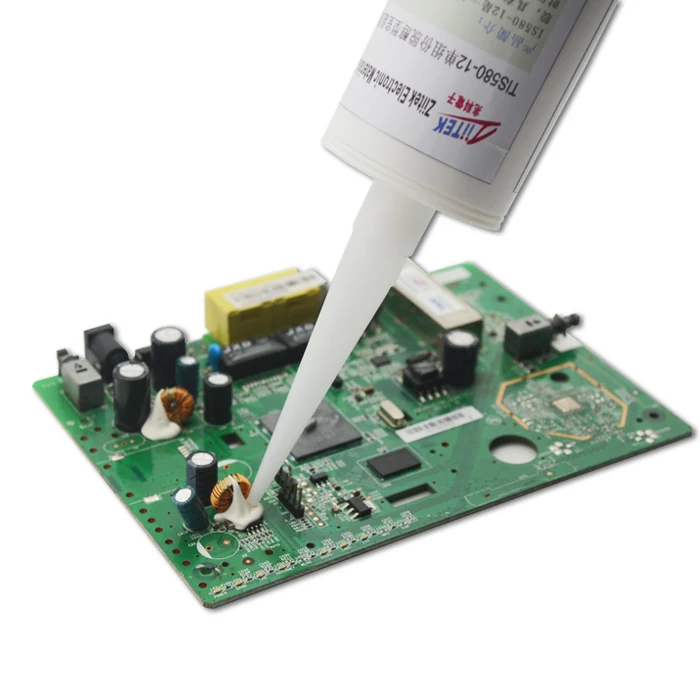
TIS580
RTV silicone adhesive
Wet-dispensable cure-in-place silicone — when geometry isn't flat or the gap varies. Higher service temp.
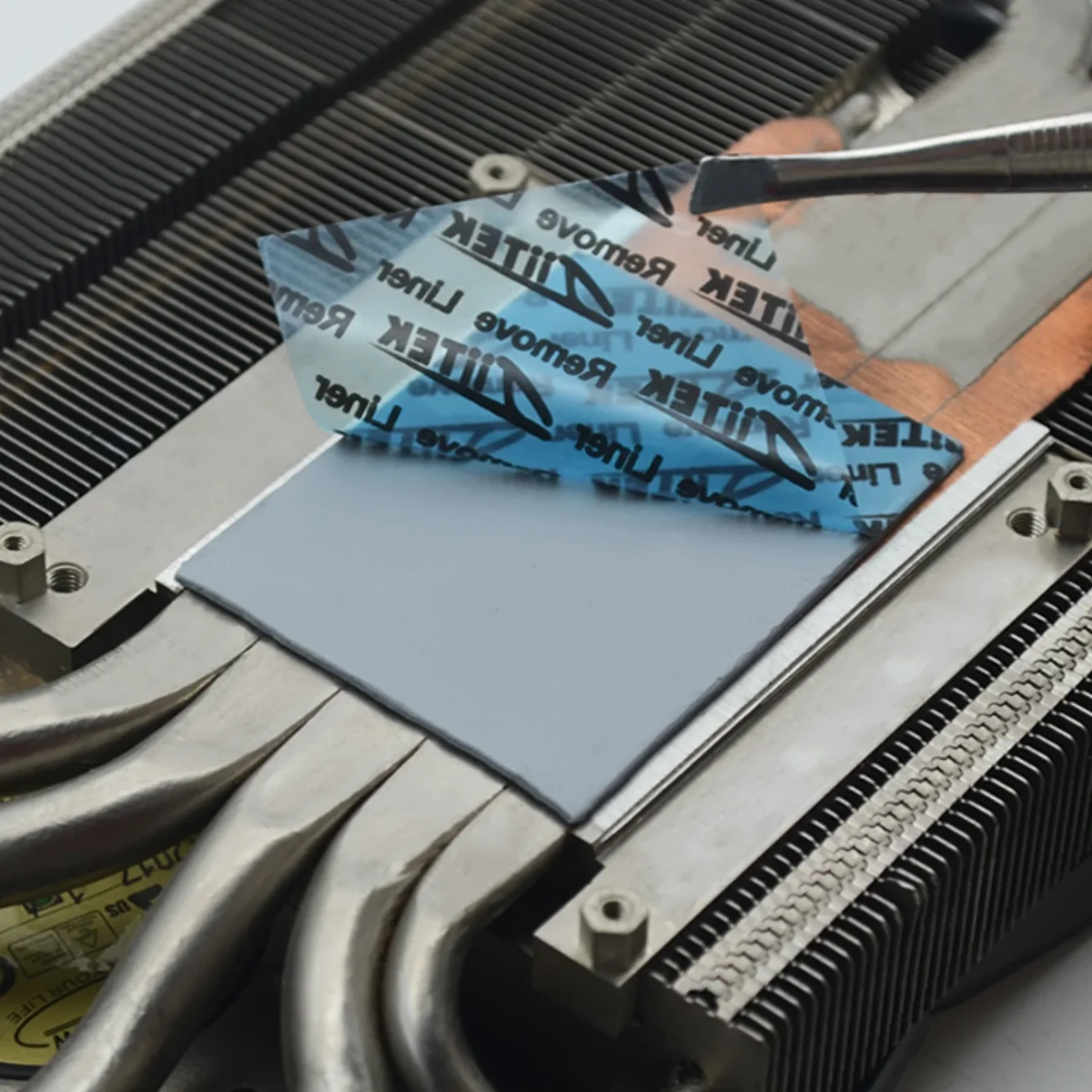
TIF
Silicone thermal pad
Clamped (no adhesive) pad — when bondline is wider than tape can fill or fully reworkable assembly is needed.
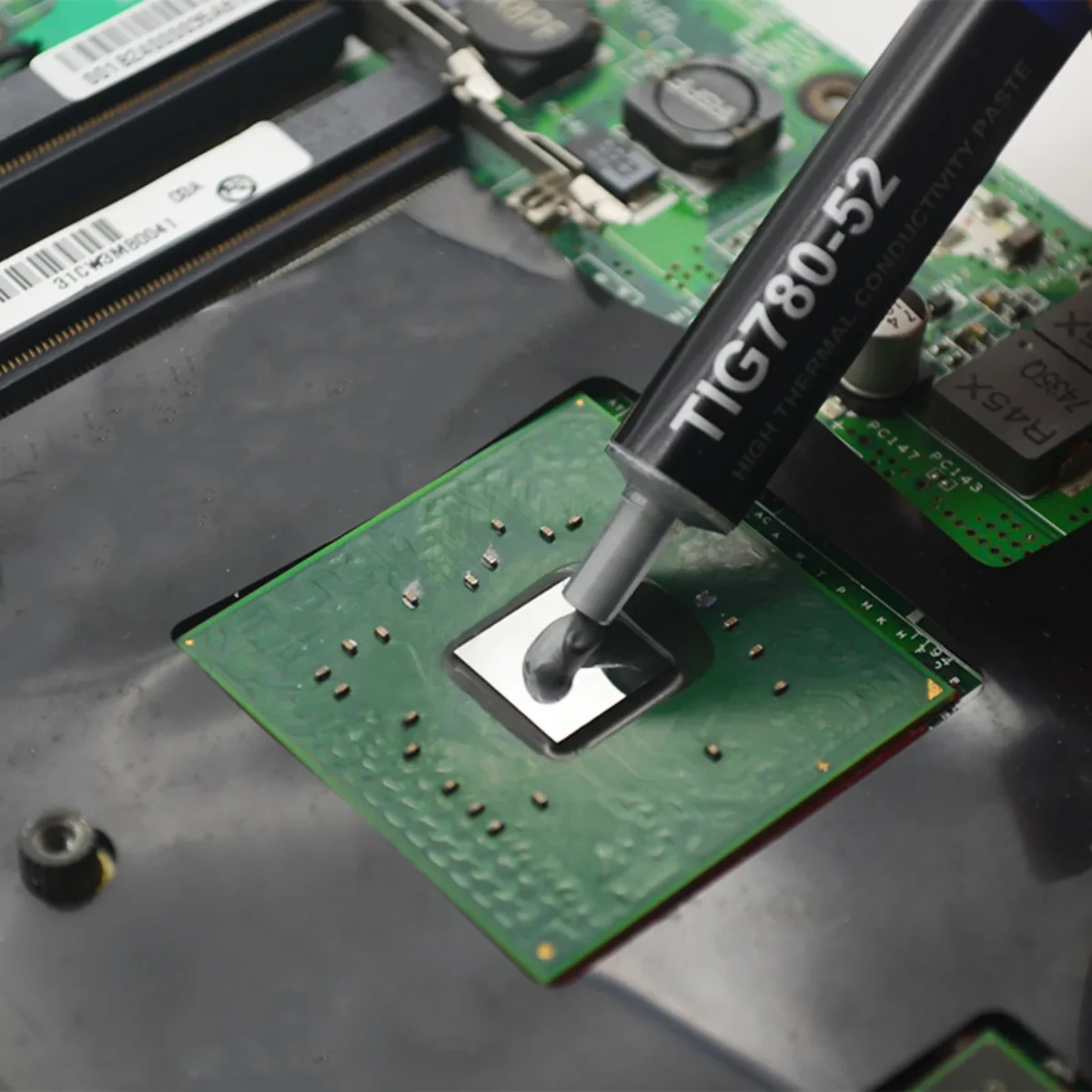
TIG
Thermal grease
Pump-grade compound when the lowest possible thermal resistance is required and clamping is in place.
Sample
Talk to engineering
Carrier choice, die-cut tooling, surface prep, or peel-and-shear test data? 2-hour response.

Your next thermal solution
starts here.
From rapid prototyping to full-scale production — our engineers are ready to design a custom thermal solution for your application. Trusted by 5,000+ clients across EV, 5G, and consumer electronics.