Optical modules and 5G radio hardware require ultra-thin, rework-friendly TIMs that control high-flux lasers and RF chains without swelling the stack. Ziitek supplies PCMs and pads qualified in Tier-1 optical transceiver lines.
From folded-line optical transceivers to outdoor radio units and high-density wireline switching, Ziitek supplies phase change materials, ultra-soft gap-filler pads, thermal greases, and graphite spreaders qualified as second-source replacements for incumbent Tier-1 TIM brands. We hold the customer's existing pad outline, carrier thickness, and rework behaviour while matching K-value and bondline targets — so a material change drops into the active program without triggering a fresh multi-quarter qualification.
Scene challenges
Folded-line optical transceivers leave ~0.2 mm between copper spreader and module shell, where any pad-thickness drift breaks the 60 C heat-spreader guardrail
800G and 1.6T QSFP-DD/OSFP modules exceed 50 W/cm2 with minimal compression headroom, and pad stress can drift laser wavelength or crack SMT capacitors
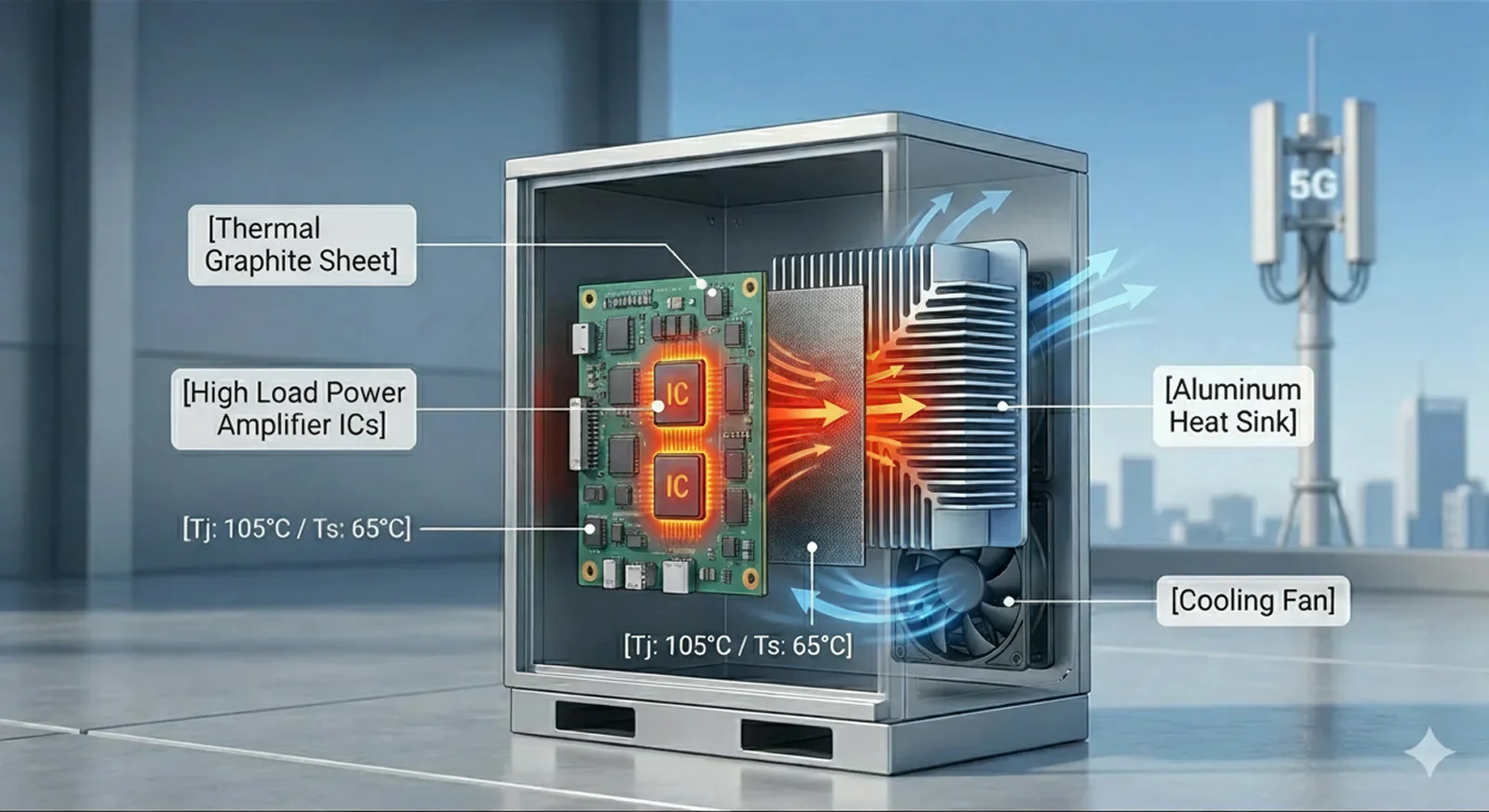
AAU and outdoor radio enclosures bake under solar load for a decade behind die-cast lids where casting flatness is loose and the maintenance window is never
Telecom programs are already running, and operator-audit regimes refuse a fresh multi-quarter qualification cycle for any second-source TIM swap
Solution value
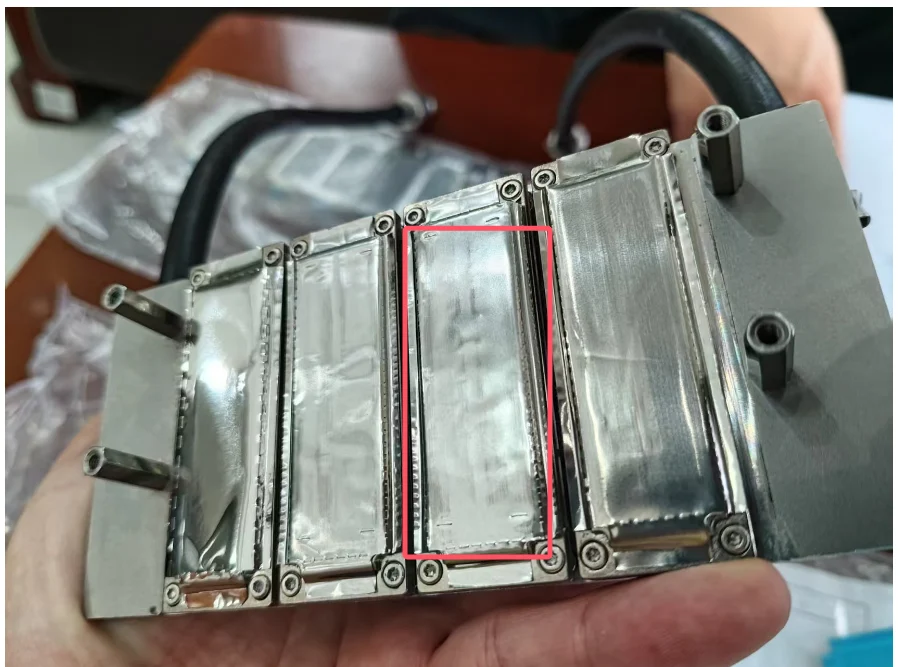
TIC808H on a 0.02 mm stainless carrier at K=7.5 W/m K and 0.2 mm thickness mirrors the incumbent outline, adhesive island, and segmented strip packaging
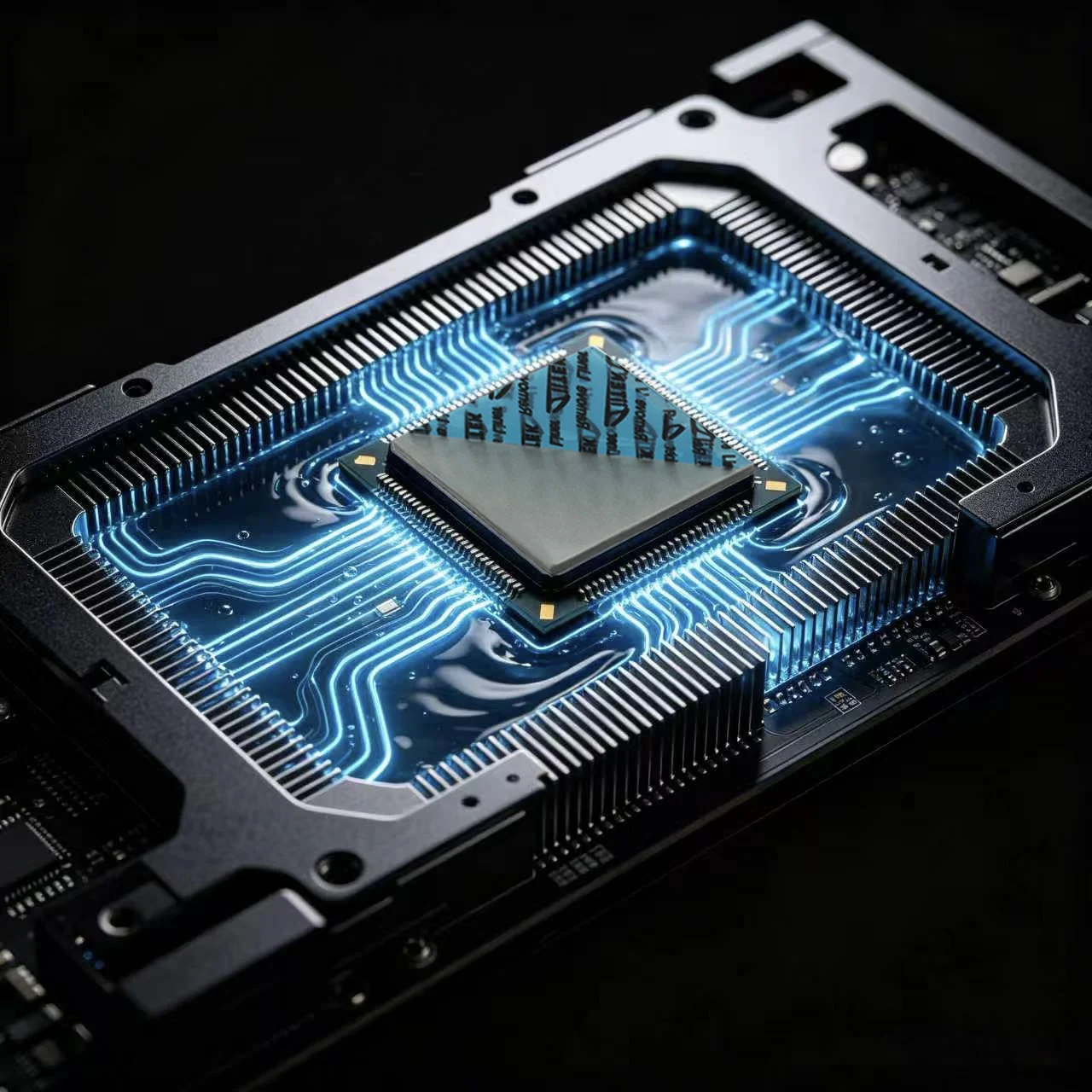
TIF700UU ultra-soft gap-filler at 10 W/m K delivers 11 psi at 70 % compression (10 psi below the competitor flagship), protecting lasers and SMT capacitors
Soft TIF silicone pads absorb die-cast lid mismatch on PA and beamforming surfaces, paired with TIR graphite spreaders for UV-stable directional cooling
Every batch ships with phase-change temperature, compression curve, rework-release, and aging data already aligned to the incumbent baseline for operator audits
Thermal interfaces that move at the speed of a telecom program
Telecom and 5G hardware is unforgiving on thermal interface materials. A folded-line optical transceiver leaves roughly 0.2 mm of stack height between a copper heat spreader and the module shell. An outdoor active antenna unit (AAU) bakes in the sun on a tower for a decade. A 51.2 Tb/s switch line card crowds switch ASICs, PHY devices, and timing clocks under one heatsink at three different gap heights. And every program is already running — engineering owns a working bill of materials and is looking for a second source that drops in without restarting qualification.
Ziitek's telecom and 5G TIM portfolio is built around that constraint. We start by mirroring what the incumbent is doing — pad outline, carrier thickness, adhesive island, packaging format, rework release behaviour — and then bring K-value, compression curve, and aging data that match or beat the baseline on the customer's own fixtures.
5G base stations: AAUs, BBUs, and remote radio heads
5G radio hardware partitions heat across baseband units (BBUs), active antenna units (AAUs), and remote radio heads (RRHs). The AAU is usually the hardest assignment for a TIM. Massive-MIMO arrays drive dozens of power amplifier chains behind a single die-cast aluminum lid. Casting flatness is loose, ambient is whatever the tower provides, and the maintenance window is "never" in practice. We supply soft silicone gap-filler pads — TIF-series — sized to absorb the casting mismatch on power-amp and beamforming surfaces, and graphite spreaders where directional cooling helps move heat toward a cooler edge of the enclosure. For the BBU pool inside a cabinet, mixed-thickness pad kits handle FPGA, DSP, and DC-DC converter surfaces under one cold-plate or finned heatsink.
Optical modules: fronthaul, midhaul, access, and AI interconnect
Optical transceivers are where TIM engineering gets the most surgical. On a folded-line 5G access module rated at 34 W with a ~60 °C heat-spreader guardrail, the incumbent PCM ran K=7.5 W/m·K at 0.2 mm on a 0.02 mm stainless carrier. Thermocouple sweeps landed at 59 / 59 / 61 / 61 °C across four positions — practically no margin for a substitute. Our second-source qualification used TIC808H on the same carrier thickness, held the 1 mm inset cut-line from the copper spreader, preserved the local 0.1 mm PET adhesive island for kiss-cut feeding, and matched the segmented strip packaging with branded liner so production-line operators followed the same SOP.
At the next density tier — 800G and 1.6T AI optical modules — thermal density exceeds 50 W/cm² inside QSFP-DD and OSFP envelopes. There is no room for a stiff pad. TIF700UU at Shore OO 25 / OO 35 delivers gel-like conformity at 10 W/m·K, and at 70% compression of a 2 mm sample it requires only 11 psi — 10 psi lower than the competitor flagship. That delta keeps laser and surface-mount capacitor stress below the crack threshold, protecting wavelength stability and bit error rate over the module's full life. For the external cold-plate interface, TIC800T-ST PCM-metal composite holds up to thousands of insertion / removal cycles in hot-swappable bays without the smearing and migration seen with loose PCM films.
RF power amplifier modules and microwave chains
RF and microwave power amplifier modules — the GaN and LDMOS power stages behind sub-6 GHz cells, mmWave front ends, and microwave point-to-point links — concentrate heat at small die areas behind a flange or directly on a copper coin. Bondline thickness drives junction temperature, and junction temperature drives reliability claims and end-of-life MTBF. We pair TIG thermal grease for thin, repeatable bondlines under bare die or integrated heat spreaders with TIF soft pads for the housing-to-heatsink interface, then characterise the combined stack on the customer's mock-up hardware so the thermal simulation team gets measured curves rather than datasheet numbers.
Routers, switches, and wireline data path
Inside a chassis-class router or top-of-rack switch, a single heatsink footprint commonly covers a switch ASIC, an adjacent PHY, and a timing clock — three surfaces at three different heights. Mixed-thickness silicone pad kits handle the height variance while a thin grease bondline takes the highest-flux die. Kiss-cut pads with tack-coated self-locating backing survive SMT-adjacent build steps, and pick-and-place compatibility removes a manual placement step. For multi-supplier BOMs, we provide pin-in-place substitutions against named global TIM brands with documented comparative testing on the customer's own hardware — not theoretical equivalence.
Why second-sourcing into telecom is different
Telecom customers operate under operator-audit regimes that pay close attention to change notifications, lot traceability, and material declarations. Every Ziitek batch ships with the comparison test data — phase-change temperature, stainless+PCM thermal resistance, compression-deflection curves, rework / clean-release behaviour — already aligned to the incumbent baseline. The qualification artefact pack is built as part of the sample shipment rather than chased after the engineering review. Sample turnaround typically lands at four days from a design-review meeting; sheet, roll, or preform formats are available within days for EVT slots. The result is a second-source path that fits inside an active program window instead of triggering a fresh qualification cycle.
Project results
TIC808H on a 0.02 mm stainless carrier at K=7.5 W/m·K and 0.2 mm pad thickness matched the incumbent's thermal envelope on a folded-line 5G optical transceiver (34 W heat source, ~60 °C heat-spreader guardrail)
Cut-line held 1 mm inside the copper spreader per the customer drawing; PET adhesive island and segmented strip packaging mirrored the incumbent so line operators kept the same SOP
TIF700UU ultra-soft gap-filler at 10 W/m·K delivered 11 psi at 70 % compression — 10 psi below the competitor flagship — protecting lasers and SMT capacitors on 800G / 1.6T QSFP-DD and OSFP modules above 50 W/cm²
TIC800T-ST PCM-metal composite at the external cold-plate interface survived repeated hot-swap insertion cycles without smearing
Thermal resistance held stable after 1,000-hour aging at 85 °C
Sample turnaround typically lands at four days from design-review meeting; preform, sheet, and roll formats available within days for EVT slots
Material compliance & qualification
Ziitek telecom grades ship with RoHS, REACH, and operator-audit material declarations alongside the comparison test data pack — phase-change temperature, stainless+PCM thermal resistance, compression-deflection curves, rework / clean-release behaviour, and 1,000-hour aging at 85 °C — already aligned to the incumbent baseline. Change-notification and lot-traceability records are formatted to telecom customer quality systems and operator audit checklists, so a second-source qualification artefact pack is built as part of the sample shipment rather than chased after the engineering review.
Conclusion
Ziitek's telecom and 5G portfolio is qualified as a drop-in second source against incumbent Tier-1 TIM brands on live optical transceiver, AAU, and switching programs, with carrier thickness, cut-line, adhesive island, and rework behaviour mirrored so the change drops into the active program without restarting qualification. The TIC808H / TIF700UU / TIC800T-ST family is the reference configuration we recommend for new fronthaul, AI-interconnect, and AAU programs.
Recommended products
Application position
Recommended model
Key specification
Folded-line optical transceiver spreader ↔ shell
TIC808H
K=7.5 W/m·K PCM on 0.02 mm stainless carrier, 0.2 mm pad
Mixed-thickness pad kit plus thin grease for bare-die / IHS
RF / microwave PA bare-die or IHS
Thermal Grease (TIG)
Thin, repeatable bondline under flange or copper coin
Folded-line optical transceiver — the highlighted slot houses the TIC808H PCM-stainless carrier replacing the incumbent global pad (from the optical-module case program).
Next-gen 800G / 1.6T AI optical transceiver — TIF700UU ultra-soft pad and TIC800T-ST PCM-metal composite (from the AI optical-module case program).
Your next thermal solution starts here.
From rapid prototyping to full-scale production — our engineers are ready to design a custom thermal solution for your application. Trusted by 7,000+ clients across EV, 5G, and consumer electronics.