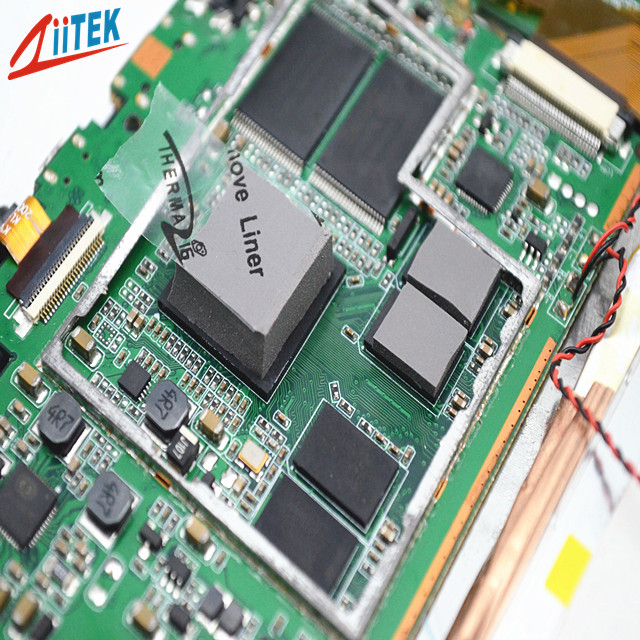
Z-PASTER 100-6060-11 非シリコーンサーマルパッド
- Thermal Conductivity (W/mK)
- 6.0
- Hardness (Shore oo)
- 60
- Density (g/cm³)
- 3.3
- 絶縁破壊強度 (V/mm)
- ≥5500
- Thickness range (inch/mm)
- 0.040~0.200/1.00~5.00
- Recommended Operating Temperature (℃)
- -45~125
Z-PASTER 100-6060-11 6.0W/m·K Non-Silicone Thermal Pad
Z-PASTER 100 6060-11 series is a siloxane-free thermally conductive interface material applied to fill the air gaps between the heating elements and the heat dissipation fins or the metal base. Their flexibility and elasticity make them suited to coat very uneven surfaces. Heat can transmit to the metal housing or dissipation plate from the heating elements or even the entire PCB,which effectively enhances the efficiency and life-time of the heat-generating electronic components.
Z-PASTER 100-6060-11 — what to validate in production
Great thermal conductivity
Non-Silicone and oil-bleed
Available in different thickness options
High compliance adapts to various pressure application environments
このグレードが使用される用途
Typical uses for this non-silicone thermal pad line include the following industries and applications.


Z-PASTER 100-6060-11 — データシート仕様
以下の値は公式データシートから転記したものです。承認およびロット別のCoAには、リンク先のPDFをご利用ください。
アプリケーションエンジニアリングサポートを依頼する| 項目 | 値(代表値/記載値) | 測定法/備考 |
|---|---|---|
| 色 | ダークグレー | 外観 |
| 構成 | Non-silicone resin | — |
| Thickness range (inch/mm) | 0.040~0.200/1.00~5.00 | ASTM D374 |
| Hardness(Shore oo) | 60 | ASTM 2240 |
| Density(g/cm³) | 3.3 | ASTM D792 |
| Recommended Operating Temperature(℃) | -45~125 | — |
| Breakdown Strength(V/mm) | ≥5500 | ASTM D149 |
| 誘電率 @1MHz | 9.0 | ASTM D150 |
| Volume Resistivity(Ohm·meter) | >1.0x10¹² | ASTM D257 |
| Thermal Conductivity(W/m·K) | 6.0 | ASTM D5470 /ISO22007 |
| 難燃性等級 | V-0 | UL94 (E331100) |
* ご注文書に記載されているPDF改訂版の値と照合してください。
Z-PASTER 100-6060-11 — よくあるご質問
他社製TIMからの置き換えやスタック構成の見直しが必要ですか?図面をお送りください。アプリケーション担当が迅速に対応します。
エンジニアに相談するWhat is Thermal Conductivity?
Thermal conductivity indicates a material's ability to conduct heat and is typically measured in W/m·K. Under the same testing conditions, a higher thermal conductivity generally indicates better heat-conduction capability.
What is Thermal Resistance?
Thermal resistance indicates the resistance to heat flow through a material or interface and is typically expressed in K/W or °C/W. Lower thermal resistance generally means that heat can pass through the material more efficiently.
How do I choose the right thermal interface material?
The selection of a suitable TIM typically requires consideration of heat source power, gap thickness, target thermal resistance, operating temperature, assembly pressure, electrical insulation requirements, flame-retardant requirements, reliability, and cost.

次世代の熱対策ソリューションを ここから。
ラピッドプロトタイピングから量産まで、当社のエンジニアがお客様の用途に合わせたカスタム熱対策ソリューションを設計します。EV、5G、コンシューマーエレクトロニクス分野で7,000社以上のお客様から信頼されています。