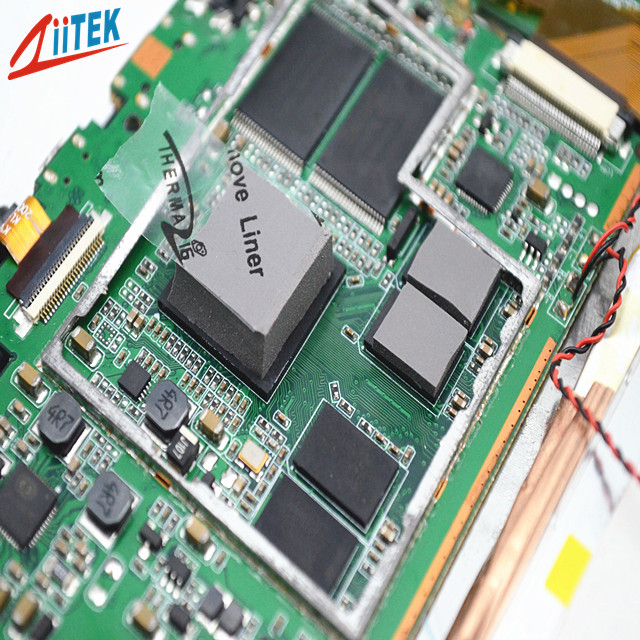
Z-PASTER 100-6060-11 Non-Silicone Thermal Pad
- Thermal Conductivity (W/mK)
- 6.0
- Hardness (Shore oo)
- 60
- Density (g/cm³)
- 3.3
- Breakdown Strength (V/mm)
- ≥5500
- Thickness range (inch/mm)
- 0.040~0.200/1.00~5.00
- Recommended Operating Temperature (℃)
- -45~125
Z-PASTER 100-6060-11 6.0W/m·K Non-Silicone Thermal Pad
Z-PASTER 100 6060-11 series is a siloxane-free thermally conductive interface material applied to fill the air gaps between the heating elements and the heat dissipation fins or the metal base. Their flexibility and elasticity make them suited to coat very uneven surfaces. Heat can transmit to the metal housing or dissipation plate from the heating elements or even the entire PCB,which effectively enhances the efficiency and life-time of the heat-generating electronic components.
Z-PASTER 100-6060-11 — what to validate in production
Great thermal conductivity
Non-Silicone and oil-bleed
Available in different thickness options
High compliance adapts to various pressure application environments
Where this grade is used
Typical uses for this non-silicone thermal pad line include the following industries and applications.


Z-PASTER 100-6060-11 — datasheet specifications
Values below are transcribed from the official datasheet. Use the linked PDF for sign-off and lot-specific CoA.
Request application engineering support| Parameter | Value (typical / as stated) | Method / note |
|---|---|---|
| Color | Dark Gray | Visual |
| Construction | Non-silicone resin | — |
| Thickness range (inch/mm) | 0.040~0.200/1.00~5.00 | ASTM D374 |
| Hardness(Shore oo) | 60 | ASTM 2240 |
| Density(g/cm³) | 3.3 | ASTM D792 |
| Recommended Operating Temperature(℃) | -45~125 | — |
| Breakdown Strength(V/mm) | ≥5500 | ASTM D149 |
| Dielectric Constant @1MHz | 9.0 | ASTM D150 |
| Volume Resistivity(Ohm·meter) | >1.0x10¹² | ASTM D257 |
| Thermal Conductivity(W/m·K) | 6.0 | ASTM D5470 /ISO22007 |
| Flame Rating | V-0 | UL94 (E331100) |
* Match values to the PDF revision cited on your purchase order.
Related non-silicone thermal pads models
Z-PASTER 100-6060-11 — common questions
Replacing another vendor's TIM or need a stack review? Send drawings — applications responds quickly.
Talk to an engineerWhat is Thermal Conductivity?
Thermal conductivity indicates a material's ability to conduct heat and is typically measured in W/m·K. Under the same testing conditions, a higher thermal conductivity generally indicates better heat-conduction capability.
What is Thermal Resistance?
Thermal resistance indicates the resistance to heat flow through a material or interface and is typically expressed in K/W or °C/W. Lower thermal resistance generally means that heat can pass through the material more efficiently.
How do I choose the right thermal interface material?
The selection of a suitable TIM typically requires consideration of heat source power, gap thickness, target thermal resistance, operating temperature, assembly pressure, electrical insulation requirements, flame-retardant requirements, reliability, and cost.

Your next thermal solution starts here.
From rapid prototyping to full-scale production — our engineers are ready to design a custom thermal solution for your application. Trusted by 7,000+ clients across EV, 5G, and consumer electronics.