Silicone potting compound
Two-component room-temperature-cure silicone for soft-pour encapsulation that survives thermal cycling, vibration, and decade-long outdoor service. Through-plane conductivity 1.0–4.0 W/m·K across 10 grades — TIG680 lightly-filled silicone for mid-λ general potting and TIS680 heavily-filled for high-λ EV battery and traction-inverter encapsulation.
10
Catalogued grades
1.0–4.0 W/m·K
Thermal conductivity (λ)
1 : 1
Mix ratio (typical)
RT 24 h
Cure schedule
−50 – 200 °C
Operating range
Two families: lightly-filled TIG680 and heavily-filled TIS680
Every Silicone potting compounds grade, one table
All 10 silicone potting compounds part numbers with thermal conductivity (W/m·K), colour notes, and PDF datasheets. Click a model name with a link for full specs, photos, and application guidance.
| Photo | Model | λ (W/m·K) | Hardness | PDF & next step |
|---|---|---|---|---|
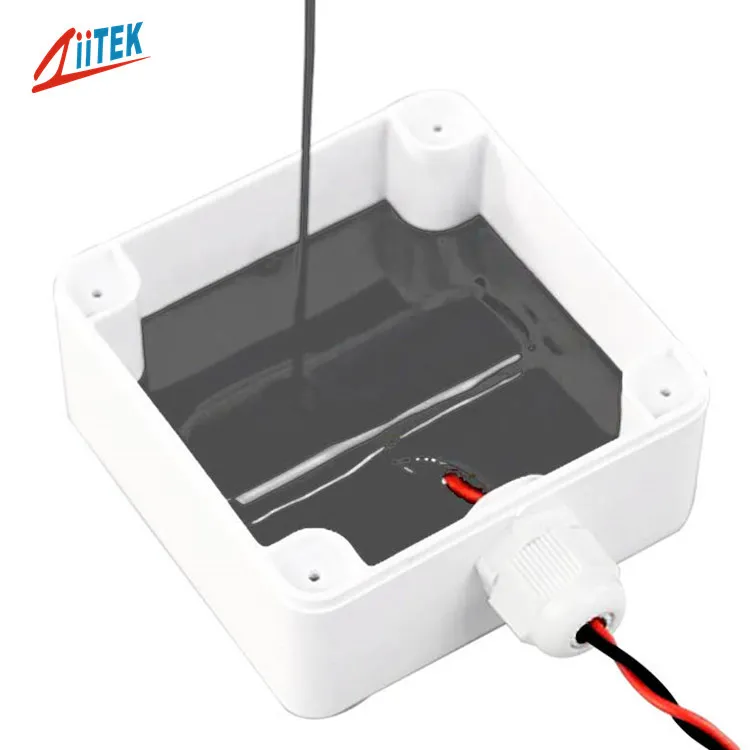 | TIG680-28AB | 2.8 W/m·K | 25 | |
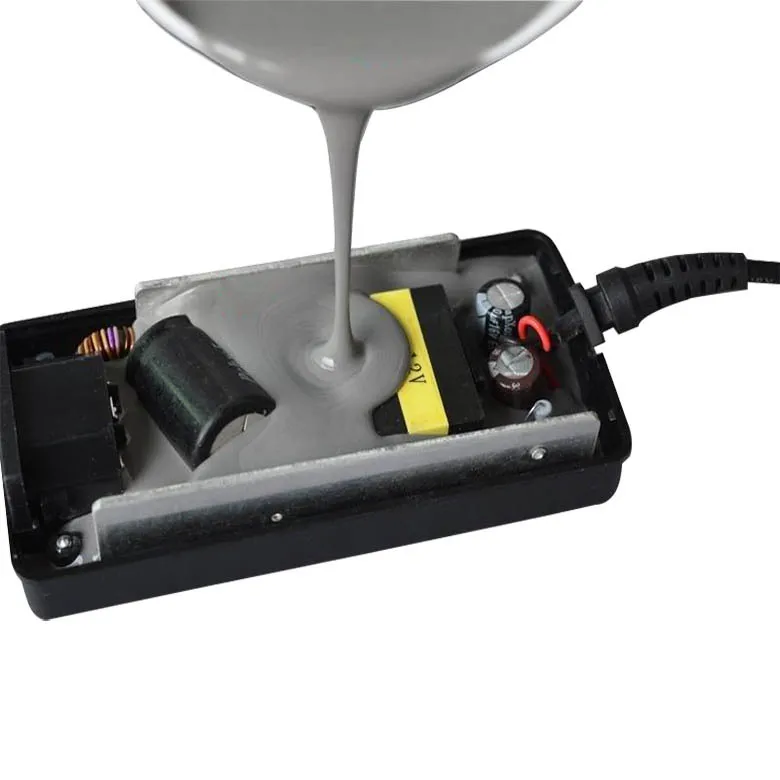 | TIG680-40AB | 4 W/m·K | 25 | |
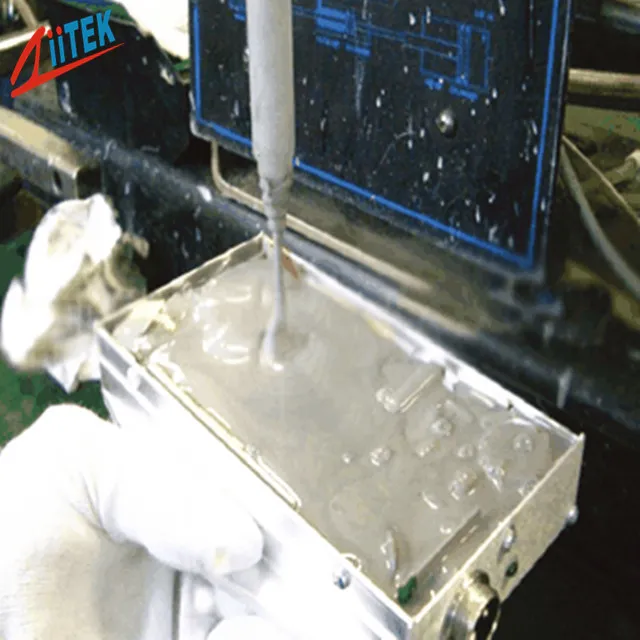 | TIG680-15AB | 1.5 W/m·K | 45±5 | |
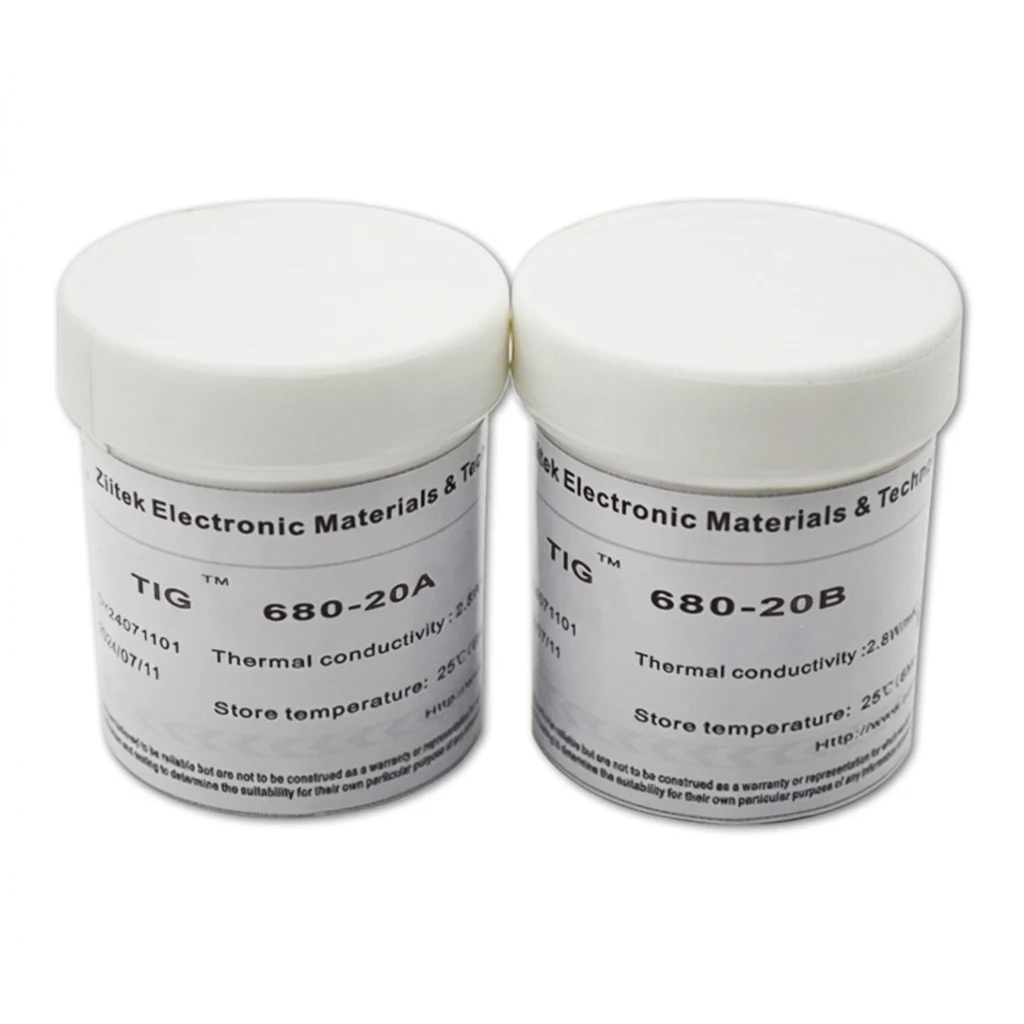 | TIG680-20AB | 2 W/m·K | 35±5 | |
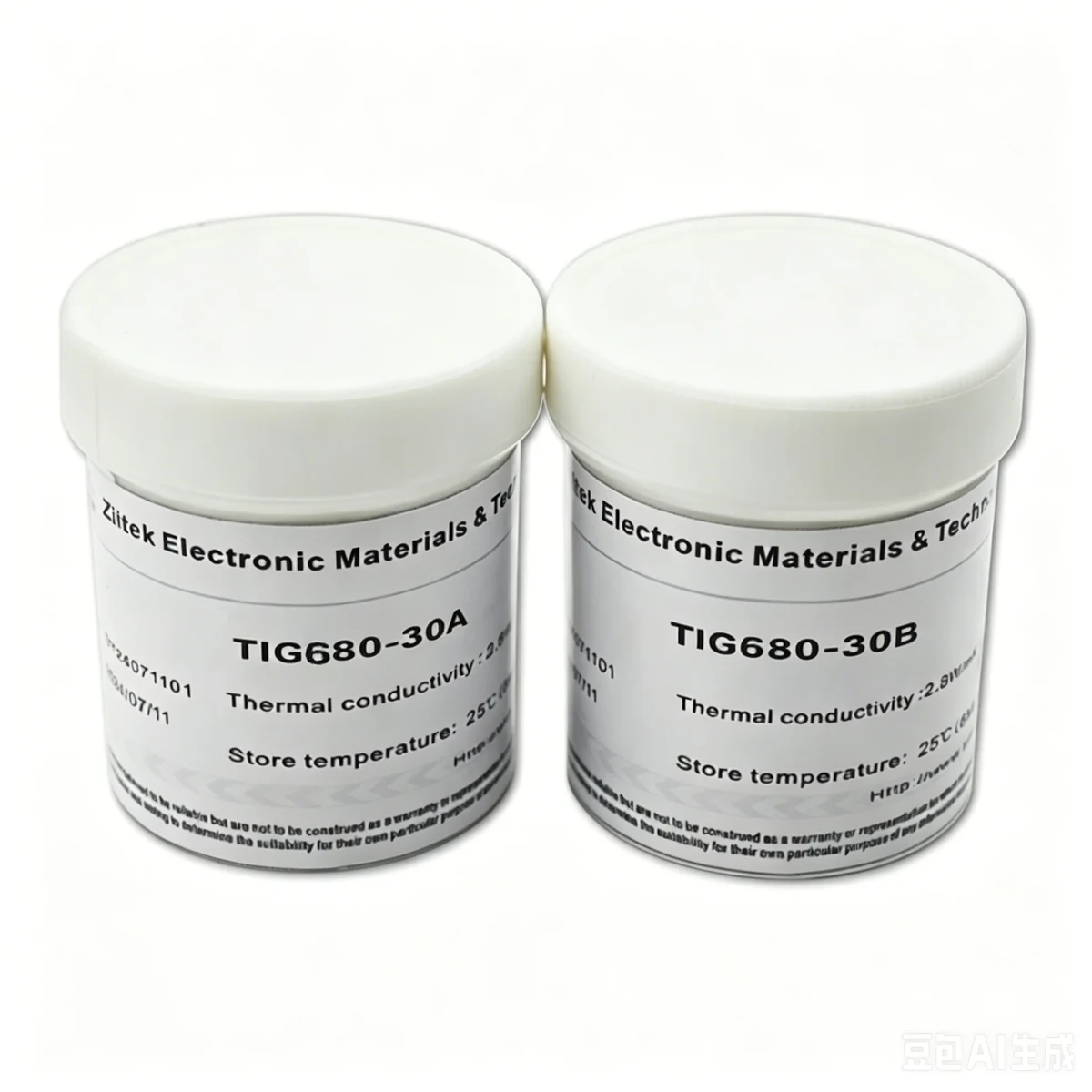 | TIG680-30AB | 3 W/m·K | 25±5 | |
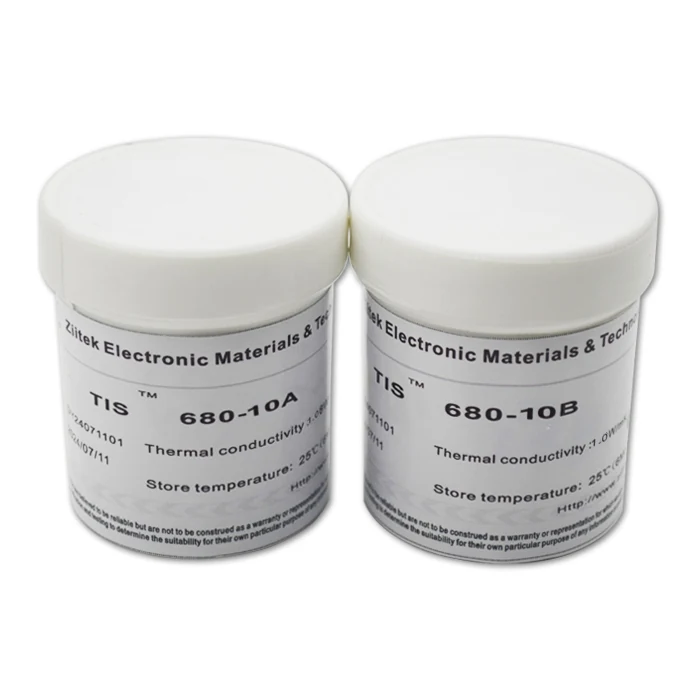 | TIS680-10AB | 1 W/m·K | 65 | |
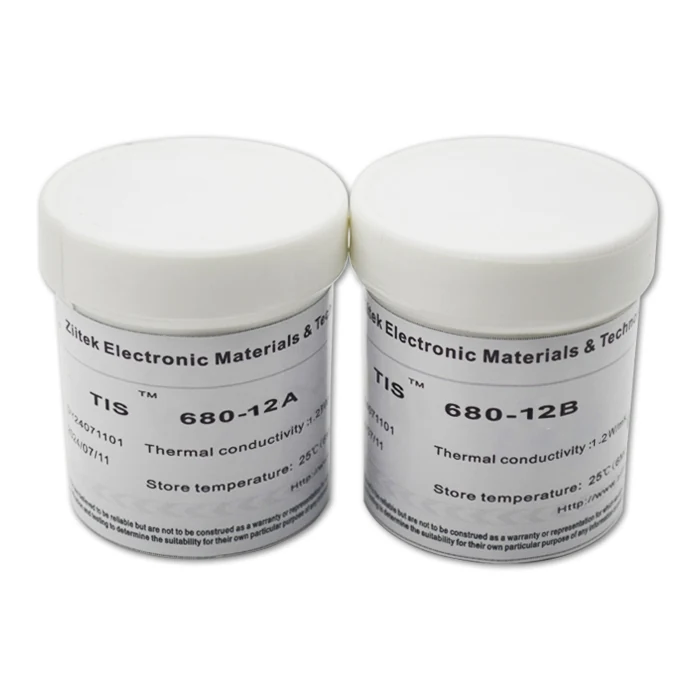 | TIS680-12AB | 1.2 W/m·K | 65 | |
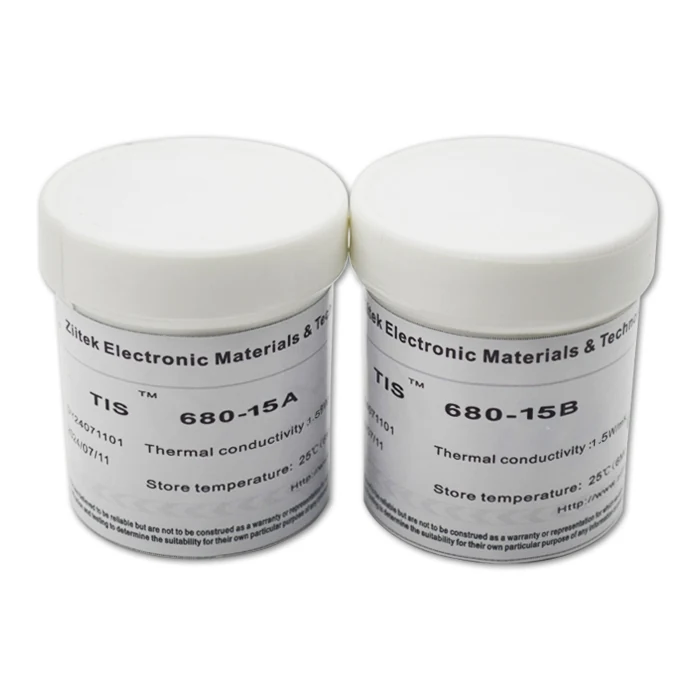 | TIS680-15AB | 1.5 W/m·K | 85 Shore D | |
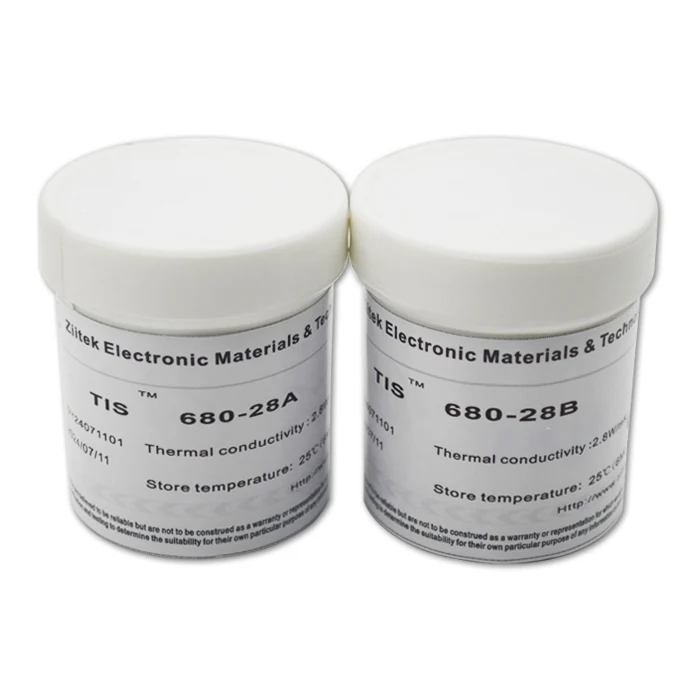 | TIS680-28AB | 2.8 W/m·K | 65 | |
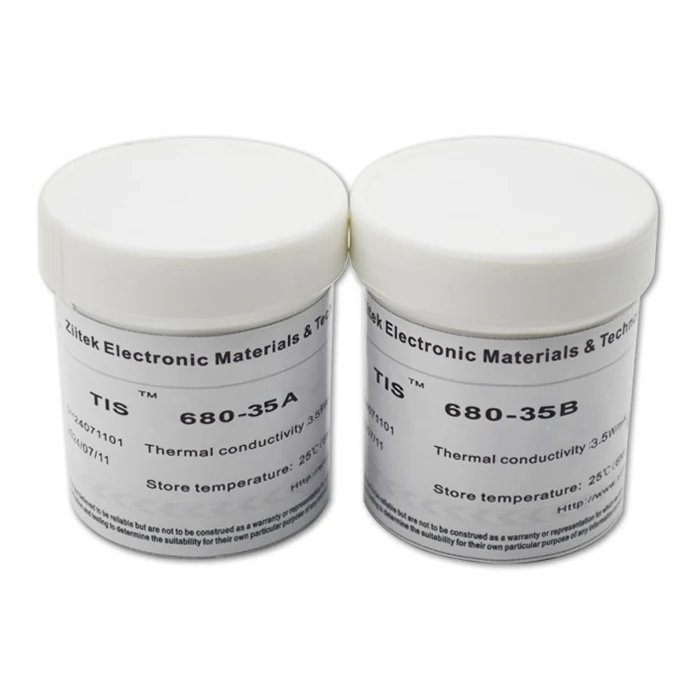 | TIS680-35AB | 3.5 W/m·K | 55 Shore 00 |
Where silicone potting fits
Soft, reworkable silicone encapsulation for modules that need vibration damping, thermal paths, and dielectric isolation in the same pour.
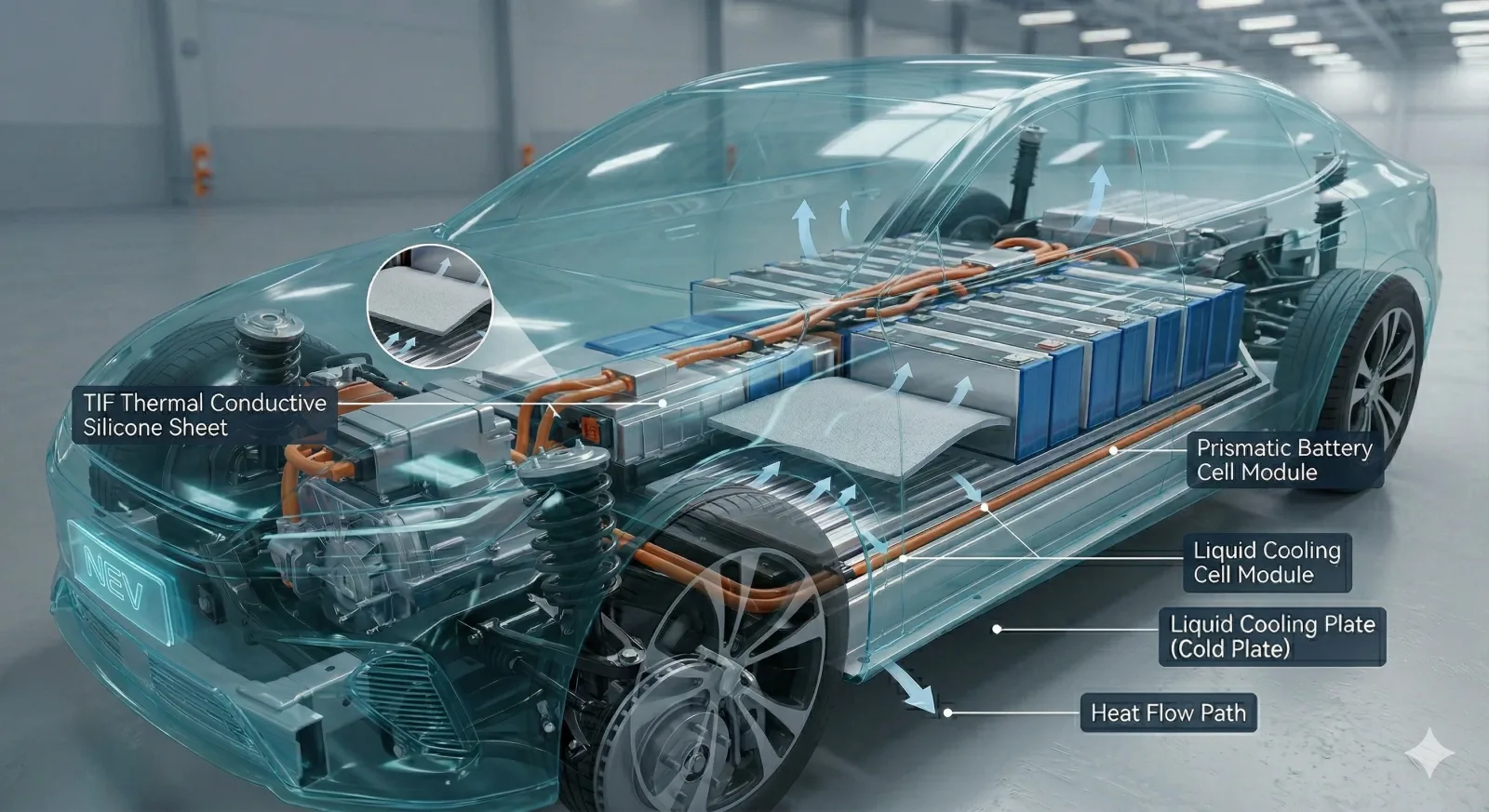
EV packs · OBC · inverters · BMS
New energy
EV battery modules, traction inverters, on-board chargers, and renewable power conversion — thermal management for high-current cycling loads with HV isolation requirements.
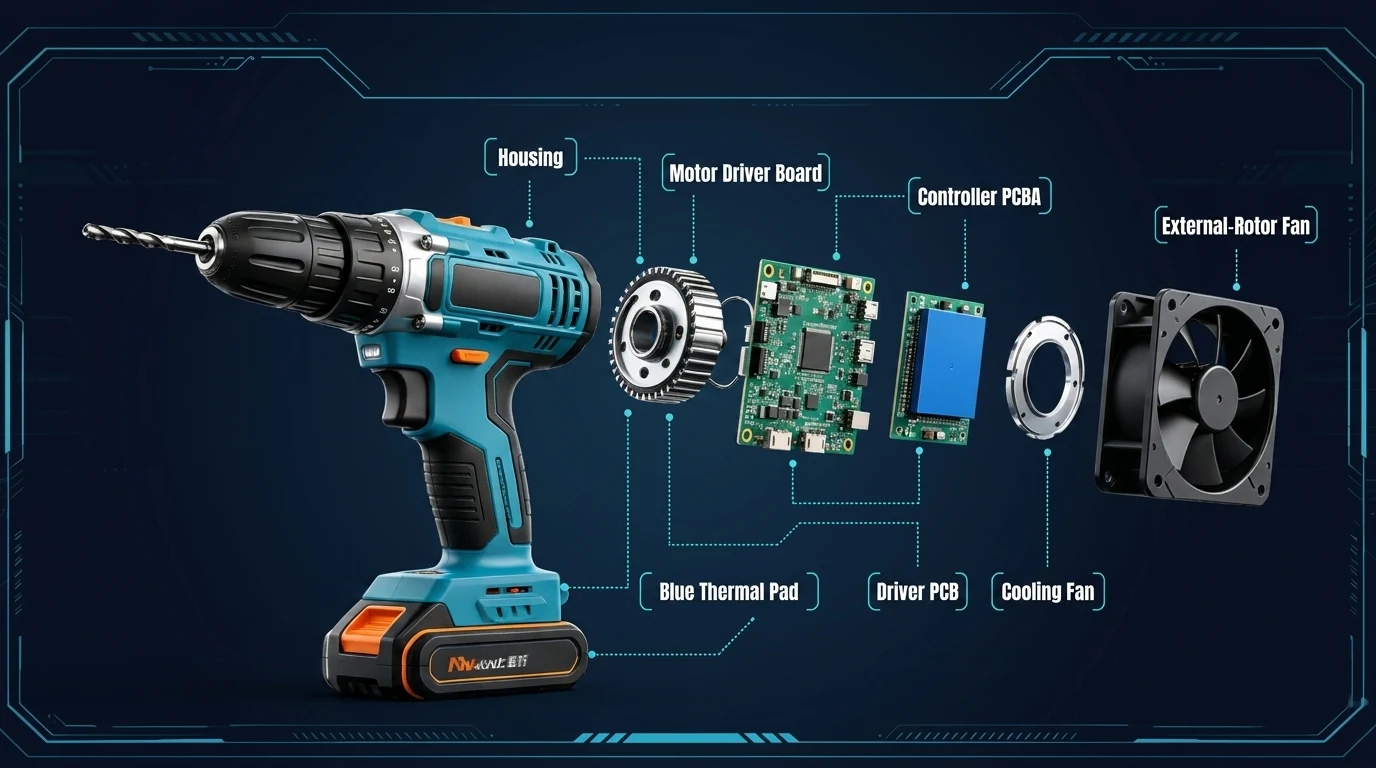
Drives · IGBT · controllers · sensors
Power Tools & Control Systems
Industrial controls, motor drives, power-stage IGBTs, and rugged modules — thermal interfaces, sealing, and encapsulation built for serviceable assemblies and harsh environments.
Typical specification window (silicone potting)
| Parameter | Typical range / note | Method |
|---|---|---|
| Thermal conductivity | Filled systems — grade band | ASTM D5470 |
| Mix ratio (2K) | A:B per series | TDS |
| Viscosity & pot life | Process window for your void budget | — |
| Hardness / modulus | Elastomeric after cure | Shore A / D |
| Dielectric strength | kV/mm — sample thickness | ASTM D149 |
| Volume resistivity | High-Ω formulations | ASTM D257 |
| Operating temperature | −50 °C to 200 °C class typical | UL746B |
| UL flammability | V-0 achievable — verify lot | UL94 |
| Repair / rework | Easier cut-out than epoxy | — |
* Representative grades. Request a lot-specific datasheet or CoA for your exact part number.
Silicone potting compounds — common questions
Need help shortlisting or cross-referencing? Talk to a Ziitek thermal engineer — 2-hour response SLA.
Talk to an engineerSilicone potting vs epoxy potting — which fits my application?
Pick silicone potting (TIG680 / TIS680) when the pour must survive thermal cycling, vibration, or wide-temperature service (−50 to +200 °C). Cured silicone is soft and elastic, so CTE mismatch with copper or aluminum doesn't crack the pour. Pick epoxy potting (TIE280-AB) when you need rigid mechanical reinforcement, top-class moisture barrier, or chemical resistance to fuels and solvents. Silicone is also reworkable — cured silicone can be cut and re-poured; cured epoxy cannot.
TIG680 vs TIS680 — what differentiates the two families?
TIG680 is a lightly-filled silicone with simpler mix and slightly lower density; the family ladder is 15/20/28/30/40 corresponding to 1.5 / 2.0 / 2.8 / 3.0 / 4.0 W/m·K and a soft Shore A 25 – 45 post-cure. TIS680 is heavily-filled with higher ceramic loading; it covers 1.0 – 3.5 W/m·K with varied hardness (Shore A 65 / Shore D 85 / Shore 00 soft-gel options) tuned to whether the pour is acting as structural reinforcement or stress-relief gel.
How is two-component silicone potting applied?
Open Part A and Part B, weigh out 1:1 (1:1 by volume in most TIG680 grades, 1:1 by weight in TIS680 grades — confirm per datasheet), mix under low shear for 3 – 5 minutes, degas under vacuum if the application is dielectric-critical or high-voltage, and pour into the cavity. Pot life is typically 30 – 60 minutes at 25 °C; full cure 24 hours at room temp or accelerated 80 °C / 30 min. For high-volume production, a meter-mix-dispense (MMD) machine with static mixing tip handles A/B ratio control automatically.
Why is silicone better for thermal cycling than epoxy?
Cured silicone has a low Young's modulus (typical 1 – 10 MPa) compared to cured epoxy (1 – 5 GPa — three orders of magnitude stiffer). When the encapsulated assembly cycles between −40 and +130 °C, copper expands more than the silicone — the soft silicone simply stretches around the components without cracking. A rigid epoxy will eventually fatigue-crack at the silicone-copper interface or fracture deep pours over large copper planes. For applications with > 50 K thermal swing or high cycle count, silicone is almost always the right call.
Can I rework or repair a silicone-potted assembly?
Yes — cured silicone can be cut with a sharp blade, the failed component replaced, and a fresh pour poured into the void to re-encapsulate. The new silicone bonds to the cured layer if the surface is clean. This is a unique advantage over epoxy potting, where rework usually means scrapping the assembly. Mark the access location at design time so the technician knows where to cut.
Will the silicone outgas onto an optical sensor or relay contact?
Two-component addition-cure silicones (most TIG680 and TIS680 grades) outgas significantly less than one-part RTV silicones — there's no acetic acid release because the cure is by platinum-catalysed hydrosilylation. For ultra-clean applications (CCD packaging, hermetic relays, MEMS) confirm the per-grade outgassing data sheet (TML / CVCM values per ASTM E595). Heat-cured grades typically out-perform RT-cured grades on outgassing because residual volatiles are driven off during the bake.
Adjacent thermal management lines
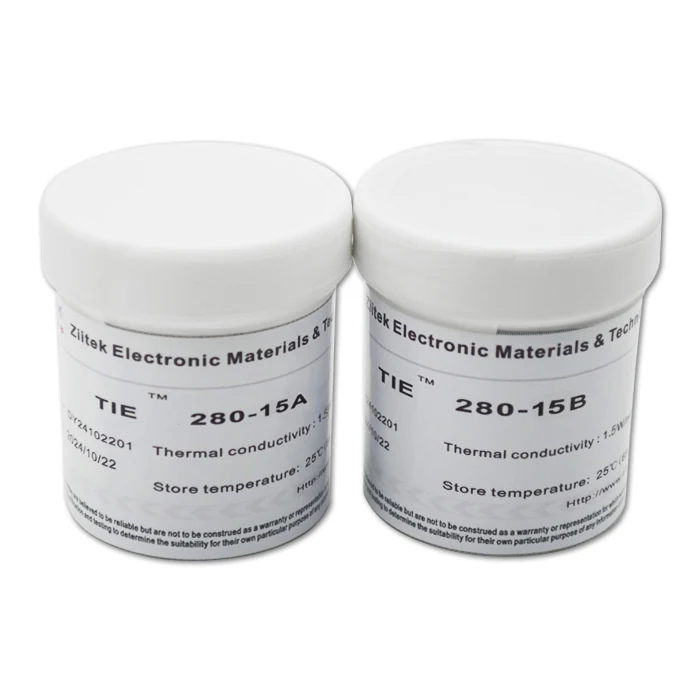
TIE280-AB
Epoxy potting compound
Rigid alternative — better moisture barrier, higher modulus, no thermal-cycle softness. Pick for steady-temperature service.
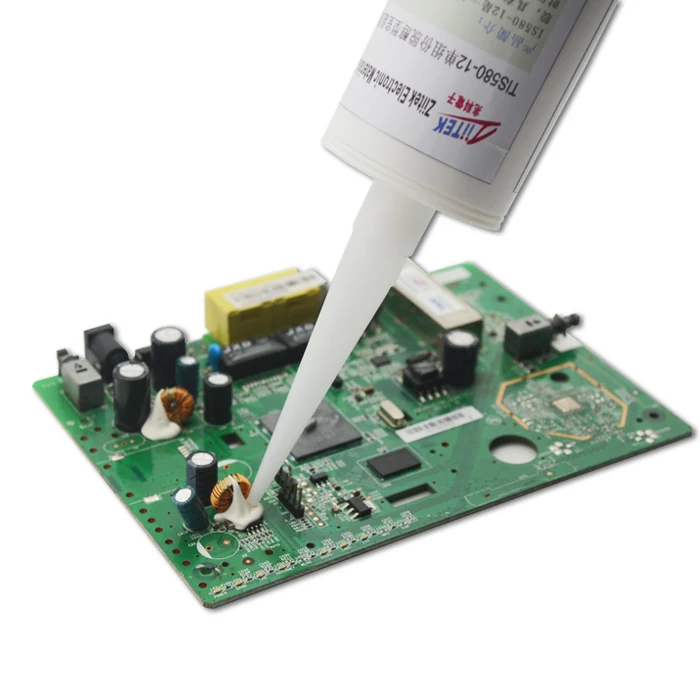
TIS580
RTV silicone adhesive
Single-part wet adhesive for bonding parts together — when the geometry needs joining, not bulk filling.
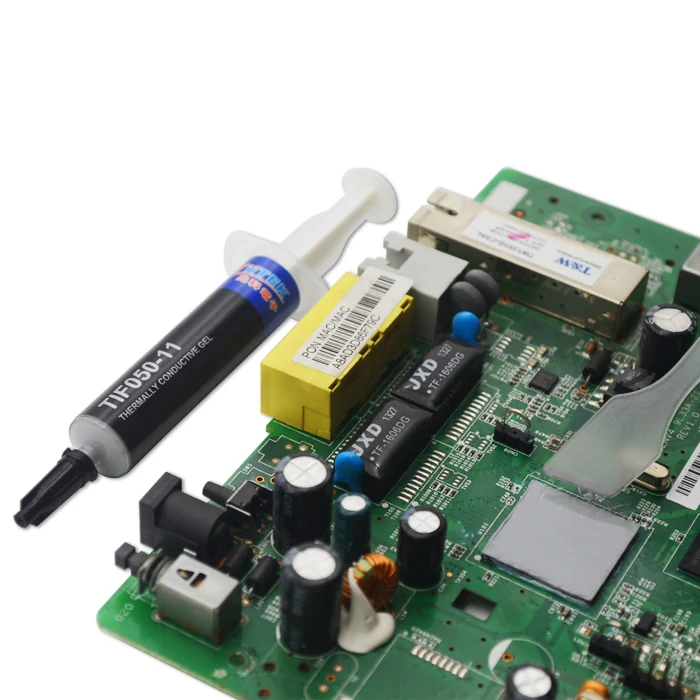
TIF Gel
Thermal gel & putty
Dispensable single-part gel for thin-bondline TIM applications — when you don't need the structural pour.
Sample
Talk to engineering
Pour-depth limits, mix-ratio tolerances, vacuum-degas process, MMD tooling? 2-hour response.

Your next thermal solution
starts here.
From rapid prototyping to full-scale production — our engineers are ready to design a custom thermal solution for your application. Trusted by 5,000+ clients across EV, 5G, and consumer electronics.