Thermal graphite sheets
In-plane heat-spreading films and z-axis carbon-fiber TIM. 9 TIR grades — natural graphite, carbon-nano-coated copper / aluminum foils, and vertically aligned carbon fiber composites — for smartphones, AI accelerators, server VRMs, and EV battery packs.
9
TIR grades
Up to 1500 W/m·K
In-plane λ (heat spreader)
Up to 25 W/m·K
Through-plane λ (z-axis)
0.025 – 0.5 mm
Thickness (typical)
−40 – 400 °C
Operating range (graphite)
Three families: heat spreaders, natural graphite, and z-axis composites
Every Graphite sheets for thermal management grade, one table
All 9 graphite sheets for thermal management part numbers with thermal conductivity (W/m·K), colour notes, and PDF datasheets. Click a model name with a link for full specs, photos, and application guidance.
| Photo | Model | Thickness | X-Y Conductivity | PDF & next step |
|---|---|---|---|---|
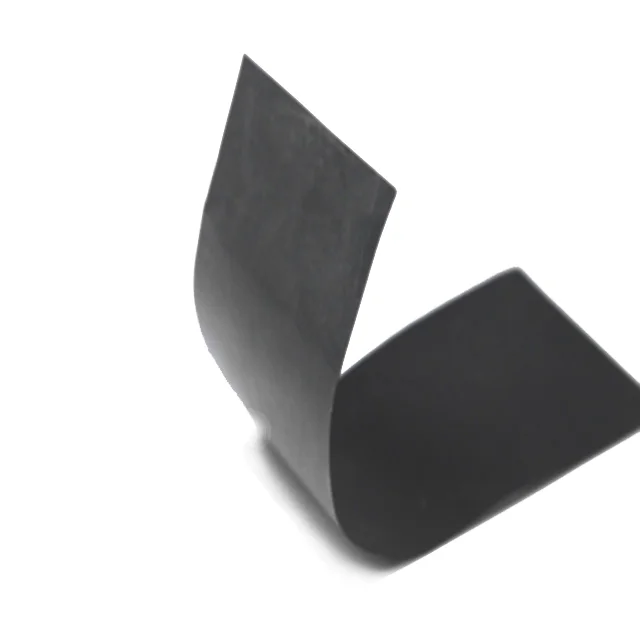 | TIR300C | 0.040~0.080 mm | 700 W/m·K | |
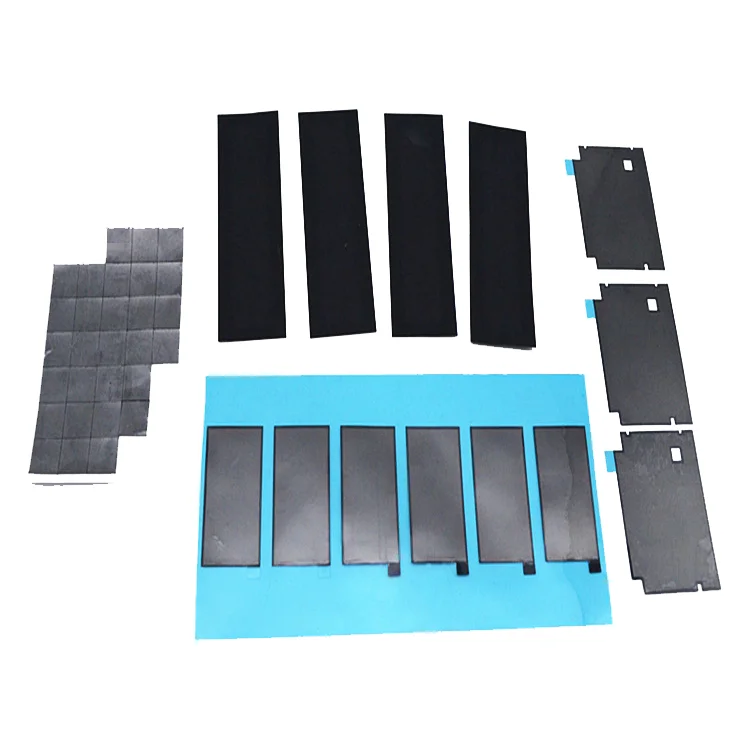 | TIR300 | 0.012~0.040 mm | 1200~1700 W/m·K | |
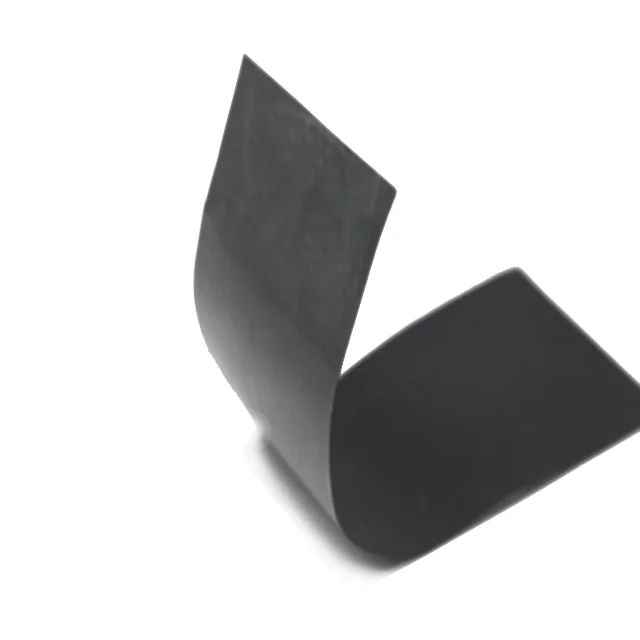 | TIR300CU | 0.060~0.080 mm | 320 W/m·K | |
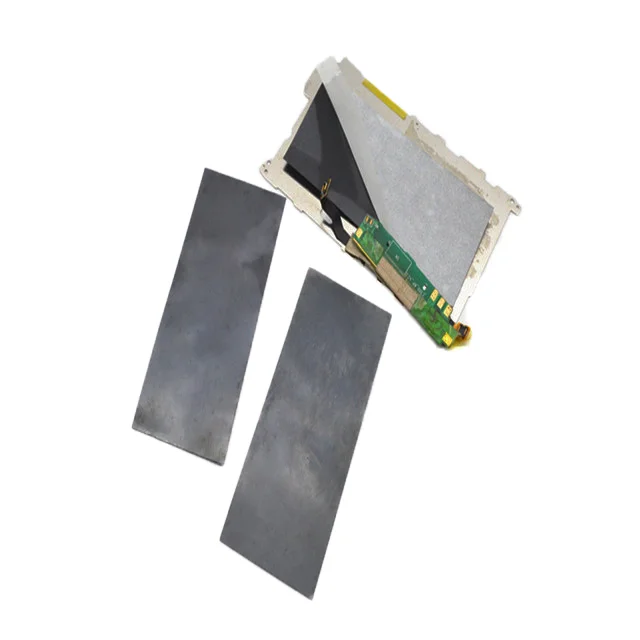 | TIR300AL | 0.050~0.080 mm | 450 W/m·K | |
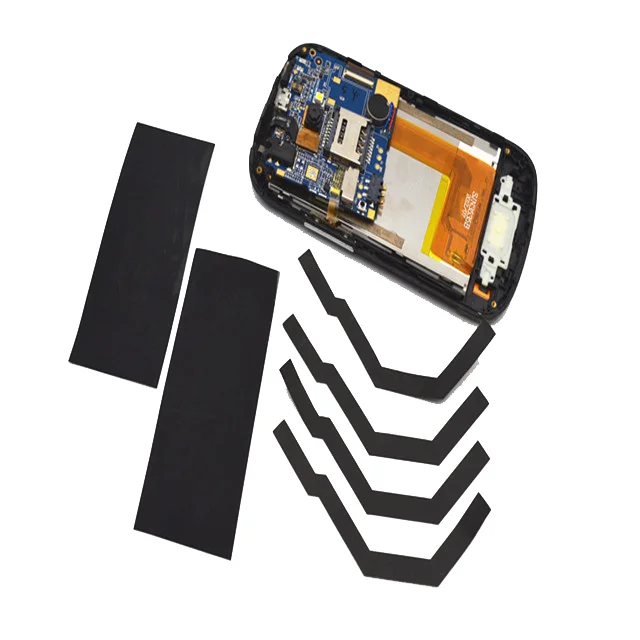 | TIR300G | 0.005~0.15 mm | 2.0 | |
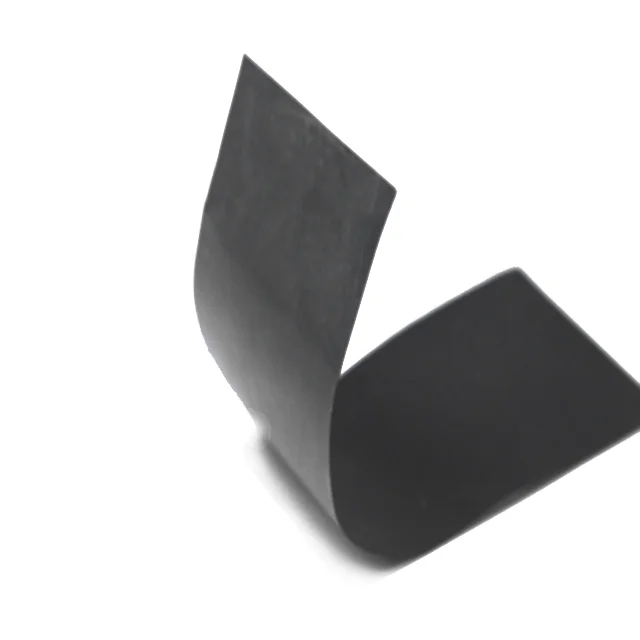 | TIR300L-A1 | 0.15 mm | 2.5 | |
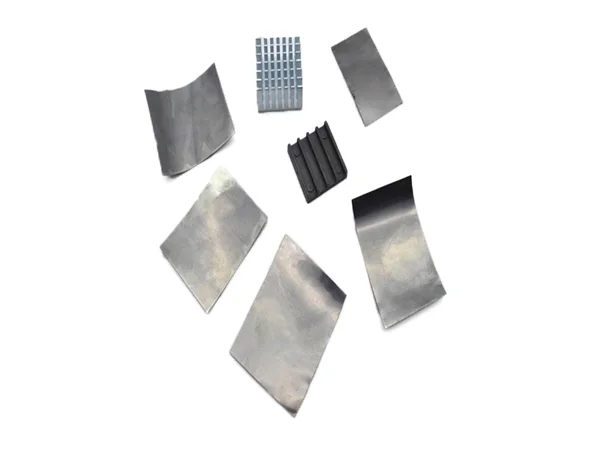 | TIR600 | 0.127~0.508 mm | 240 W/m·K | |
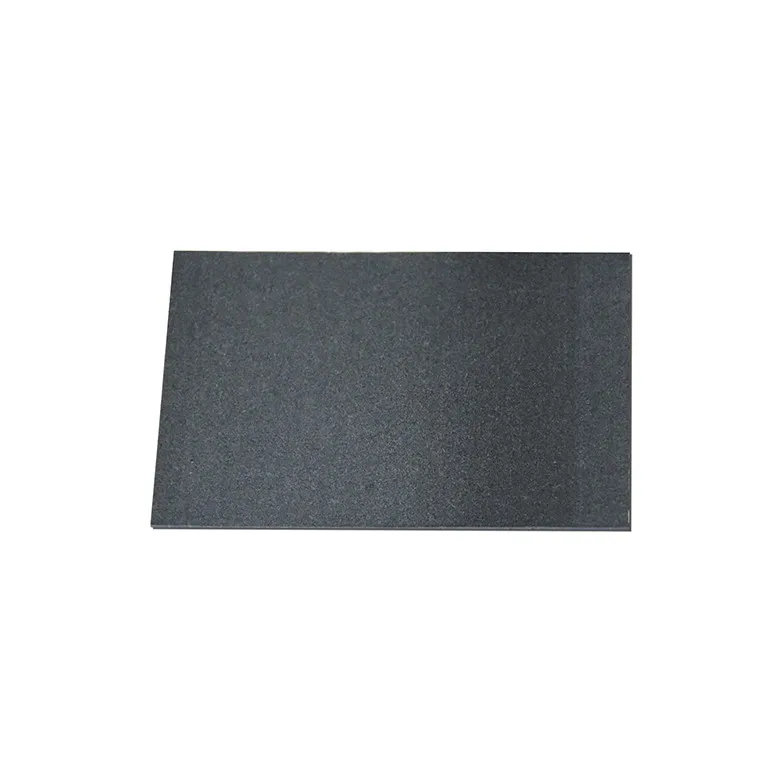 | TS-TIR700-09 | 1.0~5.0 mm | 9.0 | |
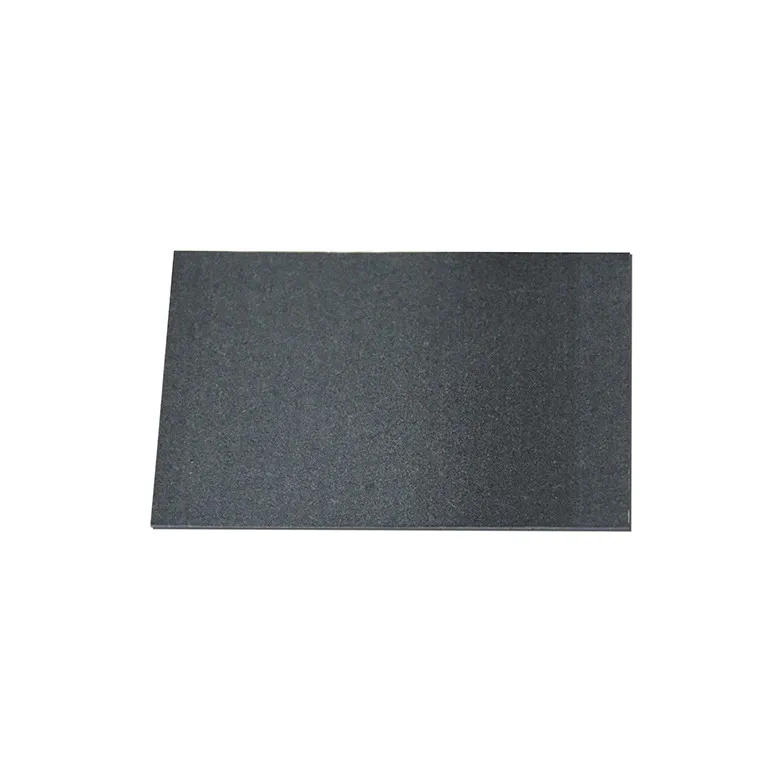 | TS-TIR700-25 | 0.3~5.0 mm | 25 |
Where graphite sheets fit
Graphite spreads heat in-plane across thin shields and chassis — smartphones, notebooks, radios, and EV adjacent electronics where z-height is scarce.
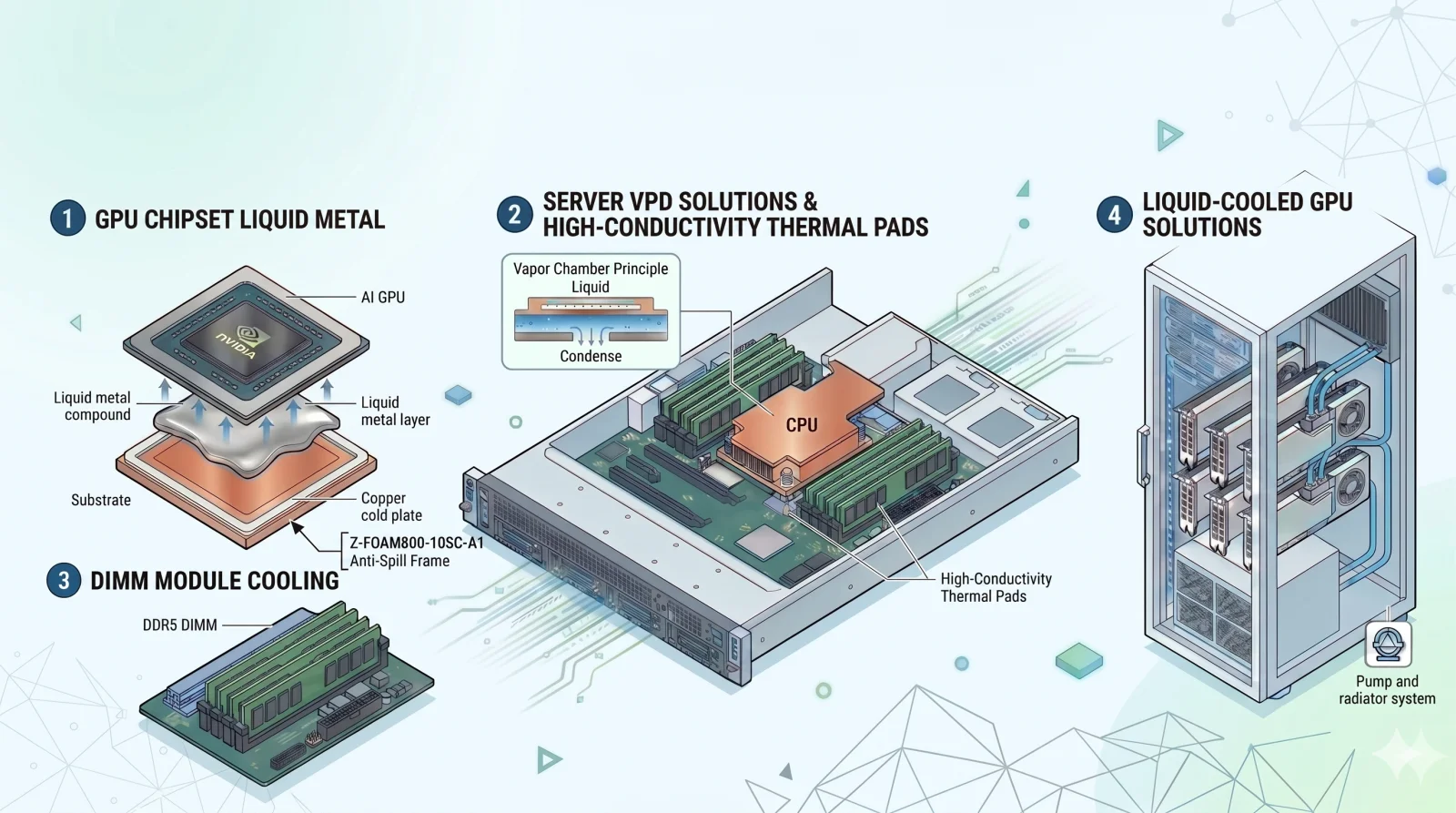
Servers · GPU · accelerators · DIMM
Data Center & AI Servers
High-flux silicon and dense PCBs — CPU/GPU bond-lines, VRM/DIMM/NIC interfaces, and accelerator cold-plate paths. Match grade against clamp force, TIM impedance, and rework cadence.
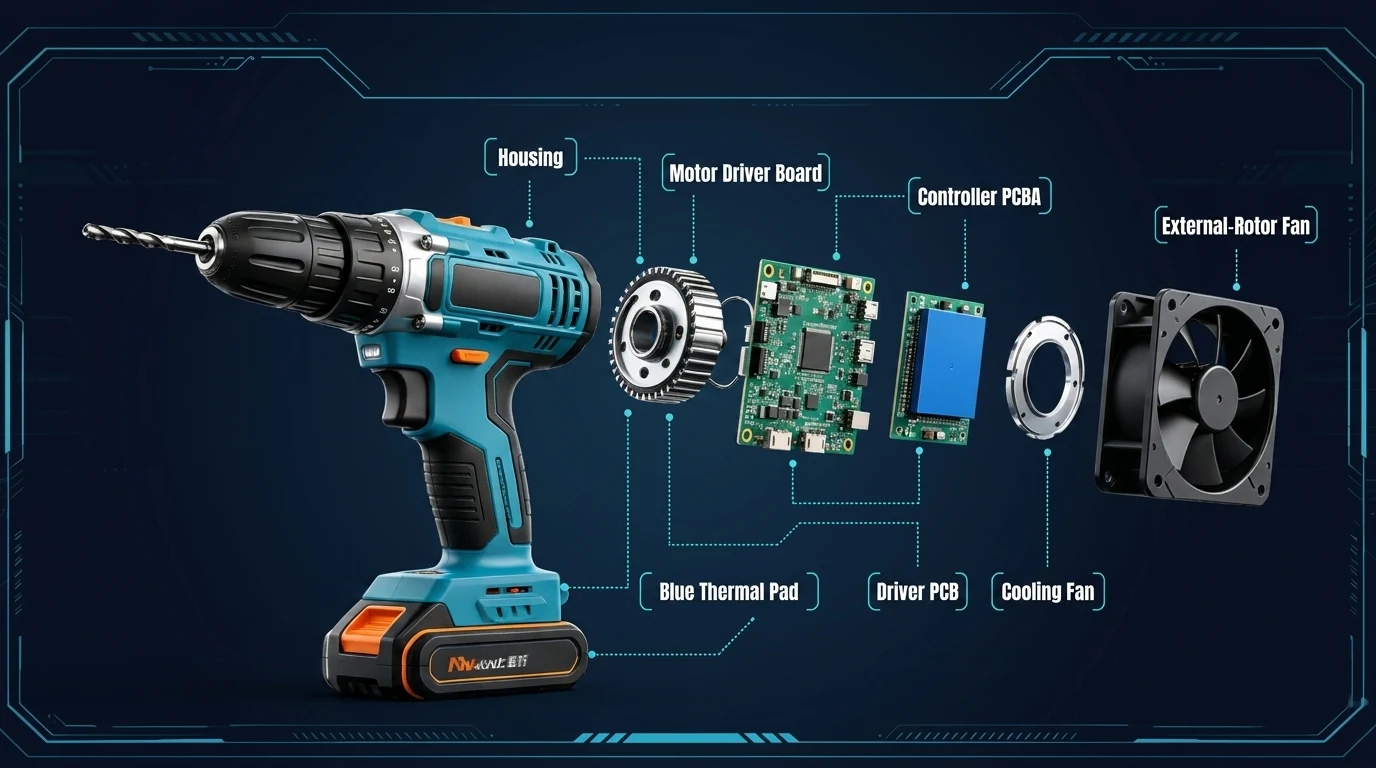
Drives · IGBT · controllers · sensors
Power Tools & Control Systems
Industrial controls, motor drives, power-stage IGBTs, and rugged modules — thermal interfaces, sealing, and encapsulation built for serviceable assemblies and harsh environments.
Typical specification window (graphite sheet)
| Parameter | Typical range / note | Method |
|---|---|---|
| In-plane thermal conductivity | Grade-dependent — high W/m·K class | Laser flash / supplier |
| Through-plane | Lower than in-plane — design accordingly | ASTM D5470 |
| Typical thickness | Microns to ≈1 mm — series-dependent | Caliper |
| Flex & bending | Flexible films — fold radius per TDS | — |
| Continuous-use temp. | Air service to ~400–500 °C class (graphite) | UL746B / TDS |
| Weight vs aluminium | Lower density spreader option | — |
| EMI / electrical | Conductive — isolate as required | Design |
| Adhesive backing | Available on variants | — |
| Outline | Die-cut sheets — DXF | — |
* Representative grades. Request a lot-specific datasheet or CoA for your exact part number.
Graphite sheets for thermal management — common questions
Need help shortlisting or cross-referencing? Talk to a Ziitek thermal engineer — 2-hour response SLA.
Talk to an engineerWhat is a thermal graphite sheet?
A thermal graphite sheet is a thin film of crystallographically aligned graphite (or carbon-nano composite) that conducts heat very efficiently along its plane and is widely used as a passive heat spreader behind smartphone displays, AI accelerator packages, RF shields, and laptop chassis. In-plane conductivity can reach 1500 W/m·K for synthetic graphite — five times that of copper foil at the same thickness — while through-plane conductivity is intentionally low to keep heat spreading laterally rather than dumping into the next layer.
What's the difference between TIR300 and TIR700?
TIR300 is an ultra-thin in-plane heat spreader (25–100 µm) whose value comes from extremely high X-Y conductivity — it spreads a hotspot across a wider area so a heatsink or shield can radiate it. TIR700 is a vertically aligned carbon-fiber composite (0.5–5 mm thick) used as a gap-filling z-axis TIM between an IC and a heatsink — its through-plane λ is what matters, not in-plane. They solve different physical problems and are not interchangeable.
Why do graphite sheets report two thermal conductivity values?
Graphite is anisotropic: heat flows easily along the basal-plane sheets (X and Y) but poorly between them (Z). A single λ number would mislead, so datasheets typically publish both — for example, 1500 W/m·K in-plane and 15 W/m·K through-plane on the same TIR300C product. Use the in-plane value to size a spreader; use the through-plane value to estimate cross-stack thermal resistance.
Are these graphite sheets electrically conductive?
Yes. Graphite and the carbon-nano coatings on TIR300C/CU/AL all conduct electricity. For applications where the spreader contacts a powered conductor (shield can, ground plane), this is intentional. For dielectric isolation between a hot powered die and a heatsink, use a TIS thermally conductive insulator instead — combining the two layers gives both heat-spreading and electrical isolation.
Can I die-cut TIR sheets to my outline?
Yes for all grades. TIR300 ultra-thin films are kiss-cut on liner with PSA backing for SMT-friendly placement. TIR600 natural-graphite gaskets and TIR700 carbon-fiber pads are die-cut to drawing with internal cutouts and chamfered edges as required. Send a DXF; sample parts ship in 5–10 working days depending on PSA composition.
What's the operating temperature limit?
Pure graphite (TIR600) tolerates continuous service to ≈ 400 °C in inert atmospheres and ≈ 250 °C in air. Carbon-nano-on-copper laminates (TIR300C) cap around 400 °C; carbon-nano-on-aluminum (TIR300AL) drops to ≈ 250 °C limited by the aluminum substrate. Carbon-fiber composites (TIR700) follow the silicone matrix limit, ≈ 200 °C continuous. Each datasheet publishes the specific range.
Adjacent thermal management lines
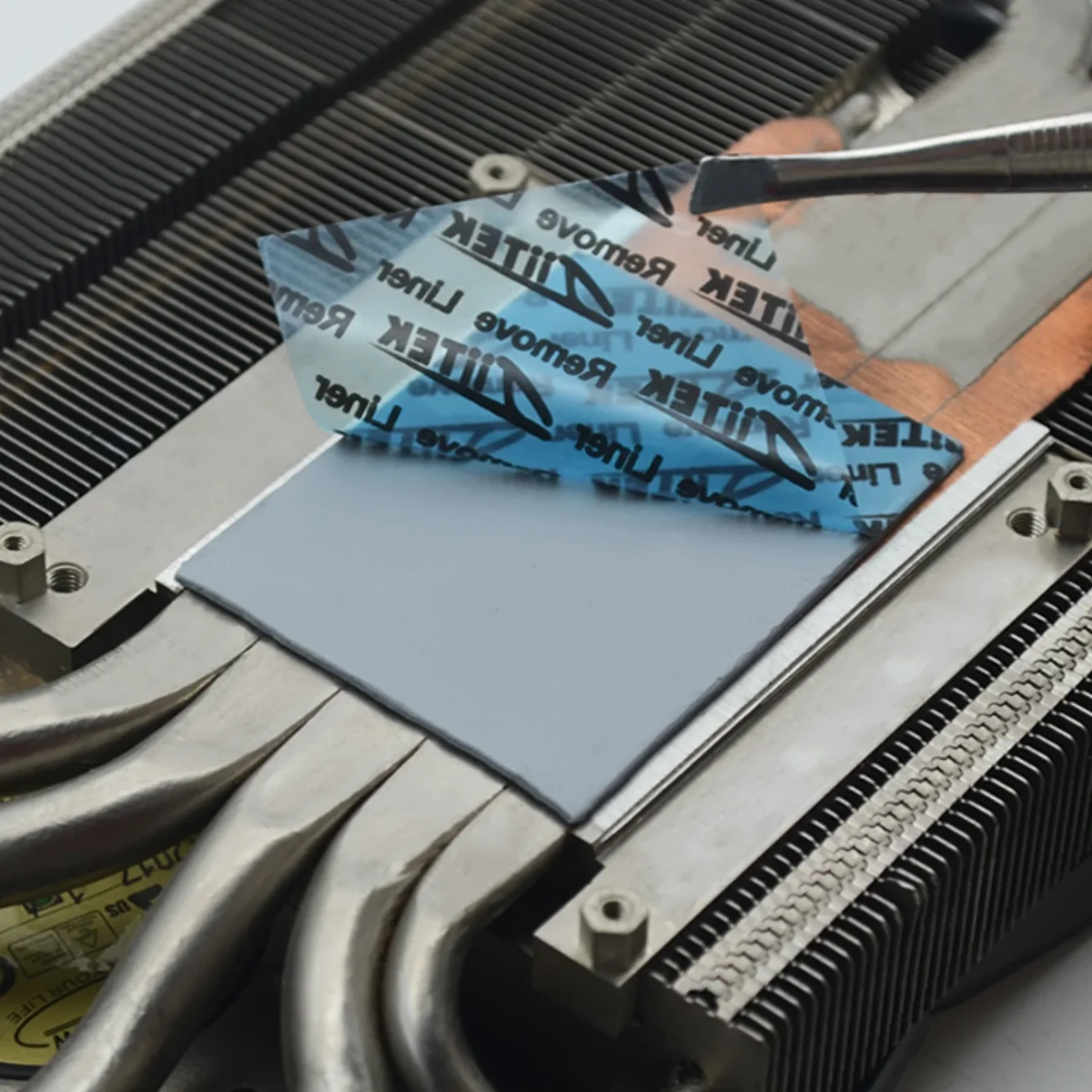
TIF
Silicone Thermal Pad
When you need conformability and z-axis conduction at lower λ — the conventional gap-pad pick.
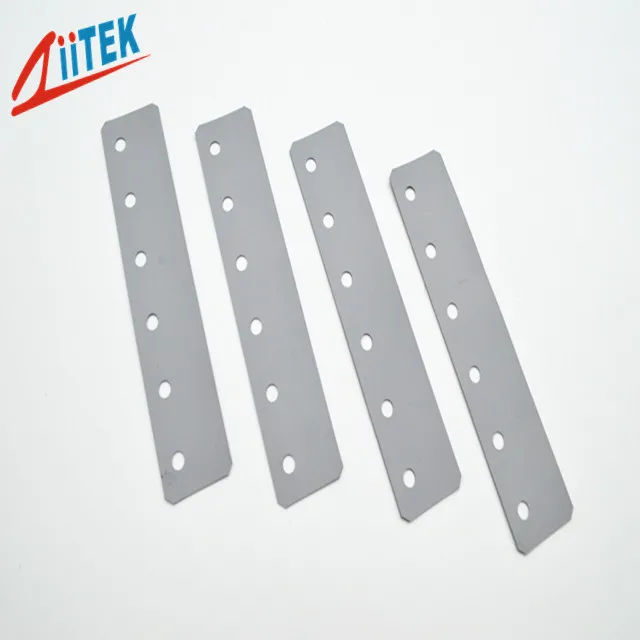
TIS
Thermally Conductive Insulator
Pair with a TIR graphite spreader when the underlying conductor must be electrically isolated.
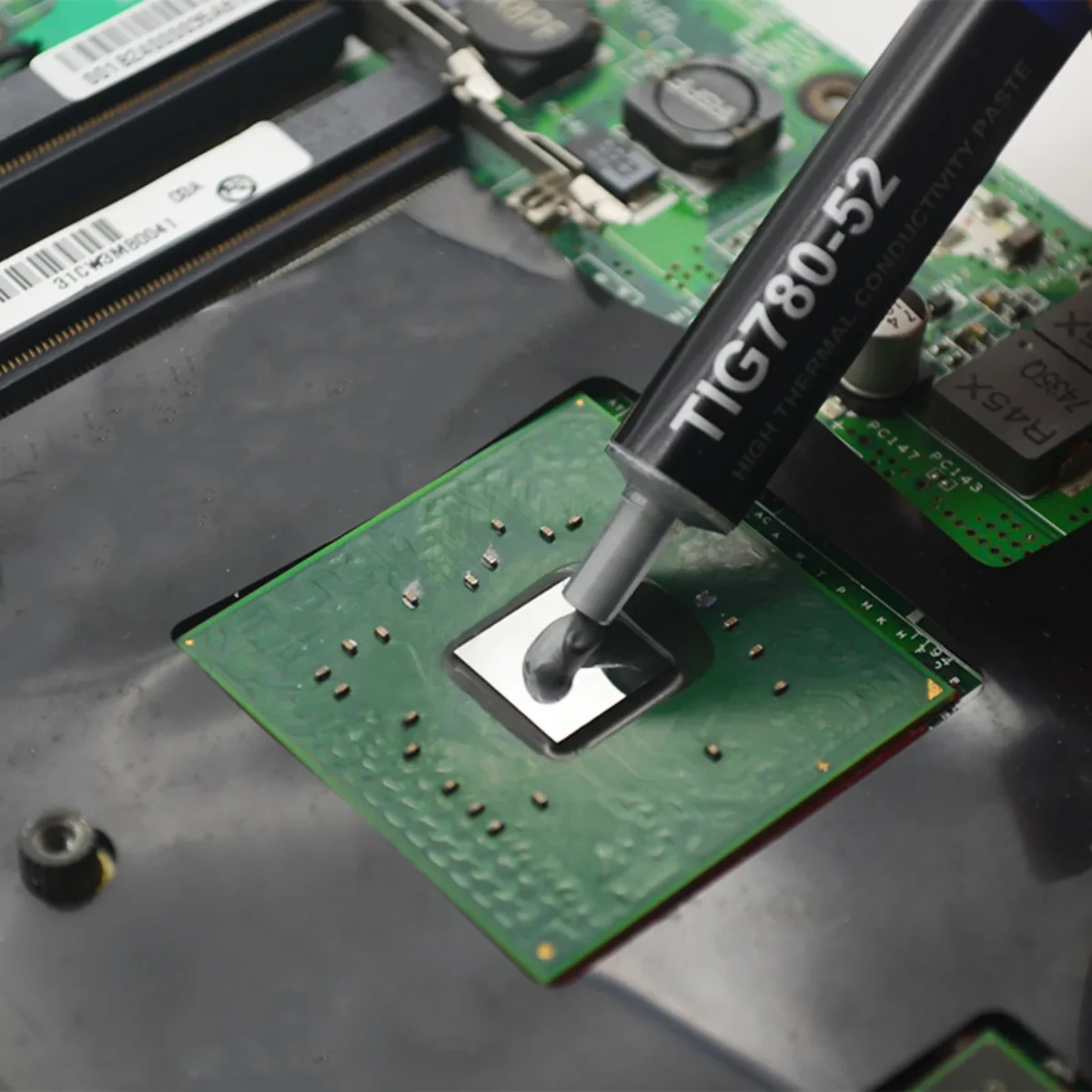
TIG
Thermal Grease
Liquid-metal and ultra-high-λ grease for the lowest possible bondline thermal resistance.
Sample
Talk to engineering
Anisotropy, Z-axis vs in-plane, hot-spot spreading — Ziitek engineers respond within 2 hours.

Your next thermal solution
starts here.
From rapid prototyping to full-scale production — our engineers are ready to design a custom thermal solution for your application. Trusted by 5,000+ clients across EV, 5G, and consumer electronics.