Thermal silicone adhesive
Single-component RTV silicone adhesive that bonds and conducts heat in one step — no mixing, no oven, just dispense and the moisture in air takes care of cure. Through-plane conductivity 1.0–2.5 W/m·K across 5 TIS580 grades, with the entry 1.0 W/m·K band for general electronics and the high-λ 2.5 W/m·K 580-25 for power-semiconductor and EV battery applications.
5
TIS580 grades
1.0–2.5 W/m·K
Thermal conductivity (λ)
1-part RTV
Ambient moisture cure
−50 – 200 °C
Operating range
Shore A 25 – 60
Soft elastic post-cure
Two λ bands across the TIS580 ladder
Every Thermally conductive silicone adhesives grade, one table
All 5 thermally conductive silicone adhesives part numbers with thermal conductivity (W/m·K), colour notes, and PDF datasheets. Click a model name with a link for full specs, photos, and application guidance.
| Photo | Model | λ (W/m·K) | Hardness | PDF & next step |
|---|---|---|---|---|
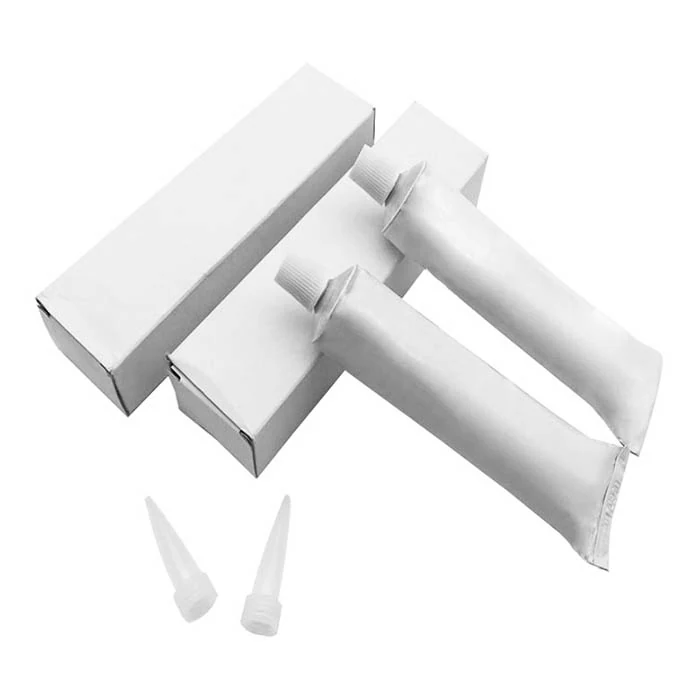 | TIS580-10 | 1 W/m·K | 45 | |
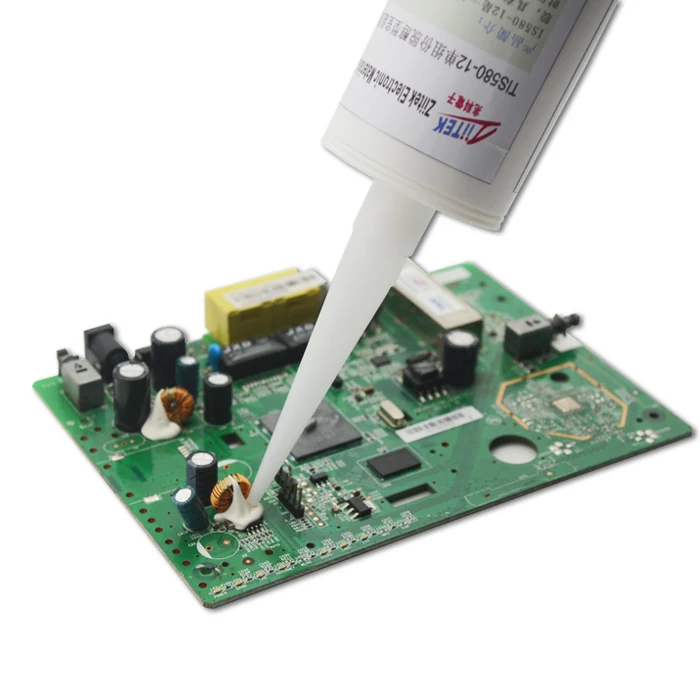 | TIS580-12 | 1.2 W/m·K | 25 | |
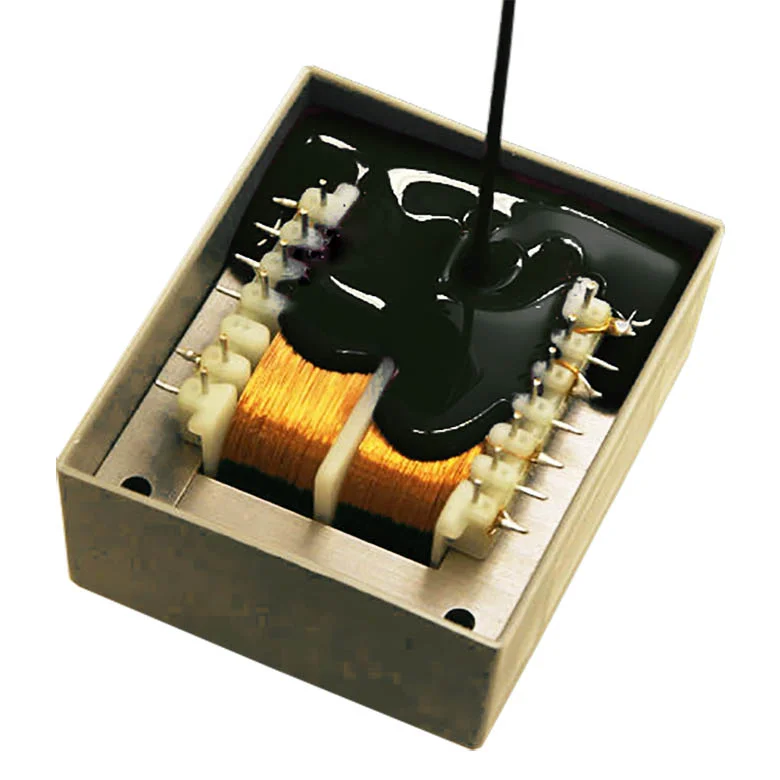 | TIS580-13 | 1.3 W/m·K | 25 Shore A | |
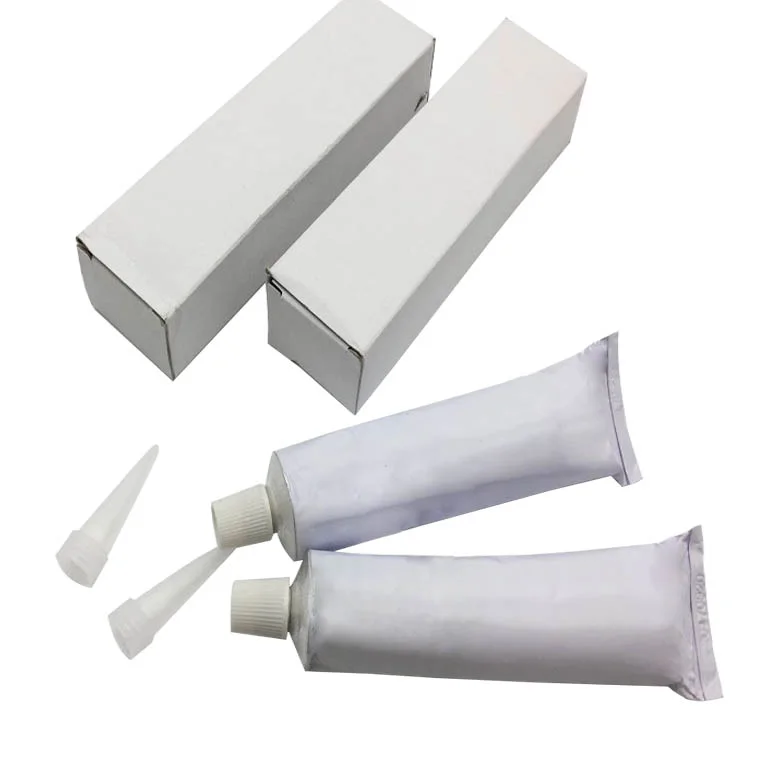 | TIS580-20 | 2 W/m·K | 45 | |
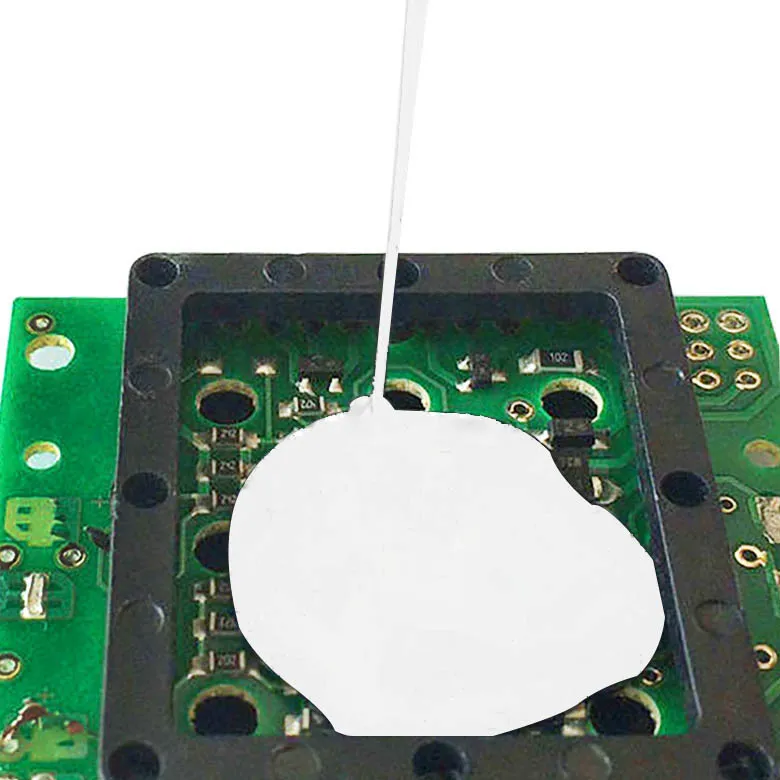 | TIS580-25 | 2.5 W/m·K | 45 |
Where thermal silicone adhesives fit
One-part RTV silicones combine primerless adhesion to many housings with a thermally conductive path — common in stamped heat sinks and enclosure assembly.
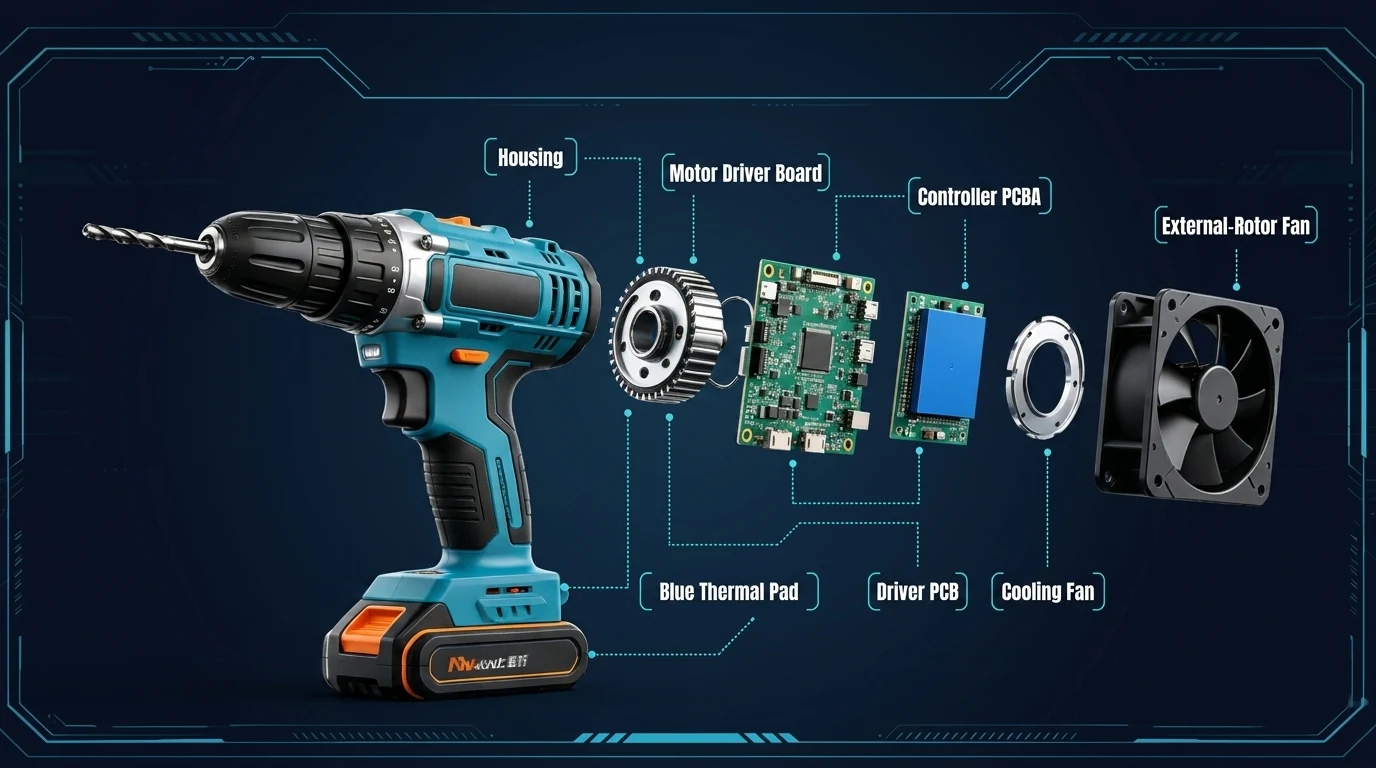
Typical specification window (thermal silicone adhesive)
| Parameter | Typical range / note | Method |
|---|---|---|
| Thermal conductivity | Conductive filler in RTV | ASTM D5470 |
| Tensile / lap behaviour | Elastomeric adhesive | ASTM D412 / D1002 |
| Cure chemistry | Moisture / platinum — per series | — |
| Hardness after cure | Shore A typical | ASTM D2240 |
| Volume resistivity | Grade-specific | ASTM D257 |
| Breakdown voltage | Applied thickness | ASTM D149 |
| Continuous-use temp. | Silicone-class | UL746B |
| UL flammability | HB to V-0 grades | UL94 |
| Application | Bead, screen, stencil | — |
* Representative grades. Request a lot-specific datasheet or CoA for your exact part number.
Thermally conductive silicone adhesives — common questions
Need help shortlisting or cross-referencing? Talk to a Ziitek thermal engineer — 2-hour response SLA.
Talk to an engineerWhat is RTV silicone adhesive and how does it cure?
RTV (Room-Temperature-Vulcanising) silicone is a single-part adhesive that cures by absorbing moisture from ambient air. Apply a bead, mate the parts, and surface tack-free time is typically 5 – 30 minutes; full cure-through reaches 2 – 4 mm/24 h depending on humidity and temperature. No mixing, no oven, no induction-heating step — ideal for assemblies that can't tolerate a thermal cure or where production-line space rules out a bake oven.
RTV silicone vs thermal epoxy — which family fits my use?
Pick TIS580 RTV silicone when the joint must absorb thermal-cycling fatigue, vibration, or wide service-temp swings (−50 to +200 °C). The post-cure modulus is low (Shore A 25 – 60), so the bond yields gracefully under CTE mismatch. Pick TIE380 thermal epoxy when you need maximum lap-shear strength (8 – 20 MPa vs 1 – 3 MPa for RTV silicone), rigid mechanical reinforcement, or top-class moisture barrier. Epoxy is structural; silicone is sealing-plus-thermal.
Is RTV silicone adhesive electrically isolating?
Yes — TIS580 grades are electrically insulating with volume resistivity ≥ 10¹⁴ Ω·cm and dielectric strength of 10 – 21 kV/mm depending on grade. The ceramic / metal-oxide thermal filler is non-percolating, so even thin bondlines maintain dielectric isolation. Verify the per-grade datasheet if your application operates above 1 kV continuous; some grades derate at very thin bondlines.
How thick a bondline can RTV silicone reach?
Single-part RTV silicone cures inward from the surface as moisture diffuses through the bondline. Thin bondlines (50 – 250 µm) cure within hours; thick bondlines slow proportionally — a 5 mm bead can take a week to fully cure through. For permanent service this is fine, but for production-line throughput keep the joint ≤ 1 mm. If a thick fill is needed, use a two-part silicone potting compound (TIS680 / TIG680) instead.
Will the silicone outgas onto an optical sensor or relay contact?
Conventional RTV silicones release acetic acid or alcohol during cure, which can corrode metal contacts or condense on optics. TIS580 grades are formulated as low-acid, low-VOC chemistries — outgassing is minimised but not eliminated. For ultra-clean applications (CCD packaging, hermetic relays, MEMS) confirm the per-grade outgassing data and consider switching to a cure-by-addition silicone or fully-encapsulated potting where outgas pathways are sealed.
How does this compare to TIA thermal adhesive tape?
TIA tape is a dry, double-sided pressure-sensitive adhesive — peel and place, instant placement, reworkable. TIS580 is a wet dispensable adhesive — conforms to non-flat surfaces, thicker bondline support, and stronger long-term bond strength. Pick tape for fast assembly with reworkability; pick TIS580 RTV silicone when the geometry is non-flat, the gap is variable, or the bond must survive higher temperatures and longer service life.
Adjacent thermal management lines
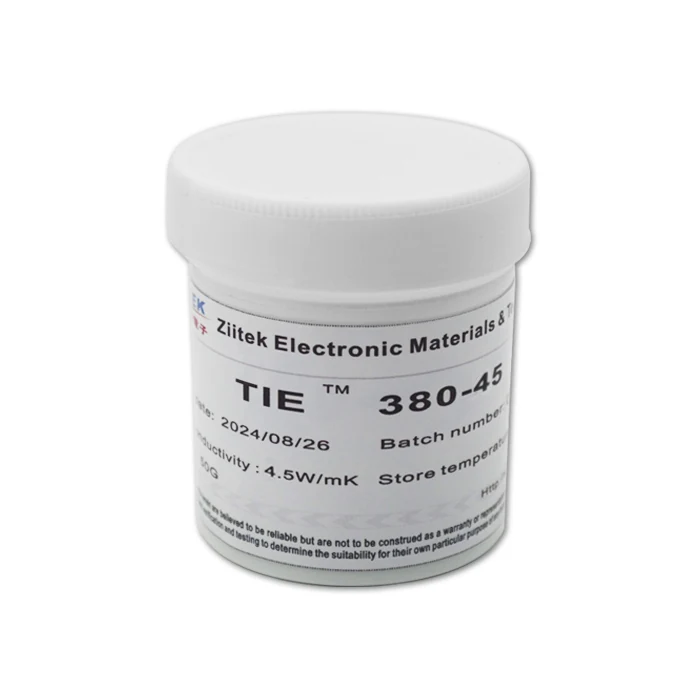
TIE380
Thermal epoxy adhesive
Single-part heat-cure structural epoxy — higher shear strength, rigid post-cure, oven cure required.
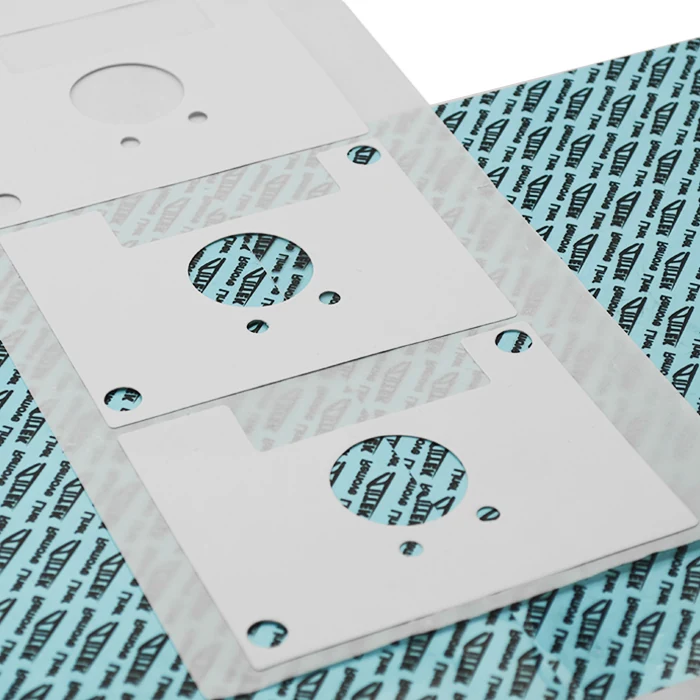
TIA
Thermal adhesive tape
Dry double-sided PSA — peel-and-place, no cure step. Pick when reworkability or instant placement matters.
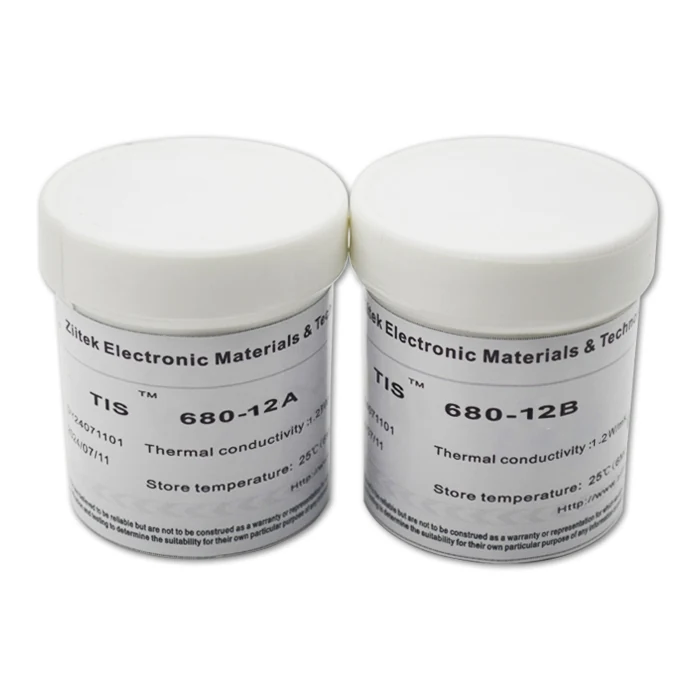
TIG / TIS 680
Silicone potting compound
Two-part cure-in-place silicone for bulk encapsulation — when the geometry needs filling, not bonding.
Sample
Talk to engineering
Help with cure-time vs humidity, bondline thickness, low-VOC formulations, or substrate prep? 2-hour response.

Your next thermal solution
starts here.
From rapid prototyping to full-scale production — our engineers are ready to design a custom thermal solution for your application. Trusted by 5,000+ clients across EV, 5G, and consumer electronics.