Thermally conductive plastic
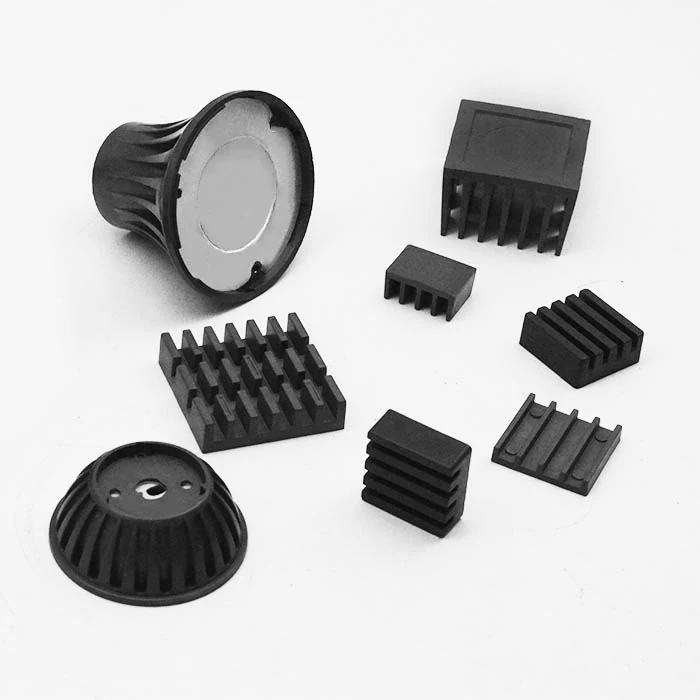
Engineering thermoplastic loaded with ceramic filler — replace machined or extruded aluminum heatsinks with complex-geometry parts, half the weight, dielectric isolation built-in. Through-plane conductivity 0.7–5.0 W/m·K across 13 TCP grades on PP, PA/PBT, and PPS resin backbones for the temperature class your application needs.
13
TCP grades
0.7–5.0 W/m·K
Thermal conductivity (λ)
PP / PA / PPS
Resin backbones
~50 % vs Al
Weight saving
UL 94 V-0
Flammability (top grades)
Three resin families covering low-cost PP, mid-temp PA/PBT, and high-temp PPS
Every Thermally conductive plastics grade, one table
All 13 thermally conductive plastics part numbers with thermal conductivity (W/m·K), colour notes, and PDF datasheets. Click a model name with a link for full specs, photos, and application guidance.
| Photo | Model | λ (W/m·K) | Specific Gravity | PDF & next step |
|---|---|---|---|---|
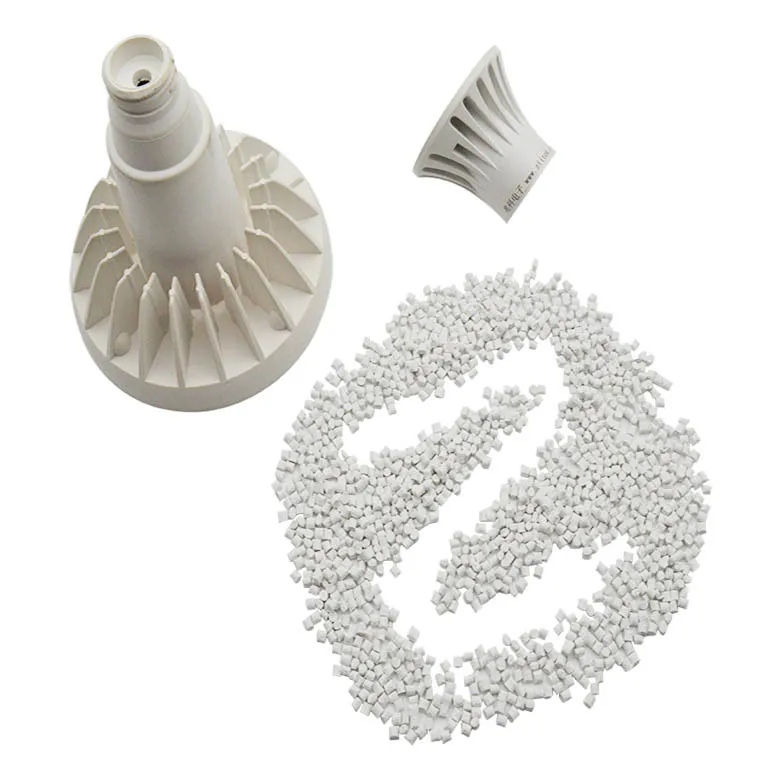 | TCP100-07-06A | 0.7 W/m·K | 1.5 | |
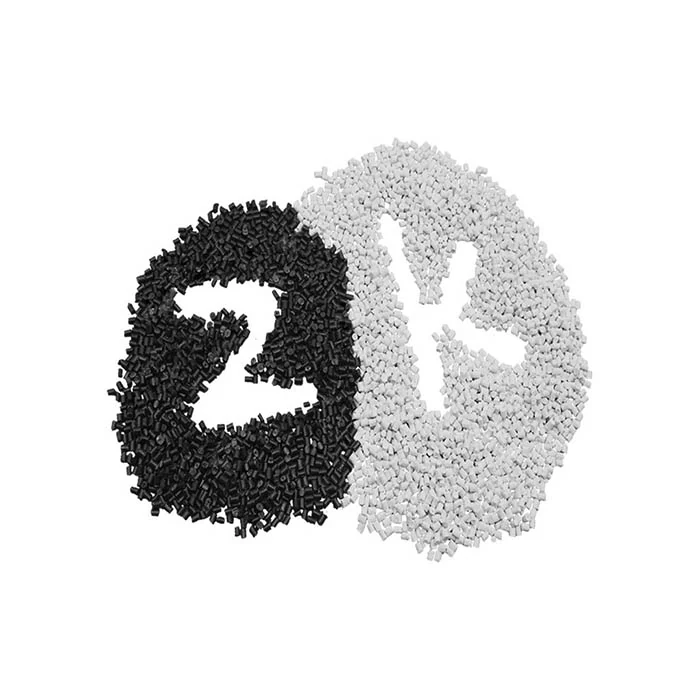 | TCP100-01PP | 0.8 W/m·K | 1.55 | |
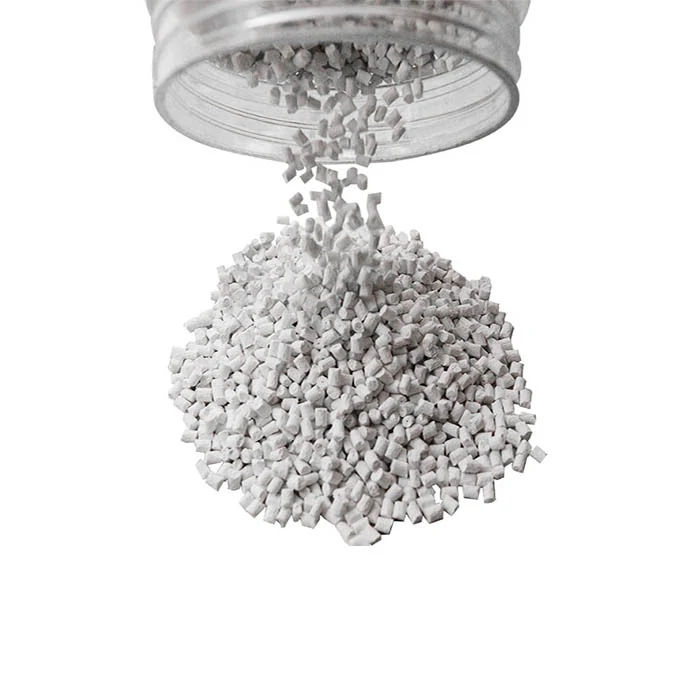 | TCP100-18-06A | 1.8 W/m·K | 1.55 | |
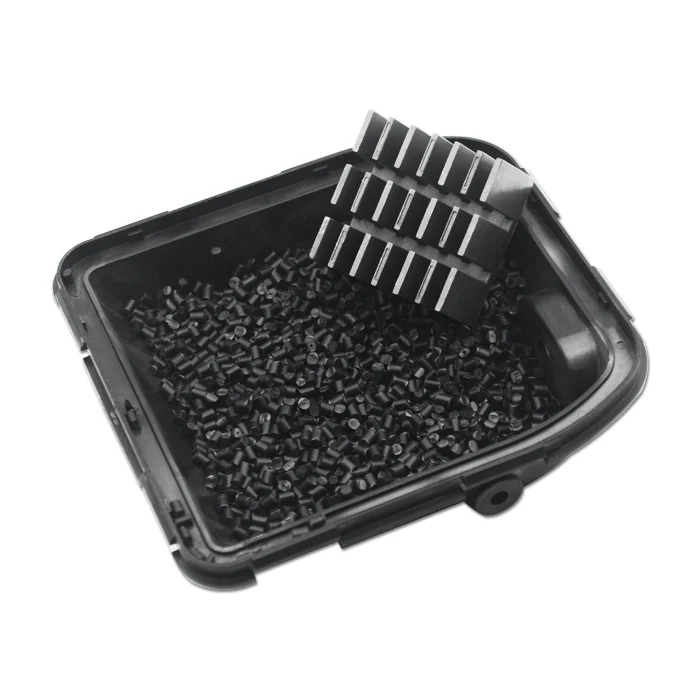 | TCP200-15-02A | 1.5 W/m·K | 1.45 | |
 | TCP200-18-02A | 1.8 W/m·K | 1.45 | |
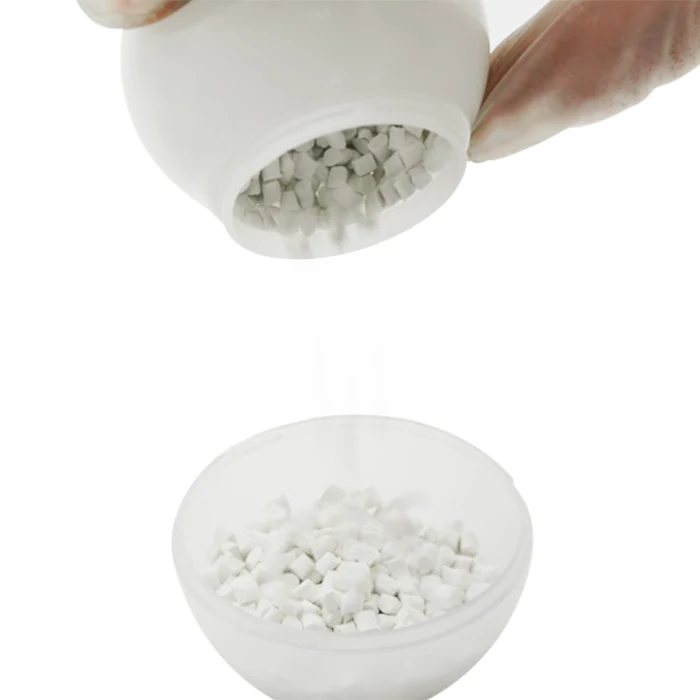 | TCP200-18-06A | 1.8 W/m·K | 1.45 | |
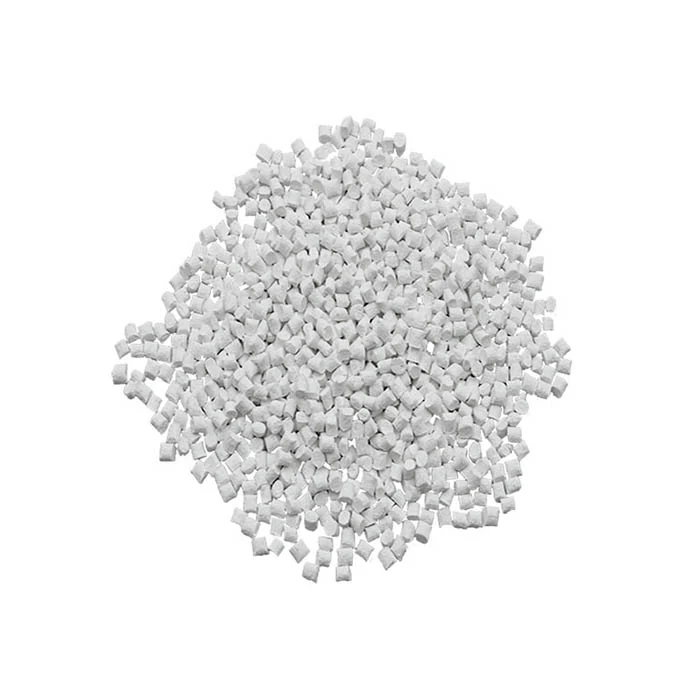 | TCP200-25-06A | 2.5 W/m·K | 1.8 | |
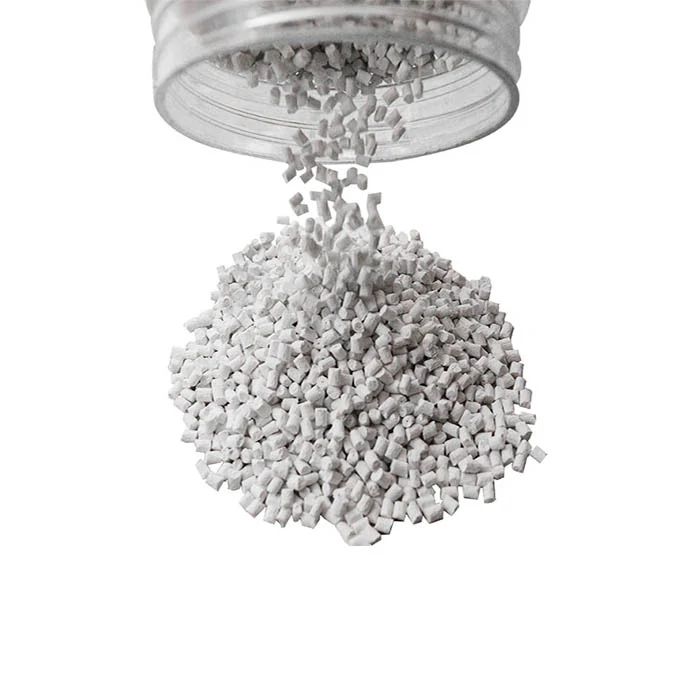 | TCP200-30-06A | 3 W/m·K | 1.65 | |
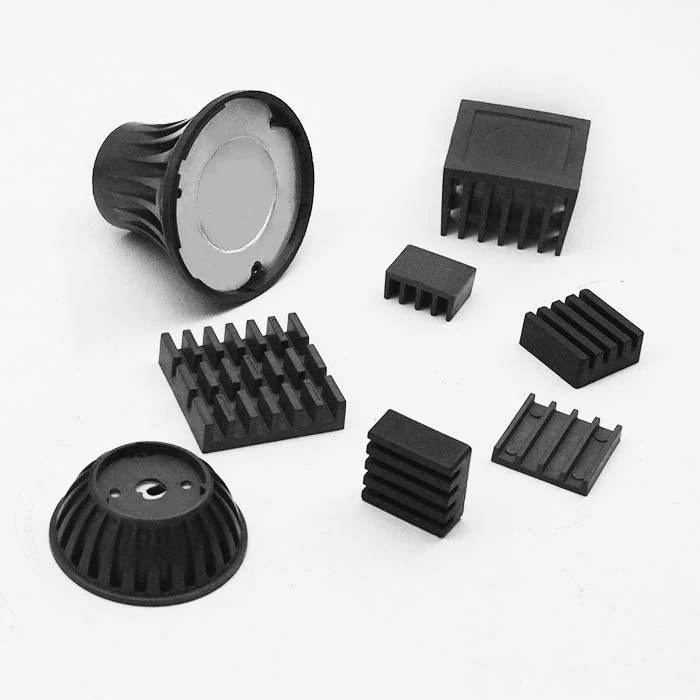 | TCP200-50-02A | 5 W/m·K | 1.45 | |
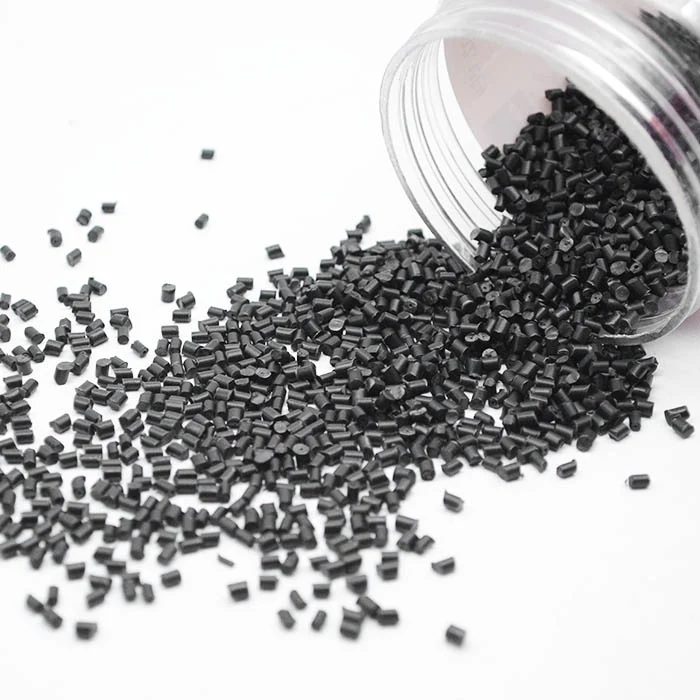 | TCP300PS-09-02A | 0.9 W/m·K | 1.7 | |
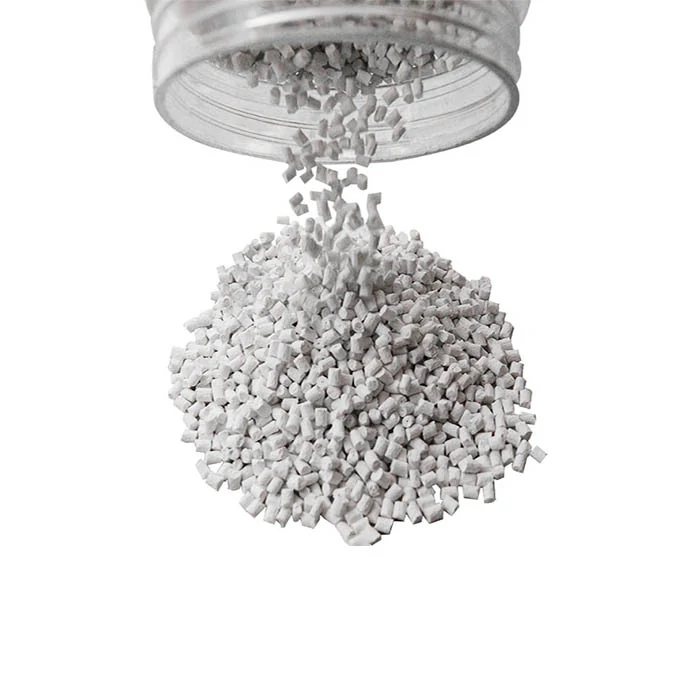 | TCP300PS-09-06A | 0.9 W/m·K | 1.7 | |
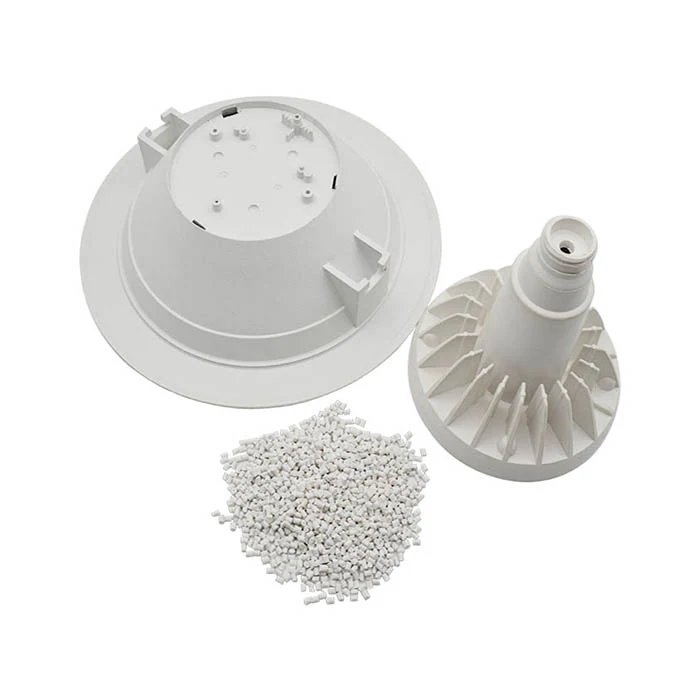 | TCP300PS-09-06A1 | 0.9 W/m·K | 1.6±0.05 | |
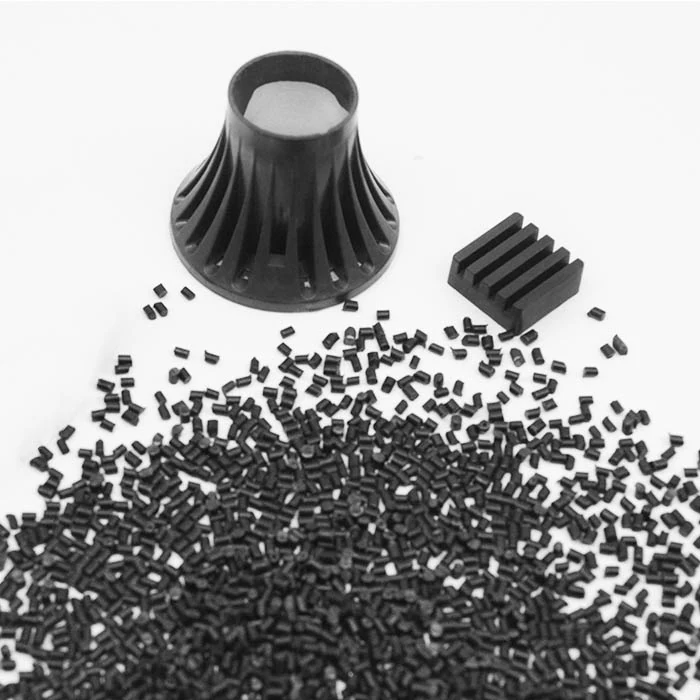 | TCP300PS-10-02S | 1.1 W/m·K | 1.7 |
Where conductive plastics fit
Injection-molded thermally conductive polymers replace metal in brackets, bezels, and housings — lighter weight and fewer galvanic couples in harsh environments.
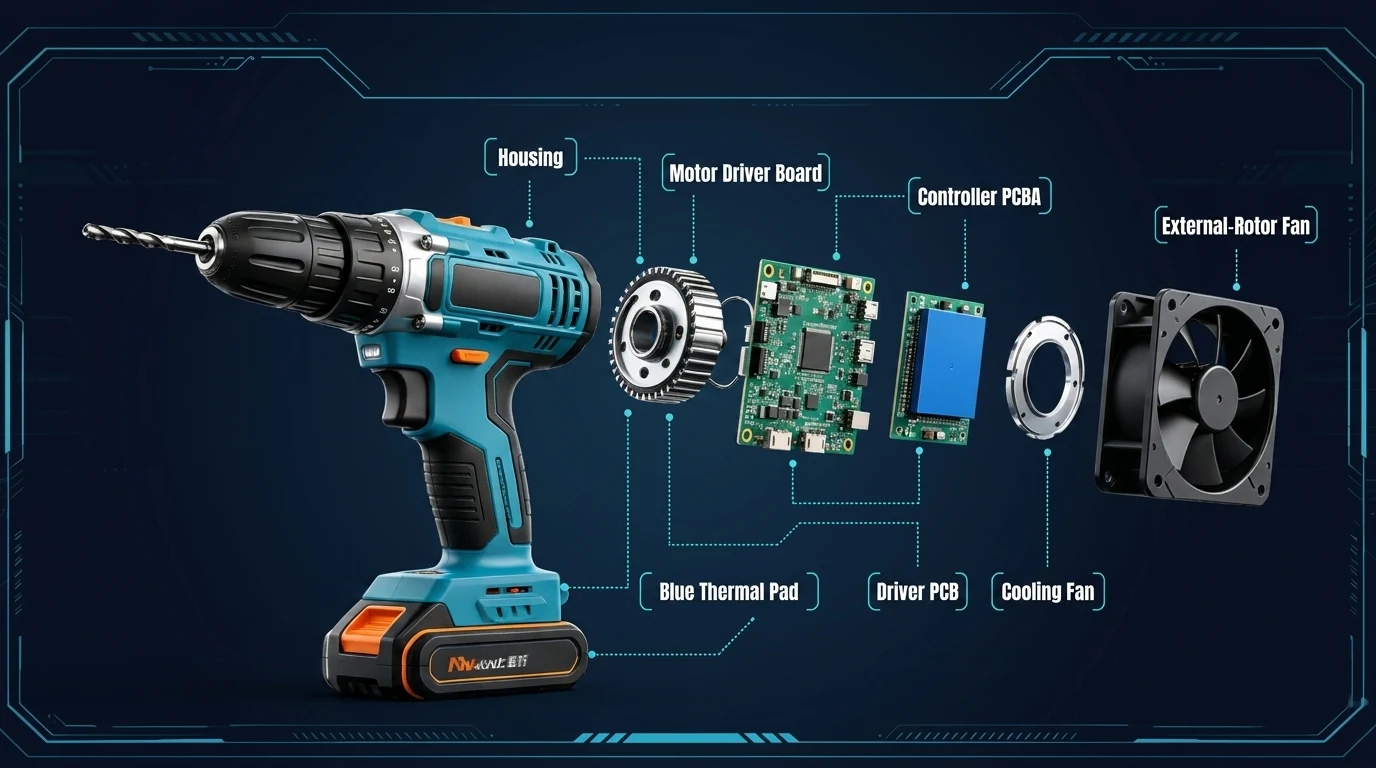
Typical specification window (conductive plastic)
| Parameter | Typical range / note | Method |
|---|---|---|
| Thermal conductivity | Through-plane — compound dependent | ASTM E1461 / supplier |
| Injection shrink & filler | Glass + boron nitride / hybrid systems | Mold flow |
| UL flammability | Grade-dependent V rating | UL94 |
| Dielectric behaviour | Polymer base — isolate if needed | ASTM D257 |
| Continuous-use temp. | Polymer-class limits | UL746B |
| Density vs aluminium | Often lighter — trade stiffness | — |
| Colour / laser mark | Compounded options | — |
| Tooling | Standard injection molds | — |
| Typical parts | Brackets, bezels, carriers | — |
* Representative grades. Request a lot-specific datasheet or CoA for your exact part number.
Thermally conductive plastics — common questions
Need help shortlisting or cross-referencing? Talk to a Ziitek thermal engineer — 2-hour response SLA.
Talk to an engineerWhat is thermally conductive plastic and where does it replace aluminum?
TCP is an engineering thermoplastic compound (PP, PA, PBT, or PPS resin) loaded with 30 – 70 % by weight of ceramic or metal-oxide filler that provides a continuous thermal path through the bulk plastic. Conductivity is typically 0.7 – 5 W/m·K — orders of magnitude below aluminum (~200 W/m·K) but enough for many low-to-mid-power heatsinking applications. The win comes from injection moulding: complex shapes (fins, hollow channels, snap-fits, integrated mounting features) that would be expensive to machine in aluminum can be moulded as one part, with dielectric isolation built-in (no anodisation needed).
TCP100 vs TCP200 vs TCP300PS — how do I choose?
Pick TCP100 (PP backbone) for cost-tuned consumer parts — LED lamp housings, low-power adapters — where service temp stays below 100 °C. Pick TCP200 (PA / PBT backbone) for industrial and automotive parts in the 100 – 150 °C range; TCP200-50-02A delivers the highest λ in the catalog at 5.0 W/m·K. Pick TCP300PS (PPS backbone) when you need 200 °C+ continuous service, fuel/oil resistance, or chemical exposure — λ is lower (~0.9 W/m·K) but the resin survives where PA and PP fail.
Will TCP replace my aluminum heatsink directly?
Sometimes — it depends on the dissipated power and the airflow available. As a rule of thumb: parts dissipating below 10 W in convective airflow can usually move from aluminum to TCP200 with comparable surface temperature; parts above 50 W typically still need aluminum unless forced airflow or a much larger surface area is on the table. The thermal-design exercise is to compute the convective resistance Rth = 1 / (h·A) and check that the bulk-conduction Rth through the TCP wall is small relative to the convective term. Engineering can run a simple FEA with your CAD if you share the geometry.
Can I use TCP for dielectric isolation in a power-electronics housing?
Yes — all TCP grades are electrically insulating with volume resistivity ≥ 10¹² Ω·cm and dielectric strength of 15 – 30 kV/mm. A TCP enclosure simultaneously dissipates heat and provides dielectric isolation between live components and the user — eliminating the anodisation step that's required when a metal heatsink doubles as a chassis. Verify the per-grade datasheet for high-voltage applications above 1 kV continuous; some grades derate at thin walls.
What about flammability (UL 94)?
TCP200 and TCP300PS grades typically achieve UL 94 V-0 at 1.5 mm or thicker — confirm per-grade datasheet. TCP100 (PP backbone) is harder to bring to V-0 without significant flame-retardant loading; check the specific TCP100 grade if your application has a UL-Yellow-Card requirement. For final-product UL listing, the part-as-moulded usually needs to be re-tested at the actual wall thickness, which engineering can arrange via Ziitek's lab partners.
What's the moulding process — do I need a special machine?
TCP grades mould on standard injection-moulding machines with no specialised equipment. Recommended barrel temperatures and mould temperatures vary by resin (TCP100/PP runs 200 – 230 °C, TCP200/PA runs 270 – 290 °C, TCP300PS/PPS runs 320 – 340 °C). Mould shrinkage is typically 0.3 – 0.7 % — comparable to filled engineering plastics. Tool wear on metal-oxide-filled compounds is slightly higher than unfilled grades; spec mould steel hardness ≥ HRC 50 for high-volume tools.
Adjacent thermal management lines
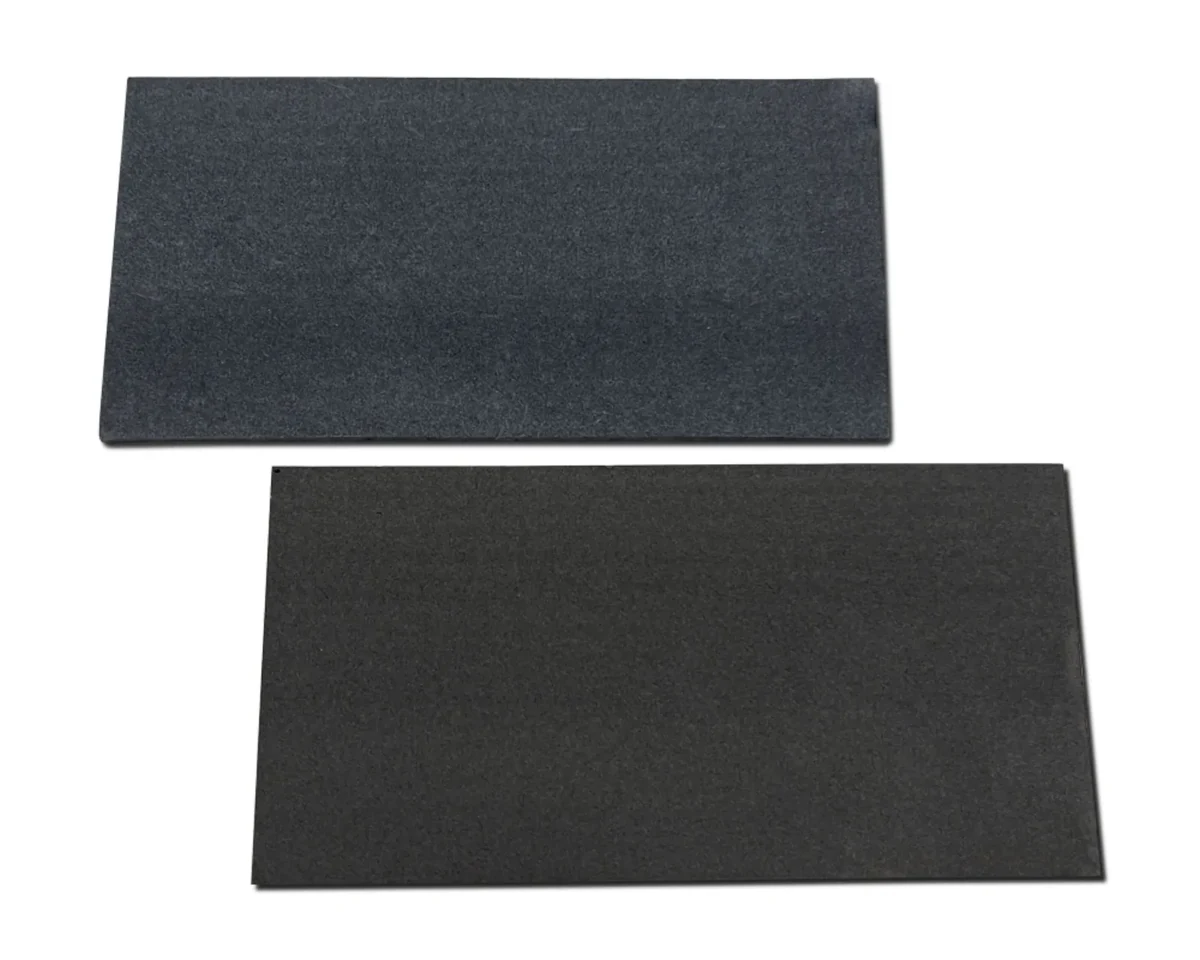
TIR
Thermal graphite sheet
Anisotropic in-plane heat-spreader laminate — when the goal is moving heat sideways across a thin layer rather than out through a bulk part.
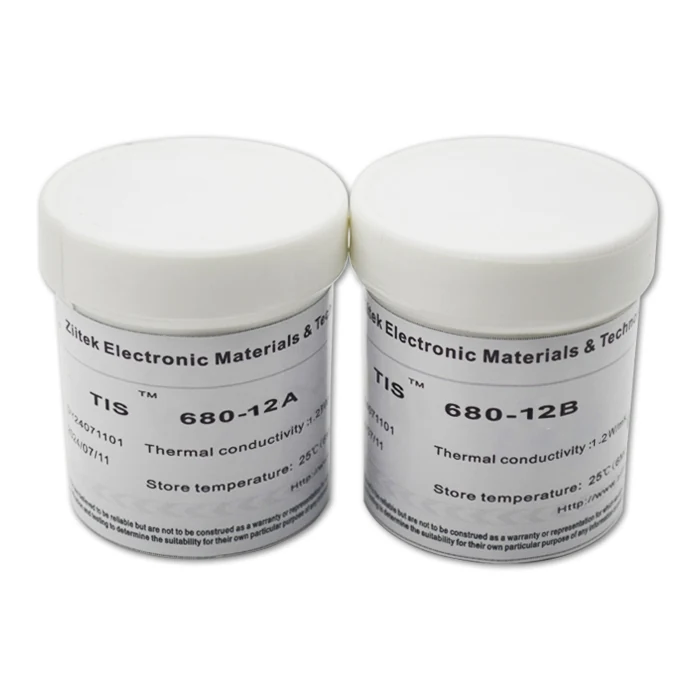
TIG / TIS 680
Silicone potting compound
Pour-and-cure encapsulant — when the cavity is irregular and a moulded TCP part isn't economical.
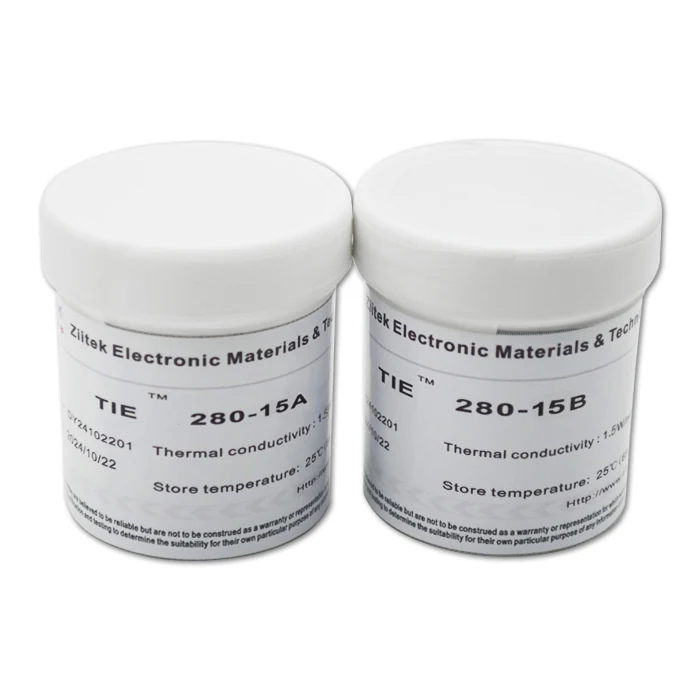
TIE280-AB
Epoxy potting compound
Rigid two-part epoxy alternative when high mechanical strength matters more than reworkability.
Sample
Talk to engineering
Geometry feasibility check, FEA-based thermal sizing, mould-tool design, or pellet sampling? 2-hour response.

Your next thermal solution
starts here.
From rapid prototyping to full-scale production — our engineers are ready to design a custom thermal solution for your application. Trusted by 5,000+ clients across EV, 5G, and consumer electronics.