Reducing AI Processor Temperature by 18.5°C for Humanoid Robots
ZIITEK's customized thermal management solution combines Phase Change Materials (PCM), thermal gels, thermal pads, and potting compounds to solve heat dissipation challenges in next-generation humanoid robots, ensuring stable operation under continuous high-load AI computing.
Overview
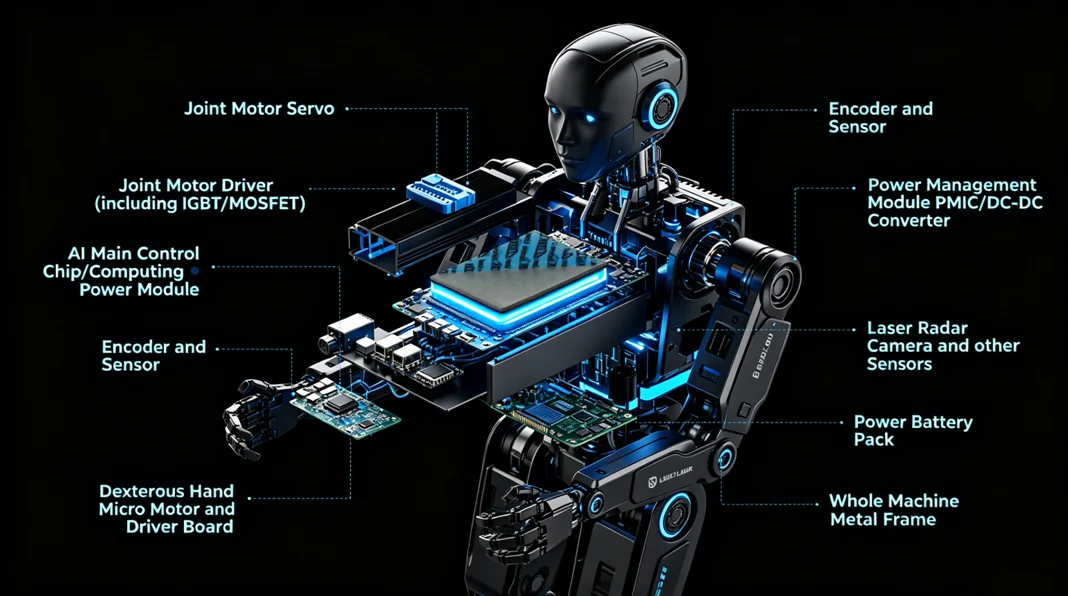
As humanoid robots evolve from motion-capable machines into intelligent autonomous systems, thermal management has become a critical challenge. High-performance AI processors, motor drivers, sensors, batteries, and power modules generate significant heat within extremely compact mechanical structures. ZIITEK provides comprehensive thermal management solutions that improve system reliability, prevent thermal throttling, and maximize AI computing performance.
Customer Background
The customer is a leading national high-tech enterprise specializing in embodied AI and humanoid robot development. The company serves commercial service robotics, home companion robots, and industrial automation applications.
Key Highlights:
- Over 300 employees
- More than 60% R&D personnel
- Production facilities in Shenzhen and Suzhou
- Planned annual capacity exceeding 50,000 units
- Humanoid robots featuring over 41 degrees of freedom
- AI computing capability exceeding 200 TOPS
- Export markets across North America, Europe, Japan, and South Korea
As AI processing power and robot functionality continued to increase, thermal management became one of the most critical barriers to product commercialization.
Challenge 1: AI Processor Thermal Overload
High-performance AI processors and NPUs generate heat densities exceeding 150W/cm² during continuous SLAM, perception, and decision-making tasks. Traditional cooling methods cannot effectively dissipate heat in compact robot architectures.
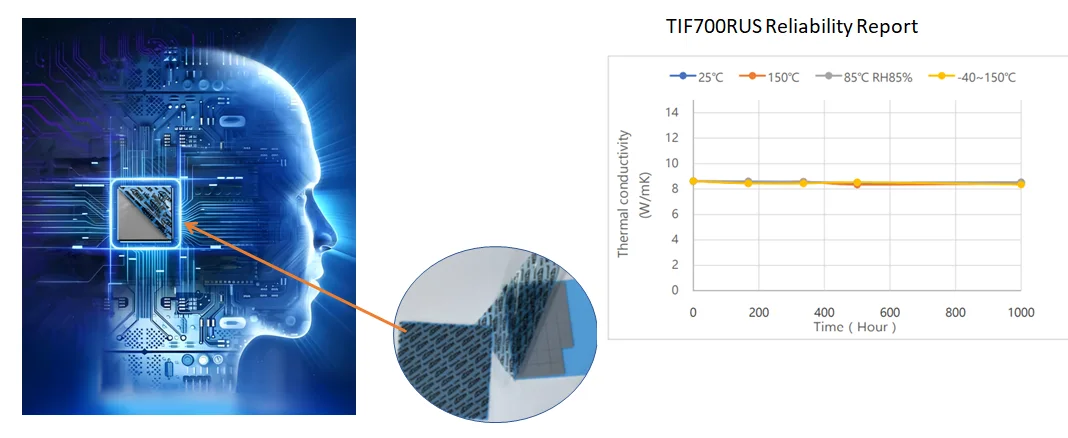
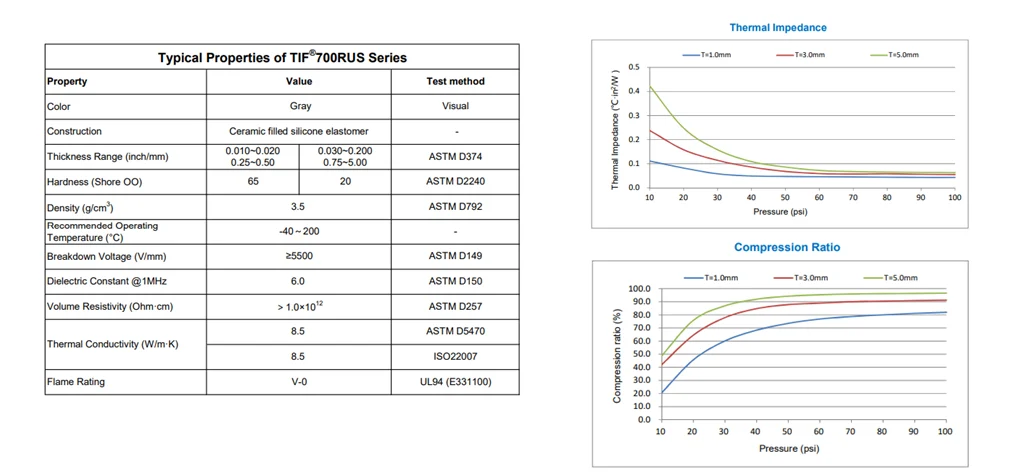
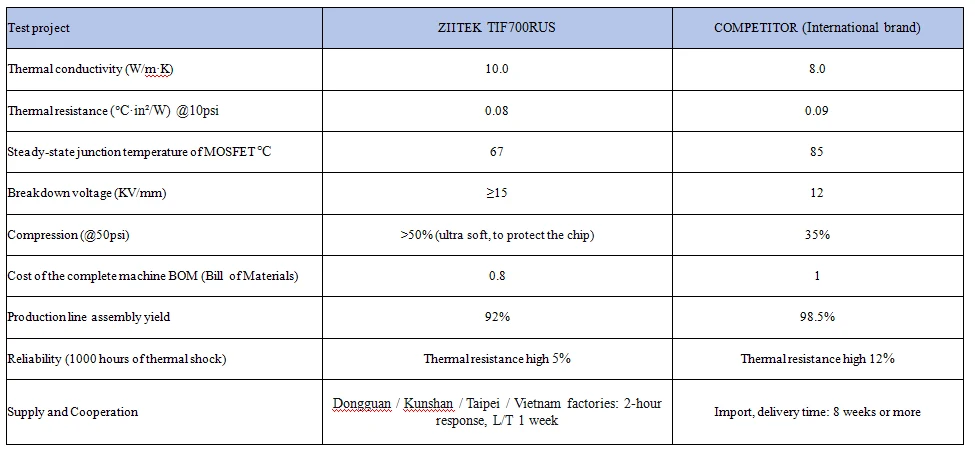
ZIITEK Solution — TIF700RUS Ultra-Soft Thermal Pad
- Thermal Conductivity: 8.5 W/m·K
- Breakdown Voltage: >5000 VAC
- Ultra-low hardness for stress-free contact
Results
- Processor junction temperature reduced from 98.5°C to 80°C
- Temperature reduction up to 18.5°C
- Eliminated thermal throttling
- Enabled sustained full AI computing performance
Challenge 2: Joint Motor Driver Overheating
Motor driver MOSFETs and IGBTs operate under continuous high torque output, causing rapid temperature rise and reduced efficiency.
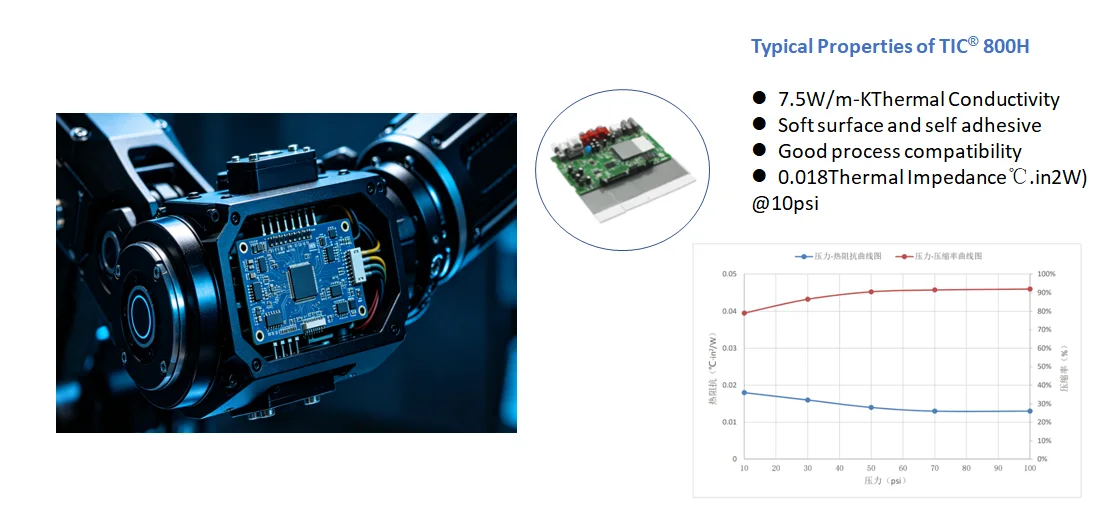
ZIITEK Solution — PCM-TIC800H Phase Change Material
- Thermal Conductivity: 7.5 W/m·K
- Phase Change Temperature: 50–60°C
- Significantly reduced interface thermal resistance
Results
- MOSFET temperature reduced from 112°C to 94°C
- Extended full-load operating time to over 2 hours
- Improved motor reliability and torque stability
Challenge 3: Sensor Thermal Interference
Precision sensors and dexterous robotic hands contain densely packed micro motors and signal components that are highly sensitive to mechanical stress and temperature drift.
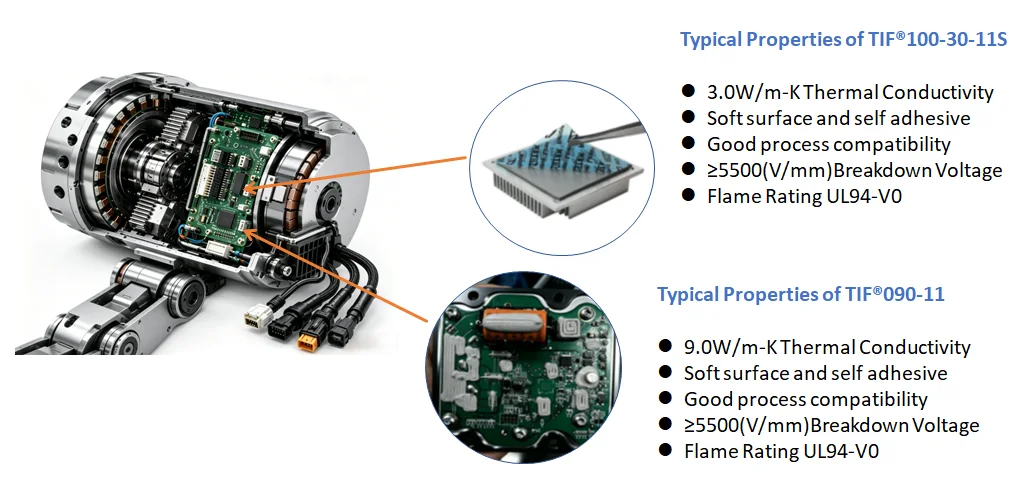
ZIITEK Solution — TIF090-11 Thermal Gel
- One-component dispensable thermal gel
- Excellent thixotropic properties
- Suitable for micron-level gaps
- No pump-out under vibration conditions
Results
- Improved sensor accuracy
- Stable performance under continuous vibration
- Passed stringent vibration testing
Challenge 4: Battery Pack and Chassis Heat Accumulation
Battery systems and power modules generate significant heat while complex robot structures contain irregular gaps ranging from 3–5 mm.
ZIITEK Solution
- TIF100-30-11S High-Compression Thermal Pad
- TIF090-11 Thermal Gel
Results
- Improved temperature uniformity throughout the robot body
- Reduced battery temperature differences
- Increased battery cycle life by approximately 20%
- Enhanced electrical insulation and safety
Challenge 5: Controller Protection and Environmental Reliability
Motor controllers require both thermal dissipation and electrical insulation while operating in high-vibration environments.
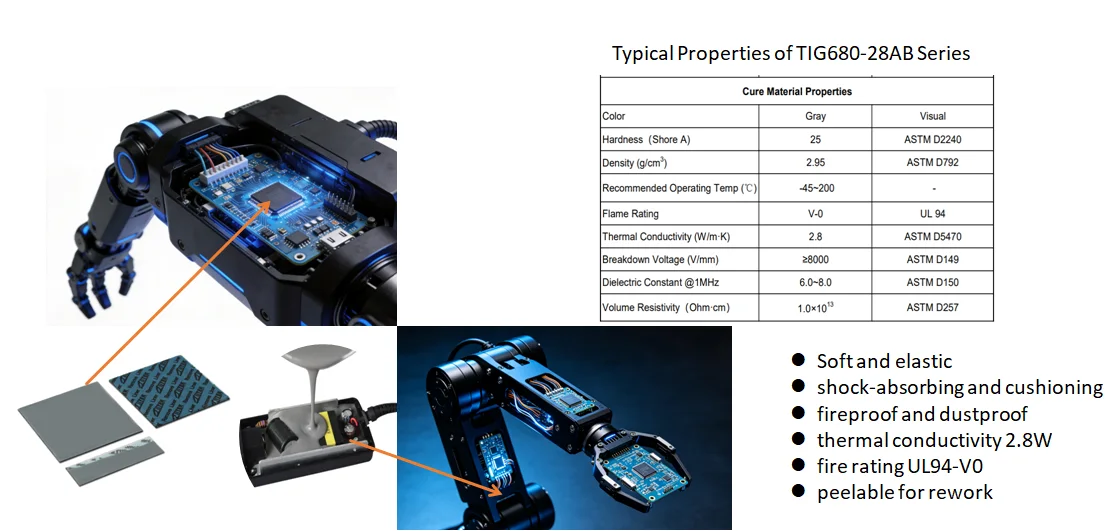
ZIITEK Solution — TIG680 Series Thermal Potting Compound
- Soft and elastic
- Shock absorbing
- Thermal conductivity: 2.8 W/m·K
- UL94 V-0 flame rating
- Reworkable design
Results
- Integrated thermal management and environmental protection
- Improved resistance to shock and vibration
- Enhanced long-term reliability
Project Background
In 2023, the customer encountered severe thermal issues during prototype testing. After approximately 45 minutes of continuous operation involving squatting, object handling, and autonomous navigation, the robot experienced motion lag, joint lock-up, and controller shutdown due to overheating.
Testing revealed:
- AI Processor Temperature: 98.5°C
- Motor Driver MOSFET Temperature: 112°C
The customer required a thermal solution that would:
- Maintain compact mechanical design
- Preserve structural strength
- Operate reliably from -20°C to 60°C
- Support long-duration AI workloads
ZIITEK's Three-Level Thermal Architecture
Level 1: Joint & Power Module Cooling
Material: PCM-TIC800H Phase Change Material
- Absorbs thermal spikes
- Reduces thermal resistance by over 70%
- Stabilizes high-load operation
Level 2: AI Computing & Power Management Cooling
Material: TIF700RUS Thermal Pads
- Efficient heat transfer
- Excellent electrical insulation
- Ultra-soft interface protection
Level 3: Structural & Battery Thermal Conduction
Materials: TIF100-30-11S Thermal Pads · TIF090-11 Thermal Gel
- Fills large tolerance gaps
- Utilizes robot frame as heat spreader
- Improves battery thermal balance
Validation Testing
Thermal Performance Test:
- 72-hour continuous operation
- Full AI computing workload
- All critical temperatures remained below design limits
Reliability Testing:
- 1,000 thermal shock cycles
- Temperature range: -40°C to 85°C
- No cracking, leakage, or thermal degradation observed
Timeline of Cooperation
| Stage | Milestone |
|---|---|
| Week 1 | The client raised a requirement for heat dissipation. Makko provided initial material selection suggestions and samples. |
| Week 3 | The client completed the assembly of small batches of samples and conducted the initial thermal tests, and the feedback was positive. |
| Week 5 | Zhaoke collaborates to complete the thermal simulation optimization of the entire machine, and determines the final material type and thickness. |
| Week 8 | Assist the client in passing the UL/CE whole machine temperature rise test. |
| Week 12 | Signed a long-term supply agreement, entered the mass production stage, and Mazko arranged a VMI warehouse to ensure delivery. |
Recommended Products
| Application | Recommended product | Features |
|---|---|---|
| AI Processor & Power Module Cooling | TIF700RUS Thermal Pad | 8.5 W/m·K thermal conductivity · Ultra-soft compression · High dielectric strength |
| Joint Motor Driver Cooling | PCM-TIC800H Phase Change Material | 7.5 W/m·K thermal conductivity · Low thermal resistance · Excellent transient heat absorption |
| Precision Sensor Cooling | TIF090-11 Thermal Gel | No pump-out · Low stress · Automated dispensing compatible |
| Battery Pack Thermal Management | TIF100-30-11S Thermal Pad | High compression ratio · Excellent gap-filling capability · Reliable insulation |
| Controller Protection | TIG680 Thermal Potting Compound | Shock absorption · Electrical insulation · UL94 V-0 certified |
Conclusion
As humanoid robots become increasingly intelligent and powerful, thermal management is no longer simply a supporting function—it is a critical factor determining system reliability, AI performance, and product lifespan.
Through its comprehensive portfolio of thermal interface materials, phase change materials, thermal gels, and potting compounds, ZIITEK delivers reliable thermal solutions for AI processors, motor drivers, sensors, battery systems, and robotic control units.
ZIITEK remains committed to supporting the future of embodied AI and intelligent robotics with advanced thermal management technologies.
Real results from real projects
Frequently asked questions
Will thermal gel leak under long-term robot vibration?
No. ZIITEK TIF090-11 thermal gel features a highly thixotropic, non-sag formulation. It remains stable even under severe vibration conditions and will not pump out or leak.
What material is suitable for extremely small gaps such as 0.2 mm?
For ultra-thin interfaces, we recommend TIF090-11 thermal gel or ultra-thin TIC800H phase change material, both designed for compact electronic assemblies.
Do you have solutions for high-power AI processors such as NVIDIA Jetson Orin?
Yes. TIF700RUS thermal pads and PCM-TIC800H phase change materials are specifically designed for high-density AI computing platforms and can help maintain processor temperatures below 85 °C.
Do ZIITEK materials comply with international standards?
Yes. Our products comply with RoHS, REACH, and halogen-free requirements, and many models meet UL94 V-0 flame-retardant standards.