_副本(3)-1.jpg)
Thermal Management Solutions for High-Density AI Servers_%E5%89%AF%E6%9C%AC(3).jpg)
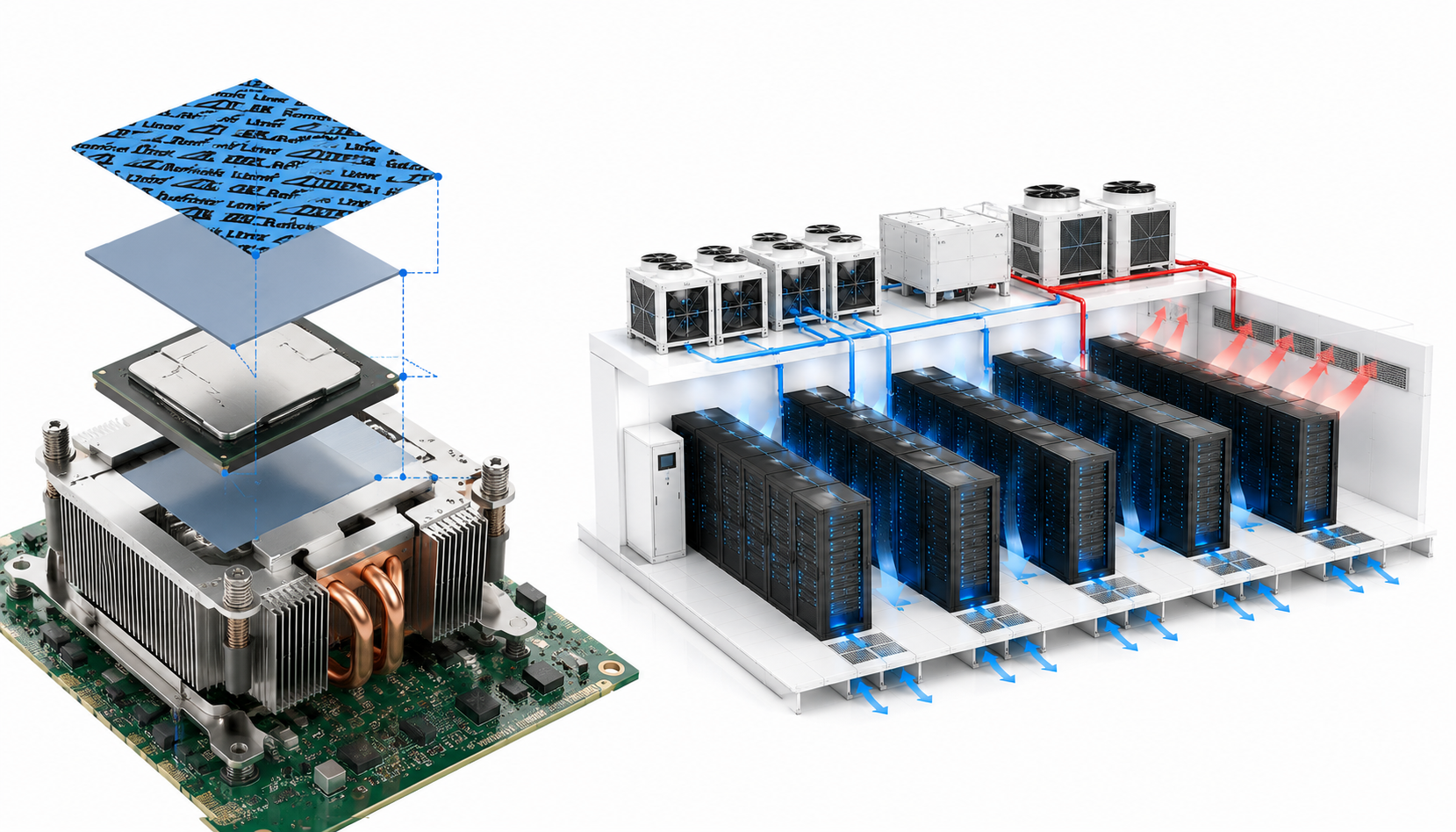
A leading Chinese AI computing infrastructure service provider faced increasing thermal challenges in high-density GPU servers, including concentrated hotspots, complex interface gaps, long-term thermal cycling, and rising cooling power consumption. ZIITEK developed a multi-material thermal management solution covering GPUs/CPUs, memory, PCB power components, and heat spreading, combining liquid metal, phase change materials, high-thermal-conductivity silicone pads, and graphene thermal interface materials.
Customer Background
The customer is a leading Chinese AI computing infrastructure service provider specializing in AI server R&D, manufacturing, and intelligent computing center solutions. Its business covers the domestic market and extends into regions such as Southeast Asia and the Middle East. With multiple smart manufacturing sites and large-scale AI server production capabilities, the customer serves cloud computing providers, AI technology companies, and large enterprise and government customers. As high-performance computing systems move toward higher power density and liquid cooling, the customer requires thermal interface materials with higher thermal conductivity, reliable interface performance, long-term reliability, and scalable supply capability.
Challenges & Solutions
Customer Challenge | Problem | ZIITEK Solution |
Localized hotspots from high-power chips | Increasing GPU/CPU power consumption creates concentrated hotspots that can lead to higher junction temperatures and performance limitations. | TIG78 Series liquid metal, with thermal conductivity up to 78 W/m·K and low thermal impedance, creates an efficient heat-transfer path between the chip and heat sink. |
Complex interfaces in multi-chip architectures | Dense GPU, CPU, memory, and auxiliary-chip layouts create varying component heights and small interface gaps, increasing thermal resistance. | TIC800 phase change material and high-conformability thermal materials are selected according to different gap and assembly conditions to improve interface contact. |
Thermal conductivity and electrical insulation required on PCB/power areas | Power and PCB areas often have irregular surfaces and require efficient heat transfer, electrical insulation, and assembly flexibility. | TIF800TU-16W thermal silicone pad provides 16 W/m·K thermal conductivity, 45 Shore 00 hardness, thermal insulation, and thickness options from 0.5–5.0 mm. |
Uneven temperature distribution across concentrated heat sources | Multiple GPUs operating simultaneously can create localized thermal zones, limiting effective heat spreading across heat sinks and chassis structures. | Graphene thermal interface material with in-plane thermal conductivity up to 130 W/m·K is used for lateral heat spreading and temperature equalization. |
Project Background
As AI model training and inference continue to accelerate, GPUs and CPUs are moving toward higher power consumption and higher heat flux density. AI servers are evolving from conventional air cooling toward advanced liquid cooling and hybrid thermal management architectures. In this environment, thermal interface materials have become a critical part of system design, directly influencing chip temperature, system stability, and cooling efficiency.
Technical Challenges
The project focused on multiple critical thermal interfaces within high-density AI servers. High GPU/CPU power levels generate significant localized hotspots, requiring low-thermal-resistance materials to transfer heat efficiently. Multi-chip and irregular component layouts create complex interface gaps and height variations, requiring strong conformability and gap-filling capability. PCB and power areas require thermal conductivity, electrical insulation, flexibility, and assembly compatibility. Concentrated heat sources can also create temperature gradients, making lateral heat spreading important for improving overall temperature uniformity.
ZIITEK Thermal Management Solution
ZIITEK adopted a position-specific material selection strategy based on heat source, interface gap, and functional requirements. For GPU/CPU core chips, TIG78 Series liquid metal provides thermal conductivity up to 78 W/m·K and thermal impedance as low as 0.02 °C·in²/W, with an operating temperature range of -45°C to 200°C. TIC800 phase change material is used for memory and auxiliary chips, providing 5.0 W/m·K thermal conductivity and thickness options from 0.102–0.305 mm. For power and PCB areas, TIF800TU-16W provides 16 W/m·K thermal conductivity, 45 Shore 00 hardness, thickness options from 0.5–5.0 mm, and electrical insulation. For lateral heat spreading, a graphene thermal interface material with 130 W/m·K in-plane thermal conductivity is used to rapidly distribute localized heat and improve temperature uniformity.
Testing & Validation
According to the supplied case-study materials, the ZIITEK thermal management solutions have been validated by leading Chinese AI server manufacturers and evaluated under high-load, thermal-cycling, and long-term operating conditions. Reported case data include a chip temperature reduction from 88°C to 65°C in an AI server project for a cloud service provider, and a PUE reduction from 1.42 to 1.08 in an intelligent computing center cooling optimization project. Before publication, the customer should confirm the specific test conditions, sample quantities, product models, and data methodology for these results.
Project Value
By combining multiple TIM technologies, ZIITEK developed a multi-level thermal management approach covering core chips, memory, PCB/power components, and system-level heat spreading. Rather than relying on a single material, the solution matches thermal conductivity, interface gap, mechanical stress, electrical insulation, and assembly requirements at each location. This approach helps achieve efficient heat transfer while maintaining assembly adaptability and long-term reliability for high-density AI computing systems.
Key Product & Parameter Comparison
Application | Recommended Product | Thermal Conductivity | Key Features | Typical Thickness / Temperature |
GPU/CPU core | TIG78 Series Liquid Metal | 78 W/m·K | Low thermal resistance; high wettability | -45°C to 200°C |
Memory / auxiliary chips | TIC800 PCM | 5.0 W/m·K | Phase-change gap filling; thin profile | 0.102–0.305 mm; -40°C to 125°C |
Power / PCB | TIF800TU-16W | 16 W/m·K | Low hardness; thermally conductive and electrically insulating | 0.5–5.0 mm; -40°C to 160°C |
Heat sink / chassis heat spreading | 130 W/m·K Graphene TIM | 130 W/m·K in-plane | Lateral heat spreading; die-cuttable | 0.05–0.2 mm; -40°C to 180°C |
Case 1 | AI Server Cluster Cooling
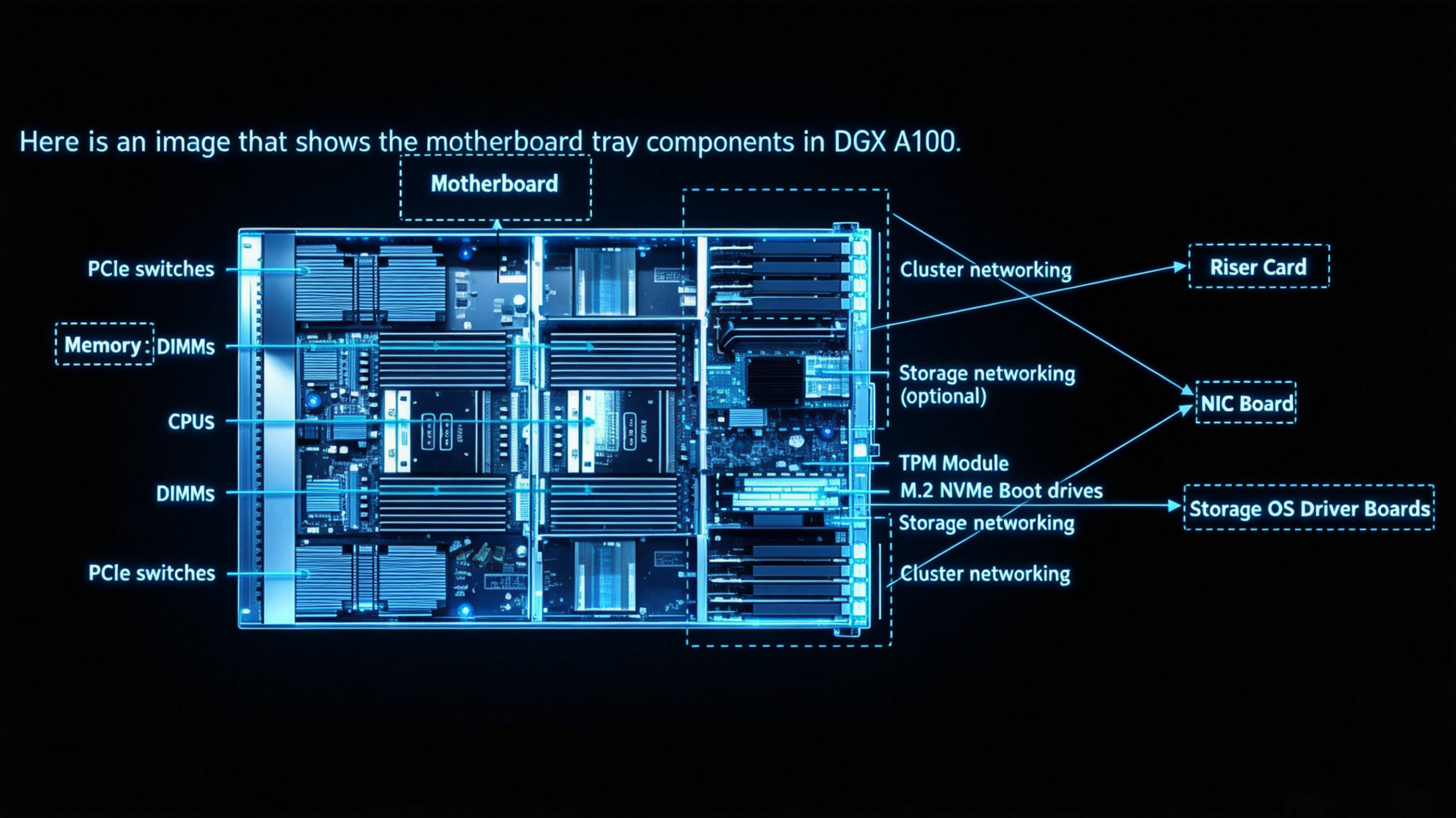
ZIITEK provided thermal interface materials for an 8-GPU AI server cluster operated by a leading domestic cloud service provider, supporting high-power GPU applications.
Key result: 88°C → 65°C; the supplied case material reports a 28% improvement in computing performance.
Case 2 | Intelligent Computing Center Cooling Optimization
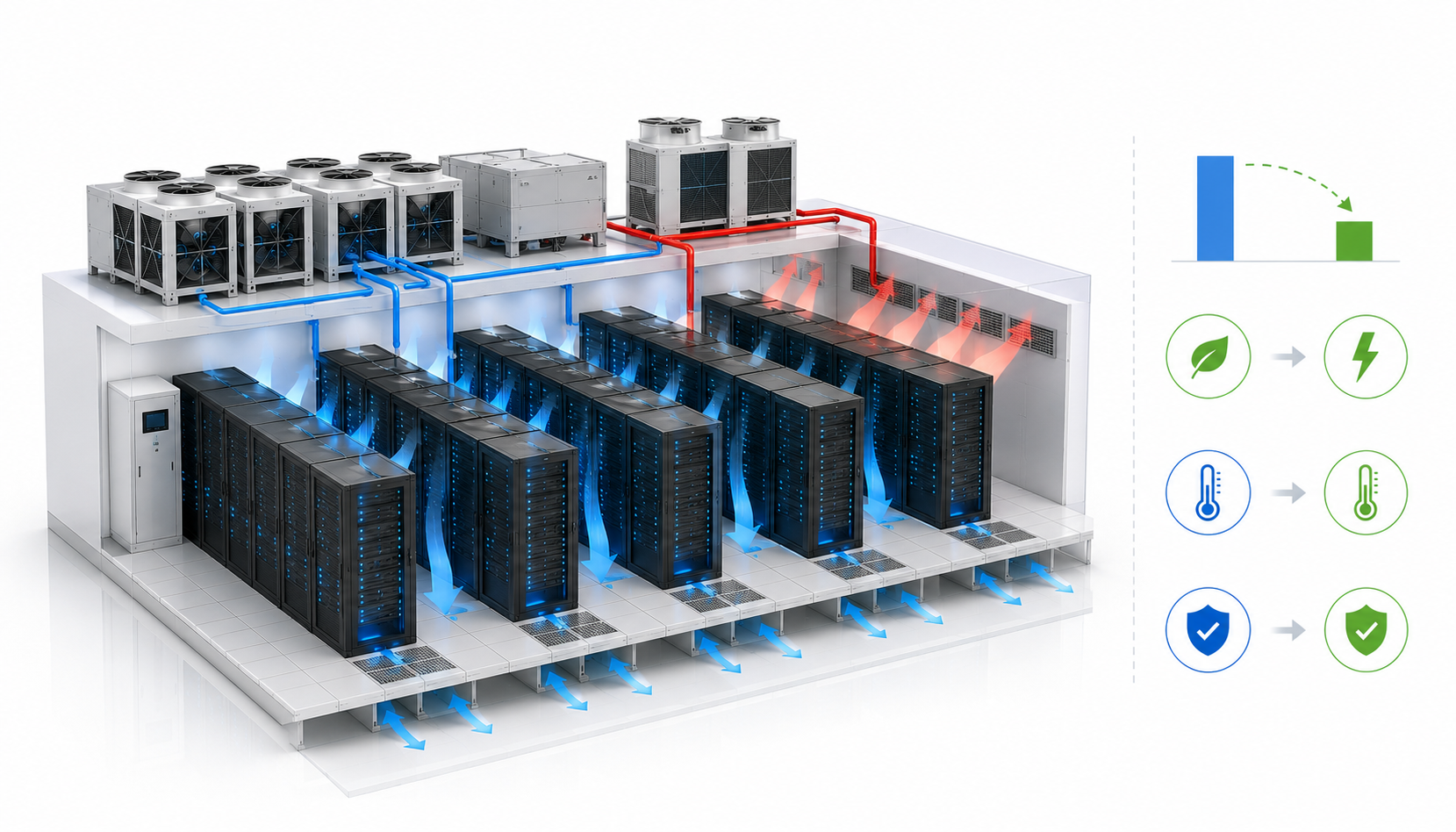
ZIITEK supported thermal optimization for large-scale server deployments at an intelligent computing center, helping address the high energy consumption associated with conventional air cooling.
Key result: PUE 1.42 → 1.08; the supplied case material reports annual electricity savings of more than 5 million kWh.
Case 3 | Thermal Management for a Self-Developed AI Server
For a self-developed high-performance AI server with a dense multi-chip architecture, ZIITEK applied a combination of liquid metal and phase change materials.
Key result: 10,000 hours of continuous operation; temperature fluctuation ≤ ±2°C; the supplied case material reports zero failures.
FAQ
Q1: Why do AI server GPUs require high-performance TIMs?
As GPU power consumption and heat flux density increase, interface thermal resistance between the chip and heat sink becomes increasingly important. High-conductivity, low-resistance TIMs help establish an efficient and stable heat-transfer path.
Q2: Why not use the same thermal pad throughout an AI server?
Different components have different power levels, interface gaps, hardness requirements, electrical insulation requirements, and mechanical stresses. Selecting liquid metal, PCM, thermal pads, or graphene heat-spreading materials according to each location provides a better balance of thermal performance and assembly reliability.
Q3: Where is liquid metal TIM typically used?
Liquid metal TIMs are suitable for low-thermal-resistance interfaces between high-power components such as GPUs/CPUs and their heat sinks. Actual application should be evaluated based on mechanical design, electrical isolation, and reliability requirements.
Q4: What applications are suitable for TIF800TU-16W?
It is suitable for power and PCB areas that require good conformability and compression performance. It combines 16 W/m·K thermal conductivity, low hardness, and electrical insulation, with multiple thickness options.
Q5: What is the difference between a graphene thermal interface material and a thermal pad?
Graphene thermal interface materials primarily use high in-plane thermal conductivity for lateral heat spreading and temperature equalization, while conventional thermal pads are mainly used to fill vertical gaps between components and heat sinks. The two technologies can also be combined.