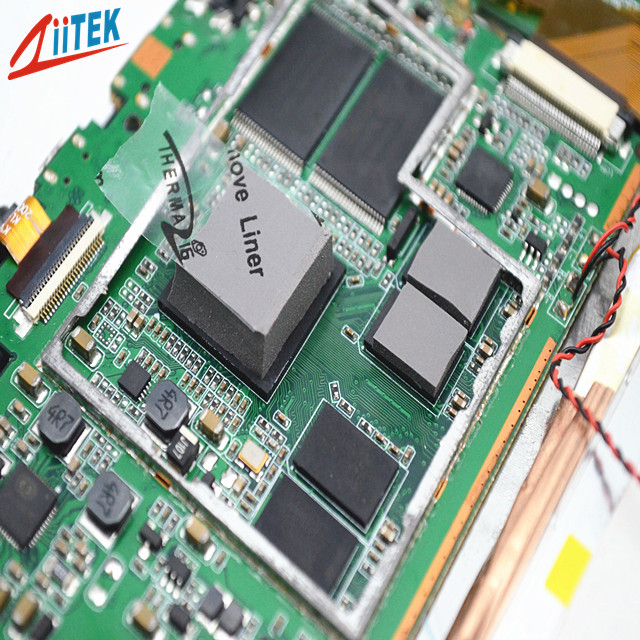
Z-PASTER 100-6060-11 無矽導熱墊片
- Thermal Conductivity (W/mK)
- 6.0
- Hardness (Shore oo)
- 60
- Density (g/cm³)
- 3.3
- 擊穿強度 (V/mm)
- ≥5500
- Thickness range (inch/mm)
- 0.040~0.200/1.00~5.00
- Recommended Operating Temperature (℃)
- -45~125
Z-PASTER 100-6060-11 6.0W/m·K Non-Silicone Thermal Pad
Z-PASTER 100 6060-11 series is a siloxane-free thermally conductive interface material applied to fill the air gaps between the heating elements and the heat dissipation fins or the metal base. Their flexibility and elasticity make them suited to coat very uneven surfaces. Heat can transmit to the metal housing or dissipation plate from the heating elements or even the entire PCB,which effectively enhances the efficiency and life-time of the heat-generating electronic components.
Z-PASTER 100-6060-11 — what to validate in production
Great thermal conductivity
Non-Silicone and oil-bleed
Available in different thickness options
High compliance adapts to various pressure application environments
此等級產品的應用領域
Typical uses for this non-silicone thermal pad line include the following industries and applications.


| 參數 | 數值(典型 / 標示值) | 方法 / 備註 |
|---|---|---|
| 顏色 | 深灰色 | 目視 |
| 結構 | Non-silicone resin | — |
| Thickness range (inch/mm) | 0.040~0.200/1.00~5.00 | ASTM D374 |
| Hardness(Shore oo) | 60 | ASTM 2240 |
| Density(g/cm³) | 3.3 | ASTM D792 |
| Recommended Operating Temperature(℃) | -45~125 | — |
| Breakdown Strength(V/mm) | ≥5500 | ASTM D149 |
| 介電常數 @1MHz | 9.0 | ASTM D150 |
| Volume Resistivity(Ohm·meter) | >1.0x10¹² | ASTM D257 |
| Thermal Conductivity(W/m·K) | 6.0 | ASTM D5470 /ISO22007 |
| 阻燃等級 | V-0 | UL94 (E331100) |
* 數值應與您採購訂單上引用的 PDF 版本相符。
What is Thermal Conductivity?
Thermal conductivity indicates a material's ability to conduct heat and is typically measured in W/m·K. Under the same testing conditions, a higher thermal conductivity generally indicates better heat-conduction capability.
What is Thermal Resistance?
Thermal resistance indicates the resistance to heat flow through a material or interface and is typically expressed in K/W or °C/W. Lower thermal resistance generally means that heat can pass through the material more efficiently.
How do I choose the right thermal interface material?
The selection of a suitable TIM typically requires consideration of heat source power, gap thickness, target thermal resistance, operating temperature, assembly pressure, electrical insulation requirements, flame-retardant requirements, reliability, and cost.

您的下一個散熱解決方案 從這裡開始。
從快速原型製作到規模化量產——我們的工程師隨時準備為您的應用設計客製化的散熱解決方案。深受電動車、5G 和消費性電子領域超過 7,000 家客戶的信賴。