UL Yellow Card Lookup: E331100 Coverage
UL Yellow Card E331100 covers named ZIITEK grades at stated colors and thicknesses. Run the lookup, read each field, and see what the card does not prove.
What a UL Yellow Card for a Thermal Material Actually Certifies
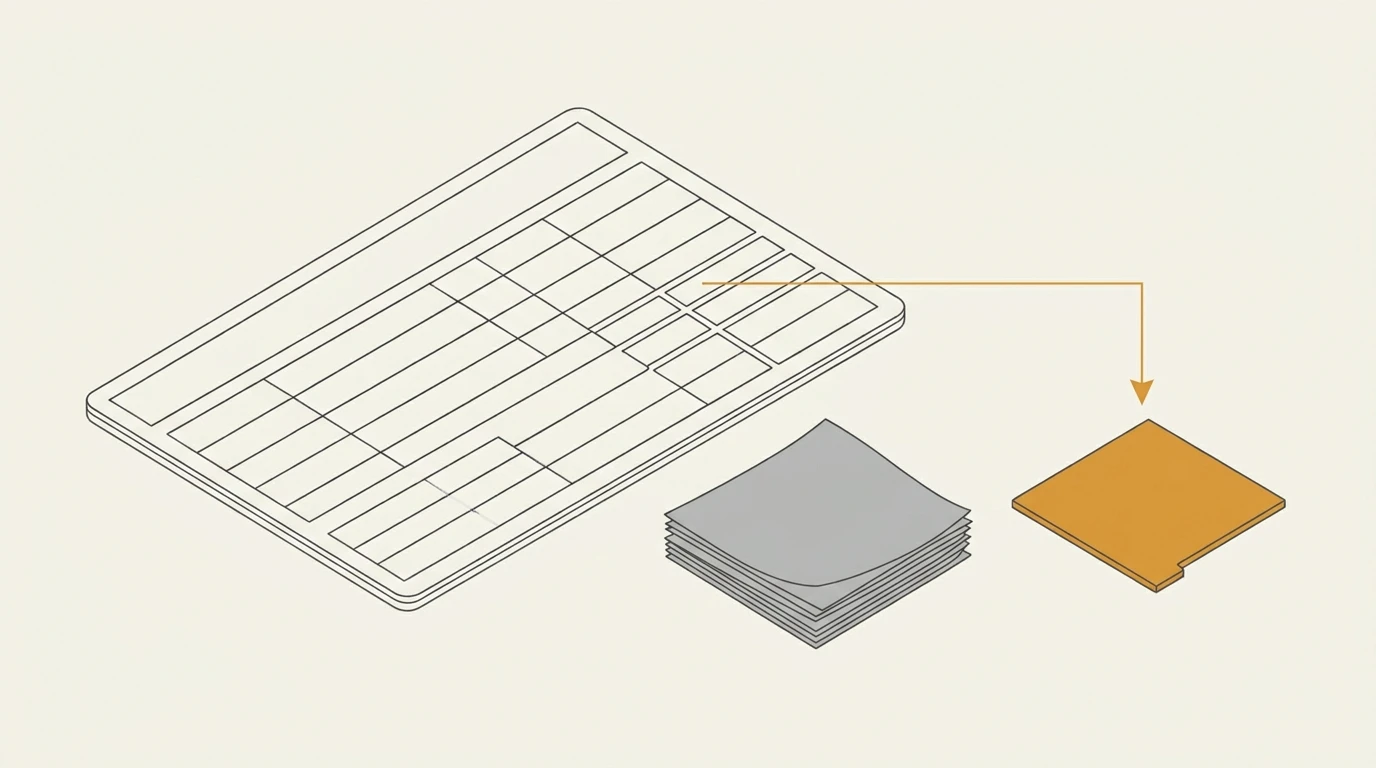
ZIITEK's UL Yellow Card E331100 is a Component – Plastics recognition file held under UL's Plastics Recognition Program. It states that specific ZIITEK grades, in specific colors and at specific minimum thicknesses, were tested by UL Solutions against UL 94 and, where tested, the UL 746 series, and that those grades stay under UL Follow-Up Services afterwards. It is not a listing of a finished part, nor a thermal datasheet.
A UL Yellow Card lookup is therefore narrow: one grade designation against one row of one file — five minutes of work. Treated as proof of something broader — thermal conductivity, REACH, a quality system — you are citing a document that does not carry those claims.
The value is narrow but real. UL's own framing is that recognized materials "can help save time and money" by eliminating further material testing and shortening the path to certain end-product certifications (UL Solutions, How to Read the UL Solutions Yellow Card). The card is what your safety engineer can lean on instead of running a fresh UL 94 program on the material.
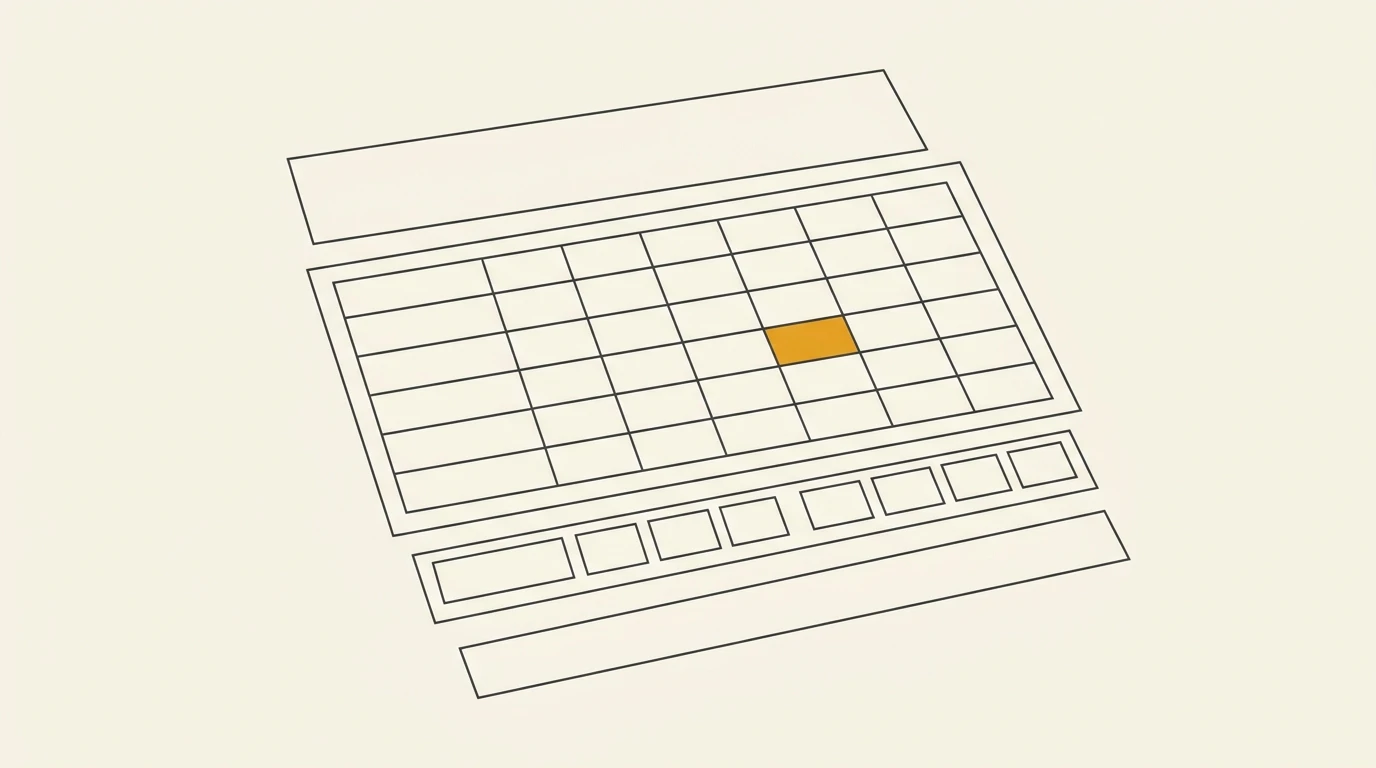
The card is a grid, not prose: a header band, a property matrix, a short-term block and a footnote band.
What File E331100 Covers at ZIITEK
ZIITEK's corporate records name the listee as DONGGUAN ZIITEK ELECTRONICAL MATERIAL AND TECHNOLOGY LTD.; confirm that exact spelling in the lookup itself. The file number sits in the upper-right corner of the card. UL's guide to reading the card notes that the listee name "does not necessarily refer to the manufacturing locations of the material", and that every listed location is subject to surveillance (UL Solutions, How to Read the UL Solutions Yellow Card, eGuide p. 3). The file answers who holds the recognition; which plant extrudes your sheet you confirm in the audit.
ZIITEK's certification summary lists the covered grade families below. The flame-rating ceiling across the file is UL 94 V-0. The W/mK, voltage and IP values in the middle column are ZIITEK datasheet data, not card fields.
| Grade family | What the family is (ZIITEK datasheet data) | What you still confirm on the card |
|---|---|---|
| TCP200 series | Injection-molded thermally conductive engineering plastic at 1.5, 1.8, 3.0 and 5.0 W/mK, for parts that would otherwise be aluminum | Each TCP200-xx-xx designation individually, plus the color you intend to mold |
| TCP300PS | Thermally conductive plastic, 0.9 W/mK grade, dielectric breakdown above 10,000 VAC | The exact designation, and the flame class at your wall thickness |
| TIC800K | Phase-change material, 1.6 W/mK, light amber, supplied with PI ultra-thin insulation | The color, since the grade is supplied in one named color |
| TIF, TIS and TIG780 series | Silicone thermal pads (1.25–16 W/mK), thermally conductive insulators (1.0–1.6 W/mK, 1500–6000 VAC) and thermal grease (1.0–5.2 W/mK) | Which individual grades inside the family are listed |
| Z-FOAM8 | Silicone foam gasket family; ZIITEK's foam data lists UL 94 V-0 and IP68 for Z-FOAM800 | The class ZIITEK holds for your density, since UL 94 rates foams by density under HBF, HF-1 and HF-2 |
| Z-Paster100 | Non-silicone thermal pad, 1.5–10 W/mK, 0.25–5.0 mm, for assemblies that cannot tolerate siloxane | The grade and the thickness row covering what you order |
Two cautions. V-0 is the ceiling of the file, not a uniform value: a card can carry V-1 or V-2 at thin sections of the same grade, and only the row says which. And the names above are commercial families: what a card recognizes is a grade designation. ZIITEK's part numbers show the specificity involved — TCP300PS-09-06A1, not TCP300PS — and that string is what you match. Recognition attaches to the material, not the shape it is cut to, which is why a silicone pad and a foam gasket can sit in a Component – Plastics file.
The Four Fields That Decide Whether Your Grade Is Covered
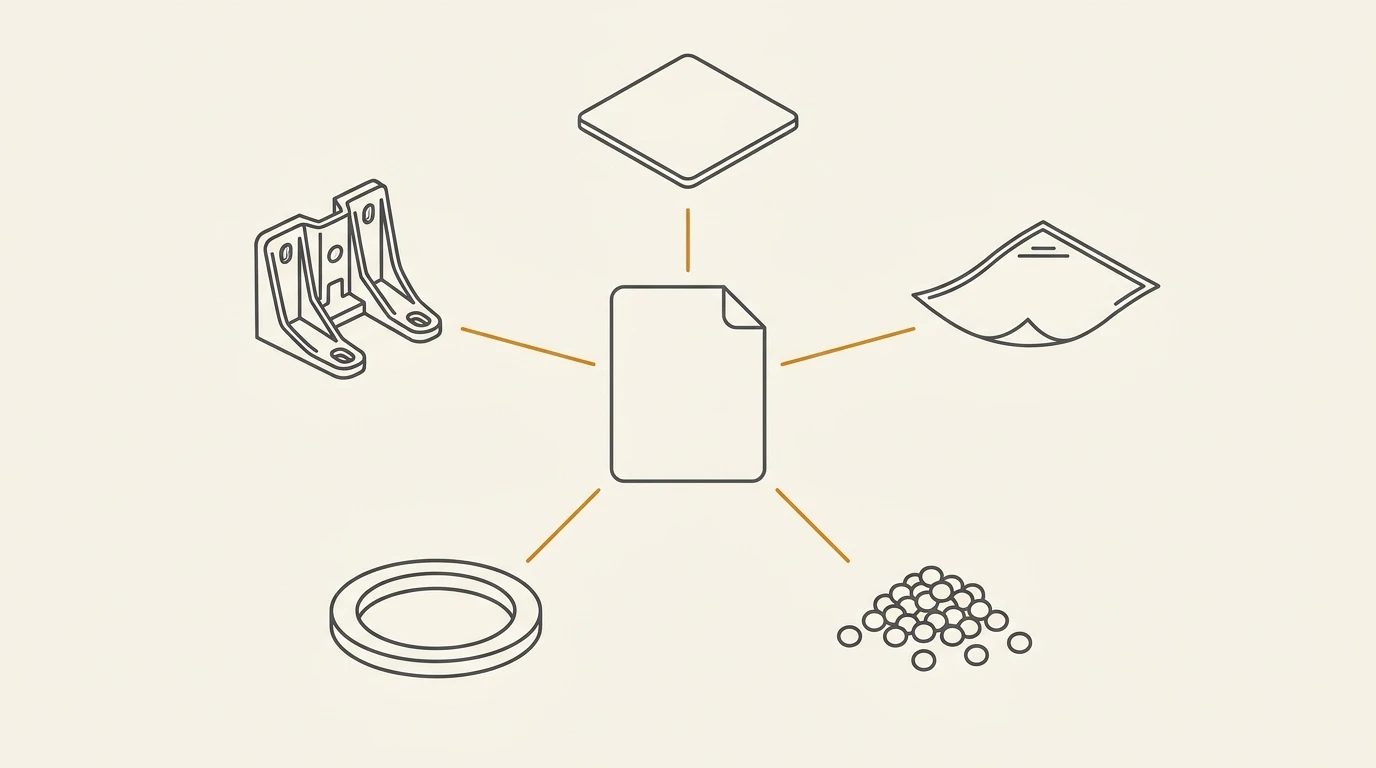
These four fields, read together, answer the buyer's question.
Grade designation. The designation plus the company or trade name is the Recognition Mark for a plastic, and that string is your traceability hook: the carton should match the card and the purchase order. Footnotes such as (f1) qualify the grade's suitability for outdoor use, and application-specific ones such as (f3) record a chemical exposure; neither is decoration.
Color. Color affects flammability, so it is a rating variable, not a cosmetic attribute. An "ALL" color rating is granted after testing the extremes — natural, the heaviest carbon black, the heaviest inorganic pigment (typically white) and the heaviest organic pigment — and holds only below those maxima. Two consequences bite: ALL applies to material delivered directly from the manufacturer, and a color concentrate added at your molder requires further evaluation. If the card lists NC and BK only, a red part sits outside the recognition.
Minimum thickness (Min Thk). This column is where most mistakes happen, and UL's guide to the card sets two rules. Where specific thicknesses are listed, recognition runs up to the maximum thickness the standard covers, 13 mm. Where a range is given, such as 3.0 to 3.3 mm, recognition is limited to that band, nominal plus 10% and minus 0% — exactly how 3.0 mm becomes 3.3 mm at the top. Either way, a pad thinner than the thinnest listed row is not covered.
Flame class, on your row. UL's example card — for an unrelated material, not the ZIITEK file — shows one grade as V-1 at 0.75 mm and V-0 at 1.0 mm and 3.0 mm. A V-0 claim at 1.0 mm is not a V-0 claim at 0.5 mm, and quoting the class without the thickness is the most common transcription error in customer specifications. If your requirement is V-0 below the first row, the file does not support it — change the thickness or change the grade. The class definitions, and when a thin material is tested to VTM instead, are in UL 94 V-0 versus VTM-0.
The Columns Buyers Misread
Three groups of numbers get quoted out of context, and none is a thermal property.
RTI (relative thermal index), from UL 746B. RTI indicates a material's ability to retain a given property — electrical, mechanical impact or mechanical strength — when exposed to elevated temperature over time. It is established per property and per thickness, which is why one grade can show three RTI numbers. It is a material-level endurance index, not a maximum operating temperature for your assembly, and no substitute for the datasheet operating window (−45 to 200 °C for the TIF, TIS and TIG780 families, −45 to 125 °C for TIC800K and Z-Paster100). The two answer different questions by different methods.
HWI and HAI, from UL 746A. Hot-wire ignition and high-current arc ignition are reported as performance level categories where 0 is best; HWI runs to ASTM D3874. They describe ignition resistance near overloaded components and arcing sources. Useful for a power enclosure, irrelevant to whether a gap pad conducts heat.
Dielectric strength, CTI and the short-term block. Dielectric strength is recorded per unit thickness, so multiplying it by your thickness gives an idealized breakdown figure — 32 kV/mm at 0.2 mm is 6.4 kV — not a qualification of your part, because voids, creepage and electrode geometry decide the real withstand. Comparative tracking index has no end-product equivalent test. The part-level withstand a supplier quotes (1,500 to 6,000 VAC for TIS) is a different claim from the card's material-level kV/mm; your drawing should say which you rely on.
The f1 and f2 suffixes come from UL 746C. f1 means the material passed both the UV and the water-immersion requirements — UV exposure of 1,000 hours in a xenon-arc weatherometer, or 720 hours in a carbon-arc unit, plus seven days of immersion at 70 °C. f2 means it met only one of the two, or was only partially tested, so outdoor acceptability is judged per application (UL Prospector, UL 746C outdoor suitability).
A Five-Minute UL Yellow Card Lookup for E331100
UL Product iQ is the database of record, and a free account is enough to read a card (UL Solutions, Product iQ); UL Prospector surfaces the same registrations.
- Search the file number. Enter E331100. If several results appear, filter to the plastics record and check the listee is DONGGUAN ZIITEK ELECTRONICAL MATERIAL AND TECHNOLOGY LTD. A file number without a listee name is not evidence of anything.
- Check the revision date. The card carries a report date and a last-revised date. If the PDF in your supplier pack predates the database revision, the database wins — recognition changes when grades, colors or thicknesses are added.
- Match the designation string exactly. Character by character against your drawing and the certificate of analysis, footnotes included. Family names such as TIF or TCP200 are not designations and cannot be searched as if they were.
- Read only your row. Find the color you buy, then the highest row whose minimum thickness is at or below your ordered thickness, and read the flame class there. If your ordered thickness sits below the thinnest row, the file does not cover it.
- Save the evidence. Screenshot the card with the last-revised date and file it with the drawing revision; that is what an auditor asks for.
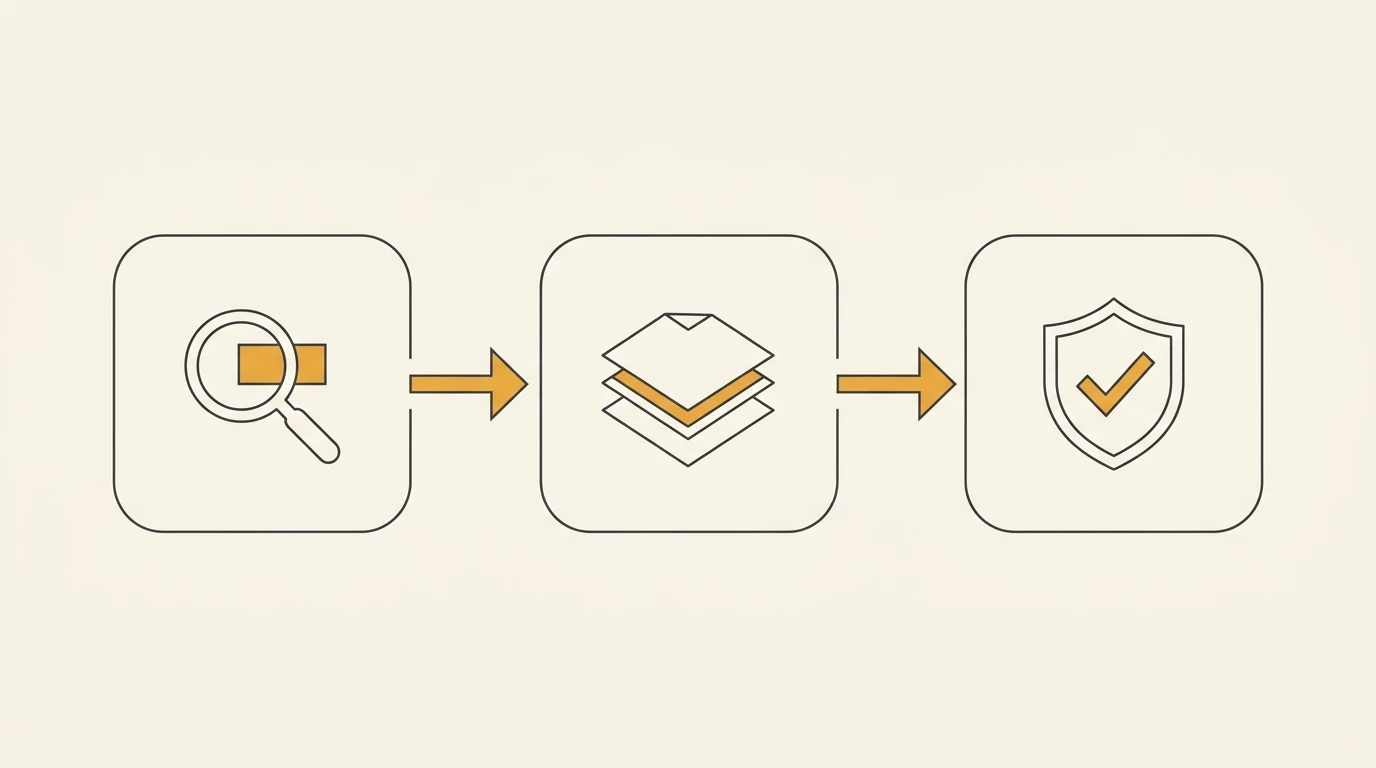
The five steps come down to three judgments: which file, which row, which evidence.
What the Yellow Card Does Not Prove
It is not a thermal-conductivity rating. There is no W/mK column on a yellow card, because the plastics program tests flammability, electrical, physical and mechanical properties, and thermal aging (UL Solutions, Plastics Testing and Certification). The 1.5–5.0 W/mK of a TCP200 grade or the 1.6 W/mK of TIC800K comes from ZIITEK's own thermal testing, not from UL. Bulk resistance is arithmetic on those numbers — a 0.5 mm pad at 3 W/mK is 1.67 × 10⁻⁴ m²·K/W — and most quoted thermal data rests on ASTM D5470. How to read the conductivity figure is covered in what W/mK means for a TIM.
It is not a RoHS or REACH declaration. RoHS can appear on a card as an optional credential under UL 746R, reported per color — UL's example reads "color: NC,BK" — and it sits alongside the base recognition rather than inside it. Non-halogenated status works the same way under UL 746H. REACH is not a UL plastics credential at all; those obligations come from Regulation (EC) 1907/2006, and RoHS from Directive 2011/65/EU. SVHC statements, Prop 65 warnings, PFAS and TSCA reporting sit outside both. All of those arrive as third-party reports and declarations; the checks to run are in RoHS, REACH, Prop 65 and PFAS for TIMs.
It is not a quality-system certificate. IATF 16949, ISO 9001, ISO 14001 and QC 080000 are management-system certificates issued to a site by a certification body against a defined scope. ZIITEK holds all four, each with its own validity period, and none appears on the yellow card. The card also does not replace production-part approval — what an IATF 16949 certificate covers is separate diligence.
It is not a statement that your end product passes. The card carries UL's own disclaimer that ANSI/UL 94 small-scale data "is intended solely for determining the flammability of plastic materials used in the components and parts of end-product devices and appliances, where the acceptability of the combination is determined by UL." A V-0 pad inside a V-2 enclosure is not automatically compliant.
It is not a certificate for the converted part. Recognition attaches to the material form as supplied — including, where the card lists one, a PI-backed film or a foam. What falls outside it is a change to the material itself — an adhesive, a color masterbatch, a coating — not the shape it is cut to. If your part differs from the listed form, ask what the card covers before you write "UL recognized" on a drawing. Follow-Up Services monitors the grade over time; it is not a lot certificate.
What to Put in the Specification Instead
Replace "UL listed" — the wrong term for a recognized component — with a line a supplier can be held to:
- Grade designation exactly as on the card, footnotes included.
- File number E331100, plus the listee name.
- Color as a controlled value, and whether an ALL-color rating is required.
- Thickness with tolerance, and the flame class required at that thickness.
- Evidence: a dated Product iQ screenshot and a certificate of analysis per lot.
If the grade you want is not covered, you have two honest routes: specify one that is, or accept an unrecognized material and carry the flammability evaluation in your end-product certification. Both are defensible; claiming recognition the row does not show is not.
For how these documents fit together — flame ratings, chemical declarations, quality systems — start at the certifications and compliance hub. Choosing between two thermally conductive plastics for a housing? The aluminum replacement comparison covers the mechanical side. If you need a covered grade confirmed against your drawing, send us the designation, color and thickness and we will check it against the file before you tool.