What Is Skiving? Precision Manufacturing Process
Skiving is a precision cutting process that shaves ultra-thin, uniform layers from blocks and sheets — and why it matters for thermal interface materials.
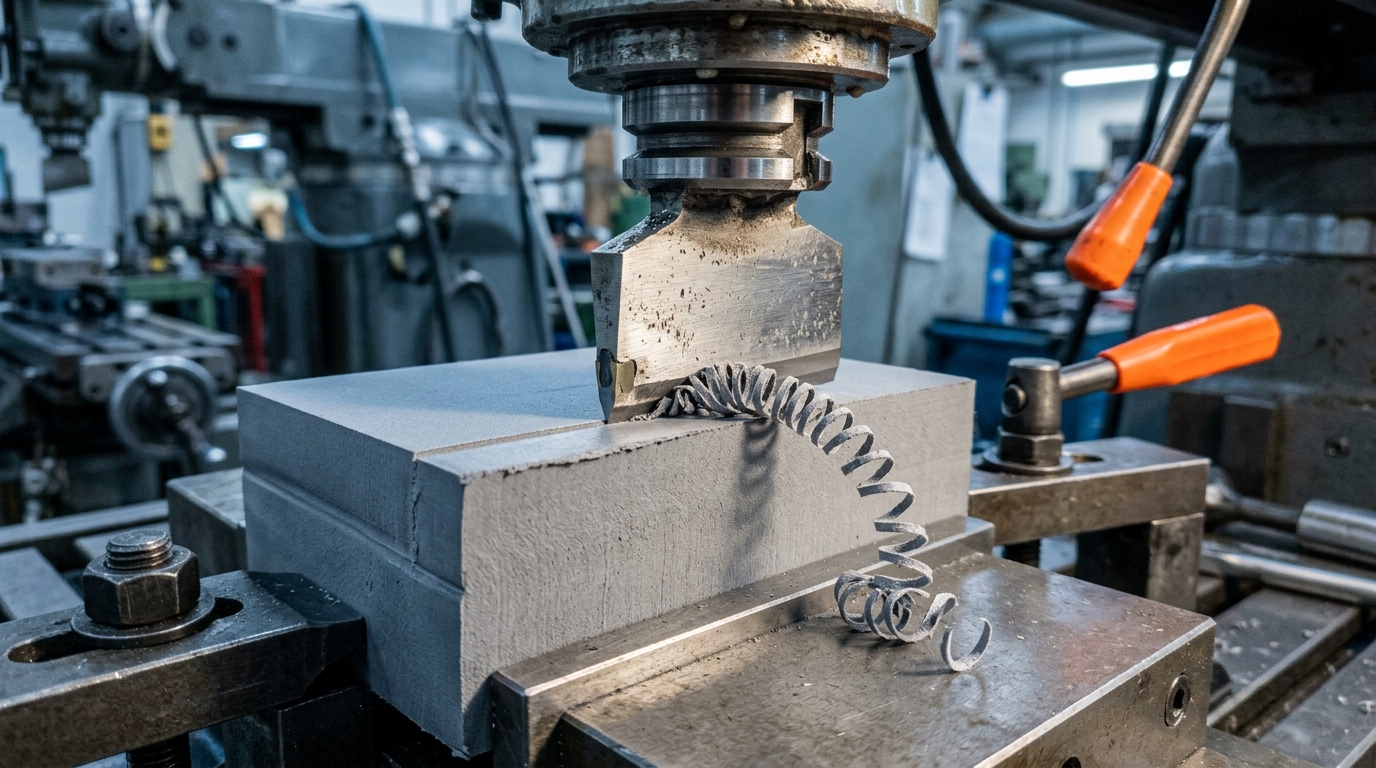
Skiving is a precision cutting process that shaves thin, uniform layers from a block or thick sheet of material using a sharp blade or rotating cutter, producing smooth surfaces and extremely thin parts that rolling, extrusion, or stamping cannot achieve. If a supplier mentions the skiving process for your thermal pad, graphite sheet, or foam gasket, this article explains what it actually does, which materials it suits, and how it stacks up against die cutting, extrusion, and cold pressing.
What Is Skiving?
Skiving is a subtractive cutting operation: instead of stamping a shape out of a sheet or molding a part to thickness, a skiving machine moves a precision-profiled blade across the surface of a block or thick sheet and slices off a continuous, thin layer. The blade removes only a fraction of a millimeter at a time, which is why skived parts come out thinner and with a smoother surface than parts made by most competing processes.
The word "skiving" is used in three different industries, and that causes most of the confusion around it:
- Manufacturing: cutting thin layers from metal, plastic, foam, graphite, or rubber — the meaning this article covers.
- Leathercraft: shaving leather hides down to a uniform thickness before stitching.
- British slang: "skiving off" means skipping school or work — unrelated to any manufacturing process.
The manufacturing sense is the one engineers care about. As [the metalworking definition of skiving on Wikipedia](https://en.wikipedia.org/wiki/Skiving_(metalworking)) notes, skiving cuts material off in slices and is used when a material must not be work-hardened or must not shed the minute slivers that cold rolling produces.
How the Skiving Process Works
The principle is simple: a skiving cutter — often made with tungsten carbide edges — is held at a fixed distance above the workpiece while the material feeds past it. Each pass removes a thin, uniform layer. Because the cutting action is continuous rather than reciprocating, the process can run at high speed, and the resulting surface is smooth enough that many skived parts need no secondary finishing.
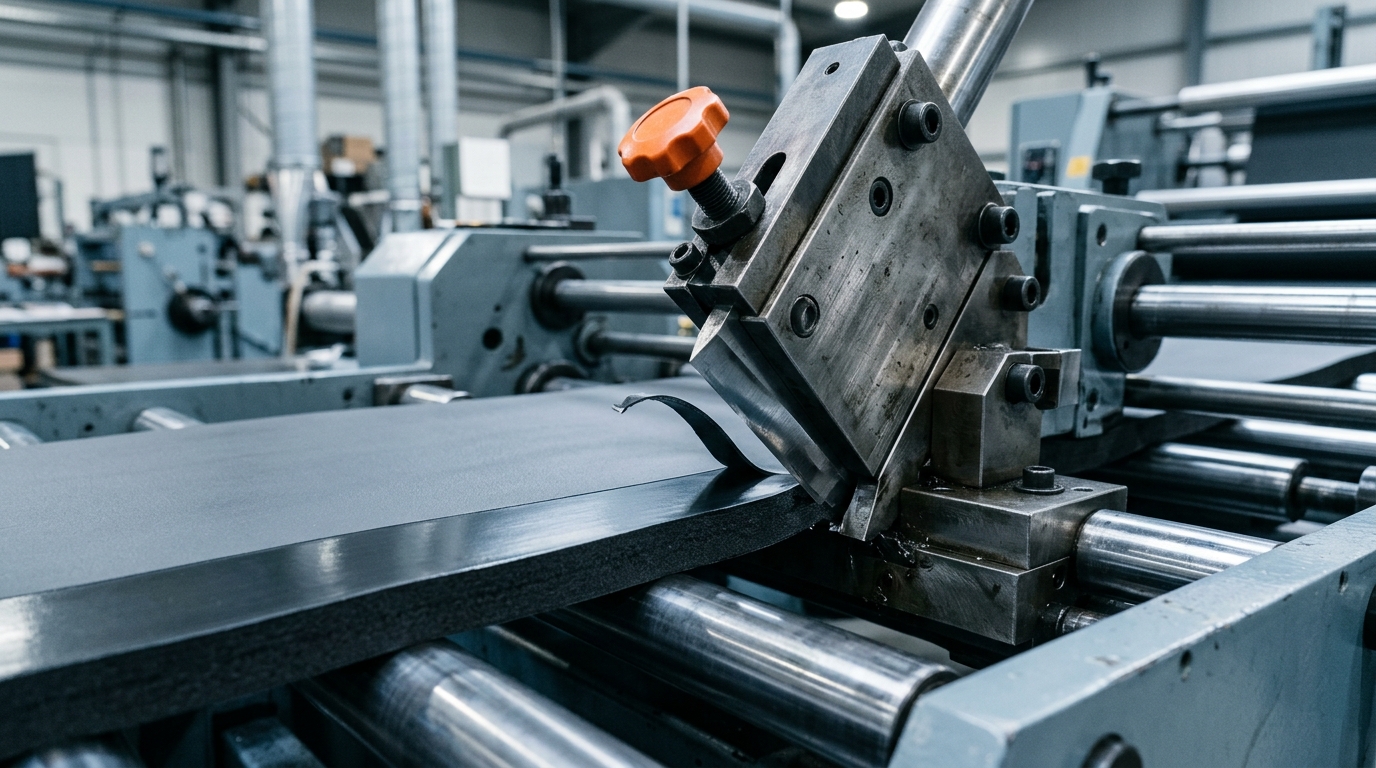
There are two common machine configurations. In metalworking skiving, the tool cuts cylindrical or flat surfaces, typically for hydraulic cylinder bores, shafts, and heat sink fins; it is often paired with roller burnishing, which presses and smooths the surface instead of cutting it. Skiving and roller burnishing are the standard pairing for precision cylindrical parts such as piston rods and cylinder tubes. In material-converting skiving, the setup looks more like a large precision slicer: a block or thick roll of foam, PTFE, graphite, or elastomer is fed past the blade, which peels off sheets of consistent gauge.
The skiving process: a precision blade removes a thin, uniform layer from the surface of a block or thick sheet.
For thermal materials, the second configuration matters most. It is the same family of equipment that produces skived PTFE sheets, skived graphite sheet, and precision-thickness foam rolls — and it is what a skiving machine does in a converting shop. One related branch deserves a mention for clarity: in gear manufacturing, power skiving uses a rotating cutter that meshes with the workpiece to cut internal gears. It is an important technique in its own right, but it works on metal gears — not on the sheet and block materials covered here.
What Materials Can Be Skived?
Any material that can be cut cleanly in thin layers without tearing or crumbling is a candidate. In practice, the common skived materials are:
| Material | Typical skived products | Notes |
|---|---|---|
| Metal (copper, aluminum) | Heat sink fins, cylinder bores | Fins skived from one block transfer heat better than joined fins |
| PTFE | Skived PTFE sheet, gaskets, insulation | A mature commercial category; sheets skived from blocks or rods |
| Graphite | Skived graphite sheet for heat spreading | Thin sheets retain high in-plane thermal conductivity |
| Foam and elastomer | Precision-thickness pads, seals, cushioning | Foam converters offer skiving and slitting as a standard converting service |
| Rubber and flexible plastics | Gaskets, washers, thin profiles | Requires sharp tooling and controlled feed to avoid tearing |
The shared requirement is material stiffness and internal cohesion: the layer being cut must hold together long enough for the blade to separate it cleanly. Brittle, particle-filled, or heavily fibrous materials — for example, ceramic-filled sheets or fiberglass-reinforced laminates — are usually poor skiving candidates because the blade chips the filler and roughens the cut edge.
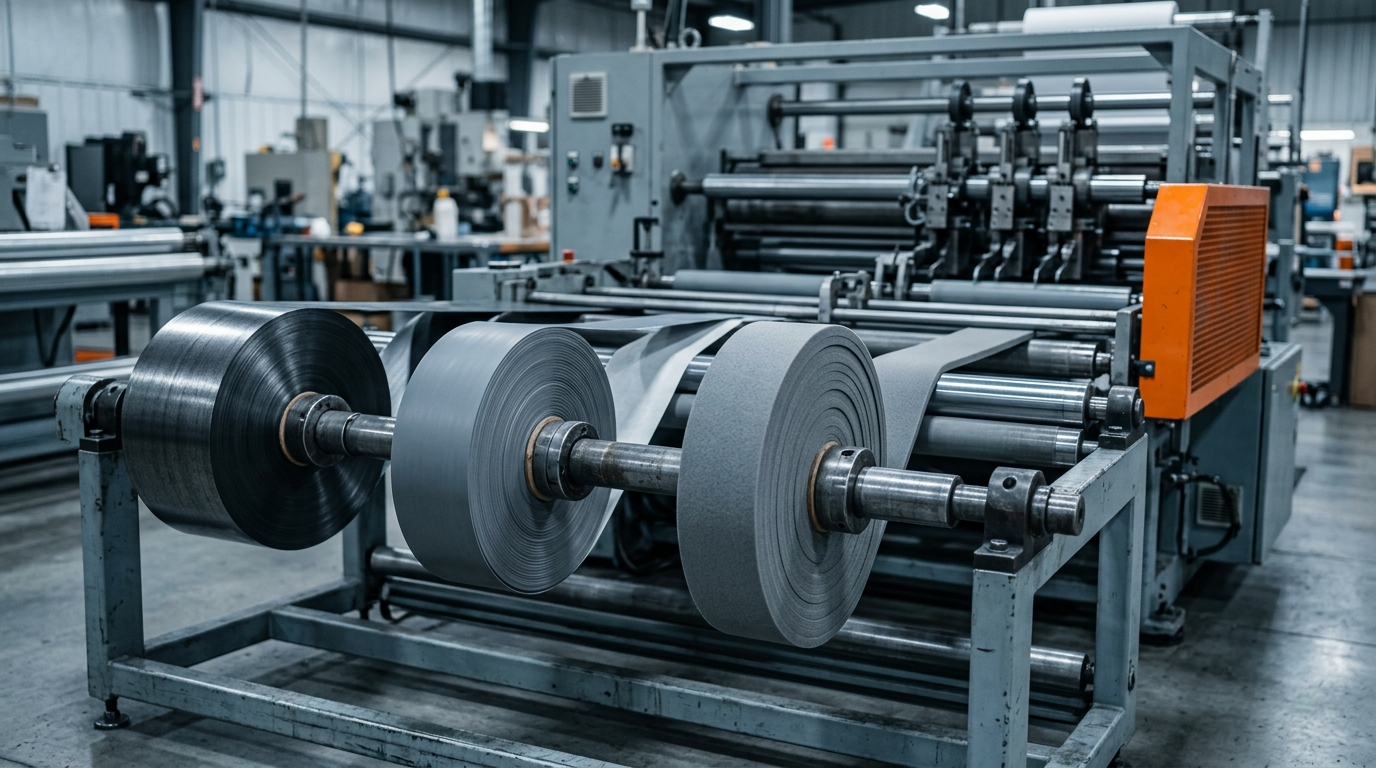
Skived materials in a converting shop: graphite sheet, silicone pad stock, and foam rolls that will be cut to precise gauges and shapes.
Skiving vs. Die Cutting vs. Extrusion vs. Cold Pressing
Engineers usually reach for skiving when the other three options hit a wall. The comparison below is the short version; the fuller decision logic follows.
| Dimension | Skiving | Die cutting | Extrusion | Cold pressing / compression molding |
|---|---|---|---|---|
| How it works | Blade shaves thin layers off a block or sheet | Punch-and-die stamps shapes from sheet stock | Material is forced through a profile die | Sheet or blank is pressed to thickness and shape |
| Best at | Ultra-thin, uniform parts with smooth surfaces | Complex 2D shapes in high volume | Long, continuous profiles | Thick or contoured parts in production runs |
| Thickness control | Excellent; gauge set by blade position | Limited by the gauge of the incoming sheet | Fixed by the die profile | Set by the mold and press |
| Tooling cost | Low; blades, no per-part die | Medium to high; a new die per shape | High; custom extrusion dies | High; machined molds |
| Edge quality | Smooth, clean cut | Clean sheared edges | As-extruded surface | Molded, rounded edges |
| Material flexibility | Metals, PTFE, graphite, foam, elastomer | Sheets, films, and foams, often with adhesive carriers | Mostly thermoplastics and metals | Rubbers, foams, and molded plastics |
The practical rule: die cutting wins when you need thousands of identical 2D shapes from sheet stock; extrusion wins for long continuous profiles; cold pressing wins for thick molded contours; skiving wins when the part must be very thin, very smooth, and free of the stress and edge issues the others introduce. For a deeper look at how the stamping side works, the differences between die-cut and laser-cut methods are a useful comparison, and our die-cutting and custom converting services for thermal materials page covers how converting steps combine in practice.
One more distinction matters: skiving and die cutting are not either-or. Many custom thermal parts are skived to gauge first, then die-cut to shape — the skiving step makes the sheet thin enough, and the die-cutting step makes it the right outline.
Why Skiving Matters for Thermal Interface Materials
Thermal interface materials (TIMs) push thickness limits harder than most components. Every extra tenth of a millimeter of pad adds thermal resistance, so designers want the thinnest uniform sheet their design can tolerate — and that is precisely the regime where skiving performs best.
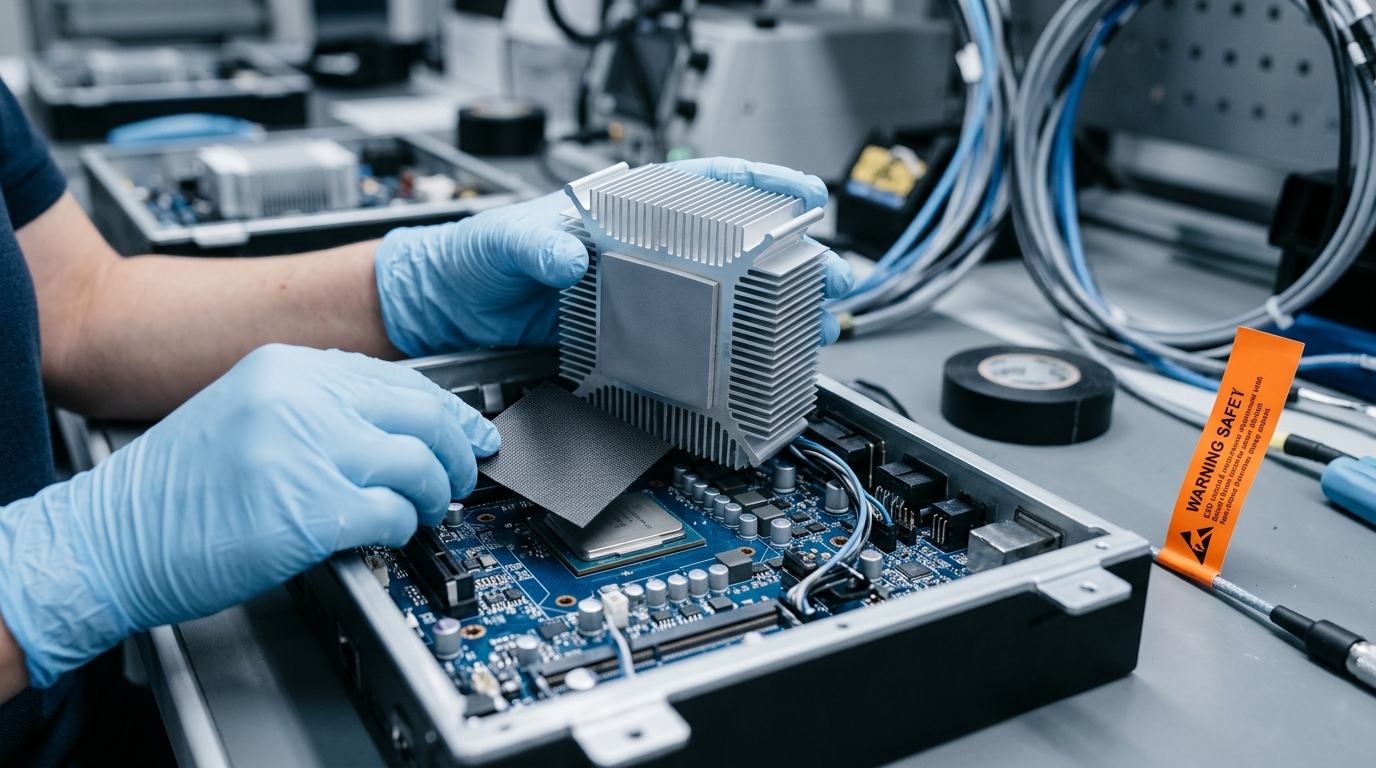
Three thermal applications depend on skiving or its close relatives:
- Skived graphite sheet. Graphite blocks can be skived into thin, flexible sheets that keep high in-plane thermal conductivity, which is why skived graphite appears in smartphones, laptops, and LED modules as a heat-spreading layer. The skived sheet has no resin layer to interrupt conduction, unlike some coated constructions.
- Skived-fin heat sinks. Fins skived from a single aluminum or copper block eliminate the interface between base and fins, which lowers thermal resistance. Skived-fin heat sinks are a standard air-cooling option in electronics enclosures.
- Precision converting of pads, gaskets, and tapes. Silicone thermal pads, foam gaskets, and adhesive-backed films are routinely skived or sliced to exact gauges before being die-cut into part shapes. This is why skiving shows up inside the same converting services as die cutting: what a thermal pad is and how it is specified and die-cut silicone foam gaskets for sealing and cushioning are two typical end products of that chain.
Converters such as ZIITEK combine skiving, slitting, and die cutting under one roof so that a custom thermal part can move from raw material to finished shape without changing suppliers — which matters when thickness tolerance and material traceability are part of the spec.
Skived thermal materials in use: a thin graphite spreader and a thermal pad between a processor and its heat sink.
Tolerances, Limits, and When Not to Use Skiving
Skiving can hold very tight thickness tolerance — for many materials, far tighter than die cutting from stock sheet — but the practical limits depend on the material, the machine, and the blade geometry, so they should always be confirmed against a sample run rather than assumed. A few boundary rules are safe to generalize:
- Soft, sticky materials tear. Unreinforced silicone gels or low-durometer foams may deform instead of cutting cleanly; converters compensate with coated blades and slower feeds, but not every soft material is skivable at production rates.
- Particle-filled materials dull blades and roughen edges. Ceramic-filled and fiber-filled sheets chip at the cut line, which defeats the smooth-edge advantage of skiving.
- Very high volumes may not justify it. Skiving is economical at prototype and medium volumes because there is no per-part die, but a stamping or molded process can beat it on unit cost once volume is high enough to amortize tooling.
- Thickness is only half the story. After skiving, dimensional stability depends on the material's compression set and thermal expansion — thermal pad thickness and compression behave differently in service than at the converter's bench.
If you are choosing between processes for a custom thermal part, start from the thickness and tolerance on your drawing, then work backward through the material and the volume. Our guide to choosing the right thermal interface material walks through the selection logic in more detail.
Skiving Services for Custom Thermal Components
Skiving is not an exotic process, but it is an exacting one: the difference between a good and a bad skived part is blade setup, feed control, and knowing which materials cooperate. That expertise lives with converters who run skiving alongside die cutting every day. ZIITEK operates die-cutting and custom converting lines for thermal materials across four production bases, with drawing-based fabrication, multi-material lamination, and quality systems certified to IATF 16949, UL, RoHS, and REACH — and our thermal pad product range shows the kind of materials that move through those lines.
Send your drawing with the required thickness and tolerance to our converting engineers for a feasibility review — they will tell you whether skiving is the right process for your part, and what gauge it can realistically hold.