Rubber vs Silicone Gaskets: Which to Choose
Compare rubber vs silicone gaskets on temperature, chemical resistance, compression set, flame rating and cost — then choose the right elastomer for the joint.
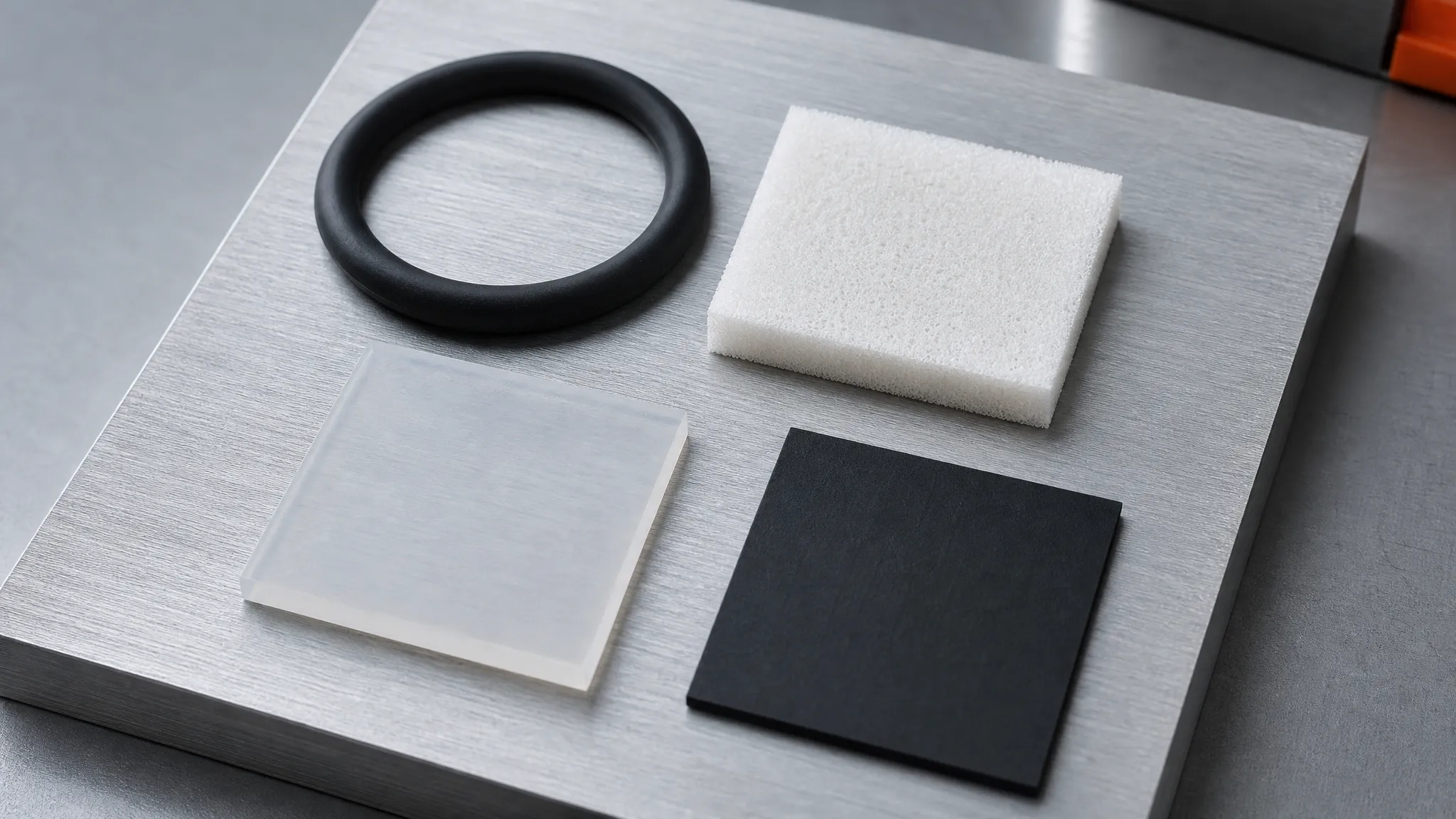
Rubber vs Silicone Gaskets: The Short Answer
Write "rubber gasket" on a drawing and you have not specified a material — you have named a family that spans EPDM, nitrile, neoprene and fluoroelastomer, each with its own temperature ceiling and its own chemical blind spots. Silicone is the other side of the same problem: it is superb at temperature and weathering and mediocre at oil, and once you decide to use it you still have to choose between a solid sheet and a compressible foam.
So the honest answer to rubber vs silicone gaskets is a routing rule, not a winner. Choose silicone when the joint runs hot, sits outdoors, or has to meet food-contact or cleanroom rules. Choose a rubber compound — nitrile or fluoroelastomer for oil, fuel and solvents, EPDM for water and weather — when the joint sees hydrocarbons, when tear strength matters, or when cost per part dominates at high volume. Choose silicone foam when the seal must absorb tolerance and vibration at low closing force. Everything below is the detail behind those three sentences.
This guide is published by ZIITEK, a manufacturer of silicone foam sealing materials, so read our account of silicone's limits with that in mind — they are real, and we name them.
| Dimension | Silicone (solid & foam) | Rubber family (EPDM / NBR / CR / FKM) |
|---|---|---|
| Practical temperature range | −60 to +200 °C, special grades to +230 °C | −50 to +120 °C typical; FKM to ~200 °C |
| Oil, fuel and solvent resistance | Poor to fair | Excellent (NBR, FKM) |
| UV, ozone and weathering | Excellent | Good (EPDM) to poor (NBR) |
| Compression set under load | Good (solid), excellent (foam) | Good, depends on compound |
| Flame rating achievable | UL94 V-0 available | UL94 V-0 available in halogen-free or FR compounds |
| Food-contact and medical grades | Yes (platinum-cured, FDA / USP Class VI) | Specialty grades only |
| Unit material cost | Higher | Lower |
| Best first fit | Hot, outdoor, clean, food-safe seals | Oil, fuel, hydraulic, high-volume cost-driven seals |
For the wider material map this article sits inside, start with our guide to silicone foam sealing and cushioning materials, which covers the sealing families across electronics, battery and appliance assemblies.
What "Rubber" and "Silicone" Actually Cover
The word rubber is a category, and the four compounds that dominate industrial gaskets behave very differently. EPDM — ethylene propylene diene monomer — is the outdoor workhorse: it resists water, steam, ozone and sunlight and holds up from about −50 °C to +120 °C, which is why it seals weatherstripping, HVAC enclosures and automotive exterior joints. Nitrile (Buna-N) trades weather resistance for oil resistance and is the default for anything touching hydraulic fluid, fuel or grease. Neoprene (CR) sits in the middle: good all-round mechanical strength and moderate chemical resistance. Fluoroelastomer (FKM, sold as Viton) is the premium end — it shrugs off most solvents and fuels and keeps working near 200 °C, at several times the price of nitrile.
Silicone is a different polymer backbone entirely — a silicon–oxygen chain rather than a carbon chain — which is where its temperature stability and its inertness come from. It ships in two forms that engineers often conflate. Solid silicone is a dense sheet or molded part, die-cut or compression-molded to a fixed profile. Silicone foam — often called silicone sponge — is a cellular version, open- or closed-cell, that compresses under very light force and springs back, which is what makes it useful where the gap is not perfectly parallel or the housing cannot take much clamp load.
That distinction matters more than the rubber-vs-silicone headline, because most "silicone failed" field reports are really "the wrong silicone form was specified."
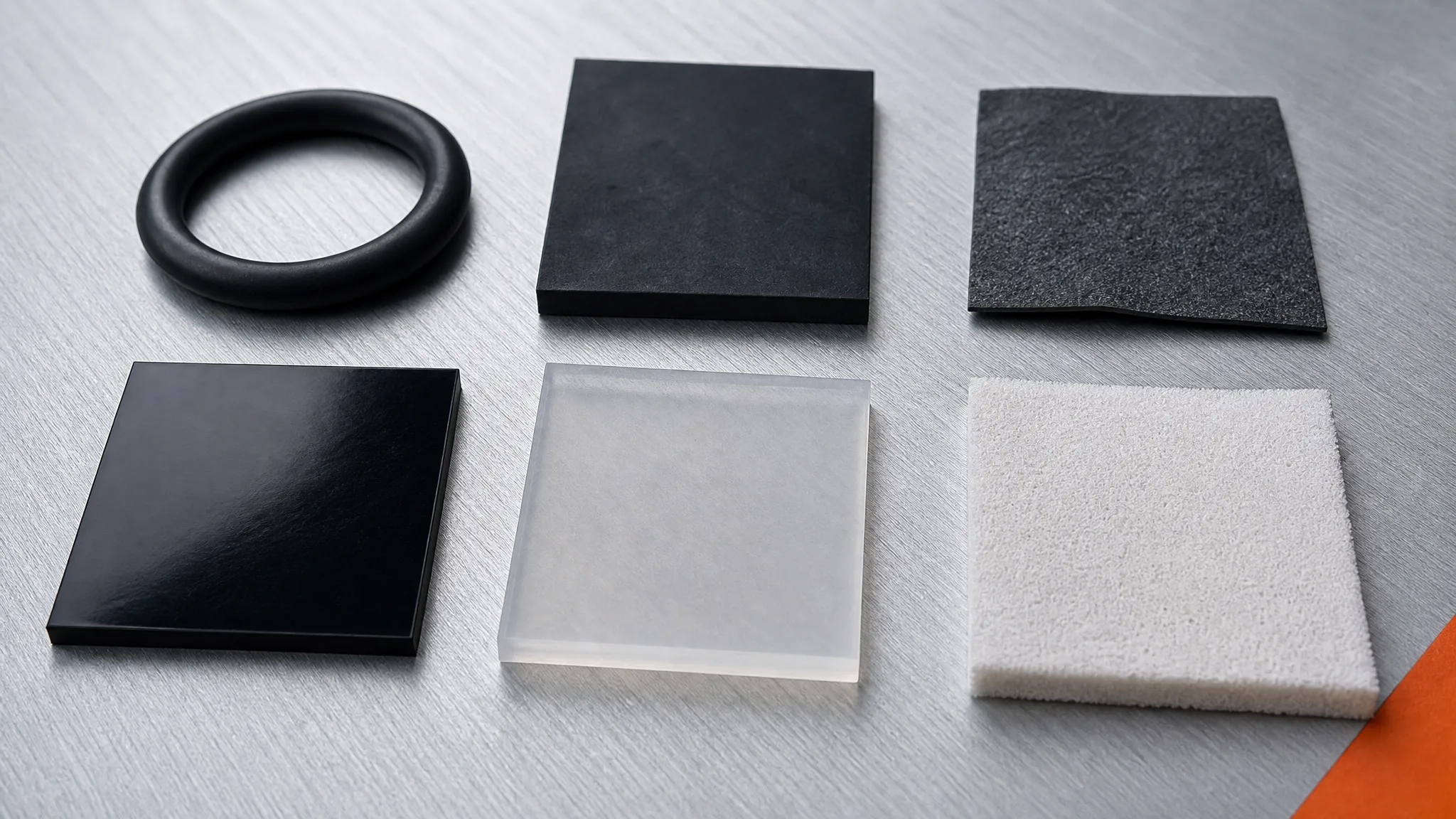
One "rubber" sample and one "silicone" sample hide six materially different compounds — match the compound, not the label.
Operating Temperature: Silicone's Decisive Advantage
Temperature is the one dimension where silicone wins outright. Solid silicone holds its sealing properties from roughly −60 °C up to +200 °C, and high-temperature grades reach about +230 °C in continuous service. General-purpose rubber compounds are comfortable only to around +100 to +120 °C, and the common ones stiffen and take permanent set if you push past that. FKM is the exception on the rubber side and will run near 200 °C, but you pay for it.
The low end is a gap most selection guides skip. When a joint is chilled — outdoor equipment in winter, cold-chain enclosures, battery packs in northern climates — rubber compounds harden and lose their ability to follow the mating surfaces, while silicone stays flexible well below −50 °C. If your seal has to survive both a −40 °C cold soak and a +125 °C aging test, silicone is usually the short list of one.
Two engineering notes keep this honest. First, the usable range depends on the compound, not the family: a plasticizer-heavy nitrile and a highly filled nitrile can differ by 20 °C at the top end, so always read the specific grade data. Second, the number that matters in a real joint is not the material's temperature limit but the joint's — thermal cycling at the gasket's own temperature ceiling will convert a marginal choice into a compression-set failure within a few hundred cycles.
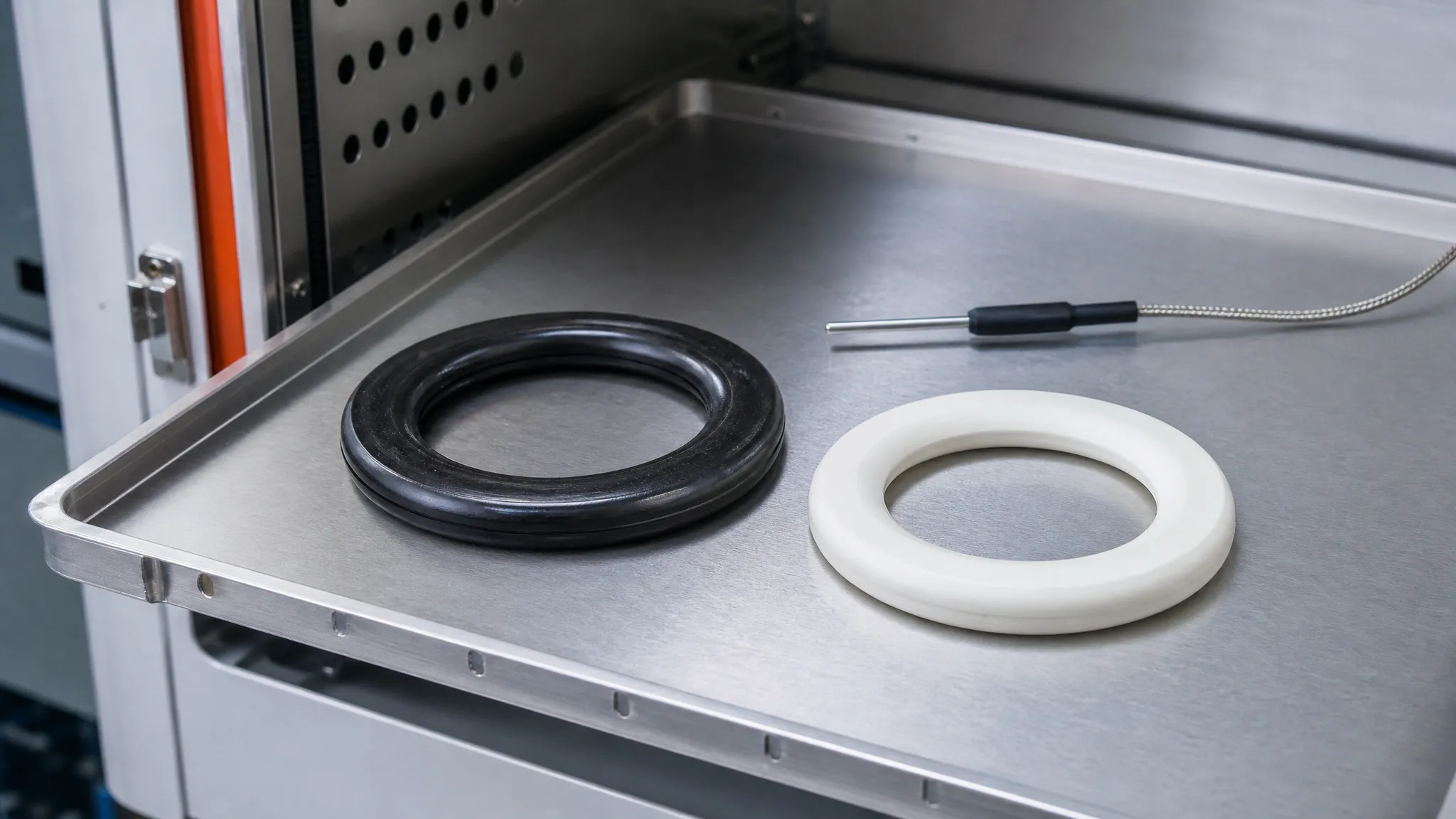
Temperature claims are only meaningful for a specific compound at a specific compression — testing the joint, not just the material, is what catches the marginal choices.
Chemical and Fluid Resistance: Where Rubber Wins
Flip the dimension and the advantage reverses. Silicone is chemically inert in the sense that matters for food and medical contact, but that inertness does not extend to hydrocarbons. Immersed in fuel, hydraulic oil, aromatic solvents or many cutting fluids, silicone swells and loses mechanical strength. Nitrile rubber exists precisely for this job, and fluoroelastomer handles the aggressive end of the spectrum — fuels, ketones, strong acids — where nitrile would degrade.
The practical method is to build your short list from the fluid, not the temperature. List every medium the gasket touches over its service life, including cleaning agents and process fluids that are easy to forget, then match: water and steam point to EPDM, oils and greases to nitrile, fuels and aggressive solvents to FKM, and food or pharmaceutical contact back to silicone (which is also why food-grade silicone tends to be specified where the same part must meet both cleaning chemistry and a food-contact rule). If the joint sees both a hot solvent wash and a high service temperature, no single compound wins comfortably — that is a design conversation about a two-material seal, not a data-sheet lookup.
UV, Ozone and Weathering: The Outdoor Question
Sunlight and atmospheric ozone destroy many rubber compounds on the same timescale they destroy paint. Nitrile is the most exposed here — unprotected NBR cracks under UV and ozone within a season. EPDM is the rubber answer and is genuinely excellent outdoors, which is why it dominates roofing, automotive exterior and outdoor HVAC seals. Silicone is at least as good: it does not develop the surface cracking that the diene rubbers do, and it keeps its color and elasticity through years of exposure.
For an indoor joint this dimension is nearly free — sunlight is absent and ozone levels are low — so paying a silicone premium for UV resistance alone is difficult to justify. For an outdoor or a UV-exposed enclosure joint, it is often the single reason silicone or EPDM gets written onto the drawing instead of nitrile.
Compression Set and Compression Force: The Metric Nobody Checks
A gasket does not fail because its material is the wrong color on a chart; it fails because it stops pushing back. Compression set is the permanent deformation a material takes after long compression, and it is the number that predicts whether the joint still seals at year five. It is measured under a defined load, temperature and time, and ASTM D395 is the standard test method — ask for the value at your service temperature, because compression set climbs steeply as temperature rises.
The second half of the dimension is closing force. A dense rubber or solid-silicone gasket needs a real clamping load to seal; if the housing is thin plastic, a machined lid with limited screw torque, or a stack of fragile components, that load may be unavailable or destructive. Silicone foam changes the equation: because it is cellular, it absorbs tolerance and seals at a fraction of the compression force a solid part requires, and its recovery is what lets it keep sealing as the joint moves. The trade-off is mechanical — foam has lower tear strength and lower thermal conductivity than solid material, so it is a sealing choice, not a structural one.
The metric to write into the spec is the one that is almost never quoted: 25 % compression stress, the force needed to compress the material by a quarter of its thickness, in kilopascals. It tells you both whether your housing can close the joint and how much recovery you have left. Our thermal pad thickness and compression guide works through the same compression logic for a neighboring material class if you want the full framework.
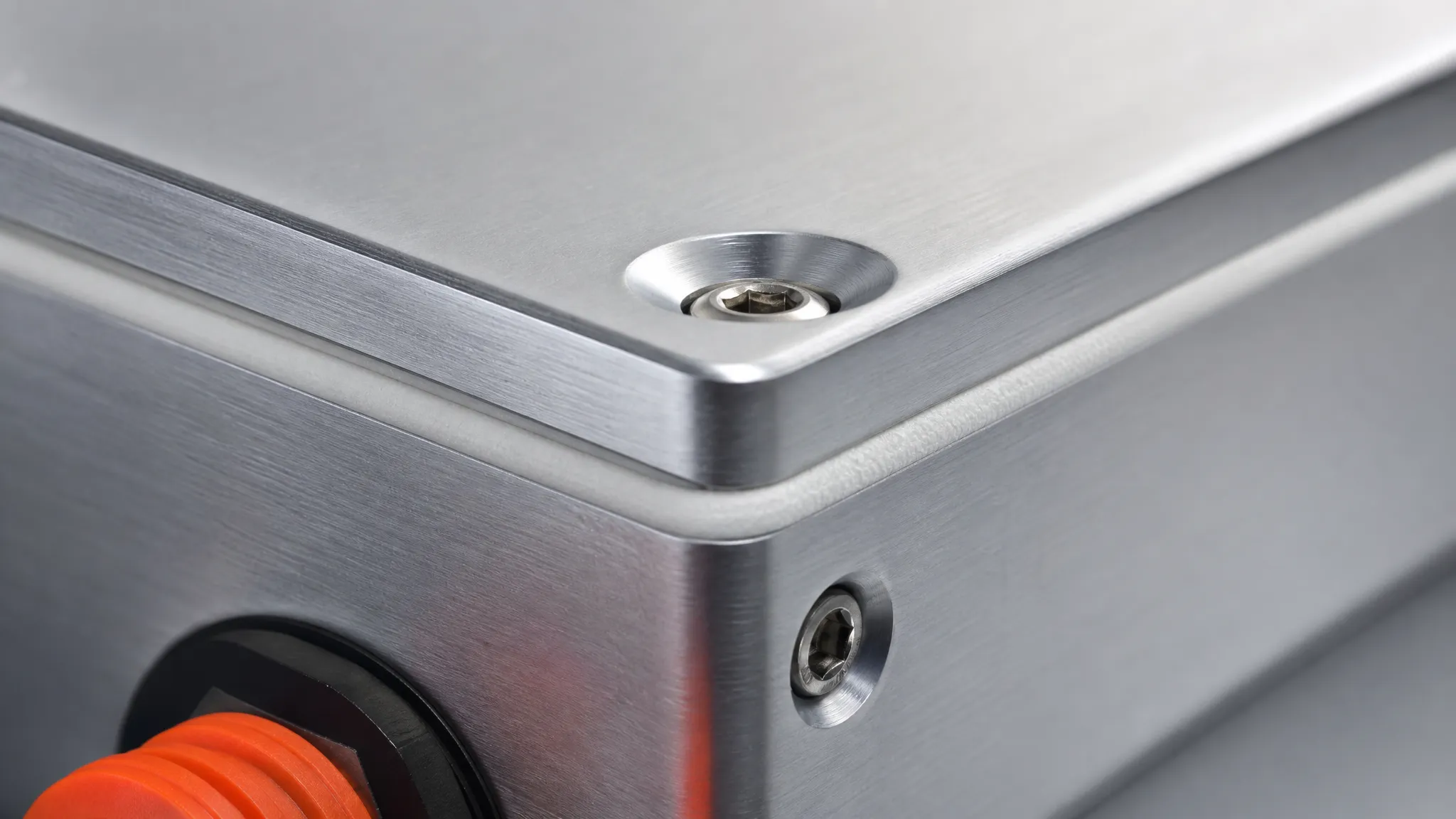
Closed-cell silicone foam seals a machined enclosure joint under light clamp load, absorbing lid flatness tolerance that a solid gasket would force the housing to absorb.
Flame Rating and Ingress Protection: UL94 V-0 and IP Ratings
For electronics, battery and appliance enclosures, two ratings decide the material before any mechanical property is discussed: the flame rating and the ingress-protection class.
UL 94 V-0 is the vertical burn rating most OEMs write into a gasket specification, and it is achievable in both solid silicone and flame-retardant rubber compounds — with one caveat that catches teams late: a rating applies at a defined thickness, and a grade that meets V-0 at 2 mm may not at 0.5 mm. Confirm the rating at your actual gasket thickness, not the headline number. We break the distinction between the V-0 and VTM-0 ratings down in our guide to UL 94 V-0 vs VTM-0 flame ratings, and a silicone foam grade built specifically for flame-retardant sealing is covered in UL94-V0 silicone foam sealing.
Ingress protection works on a different axis. An IP rating describes what the assembled enclosure keeps out, and the gasket is usually the component that decides it — the enamel on a lid has nothing to do with whether water reaches the electronics. The IEC's IP rating guide defines each digit; the working version for a gasket is that IP68 sealing is a property of the compressed seal geometry plus the material's recovery, not of a material family. A closed-cell silicone foam gasket with a defined compression window is a common route to IP68 in cast or machined enclosures, and the design detail is covered in silicone foam gaskets for electronics sealing to IP68.
Food-Grade, Medical and Cleanroom Compatibility
Where the seal touches food, drinking water or a patient, the material list narrows fast and it narrows toward silicone. Platinum-cured silicone is non-toxic, does not support fungal growth, survives repeated steam and chemical sterilization, and is available in grades that comply with 21 CFR 177.2600 for rubber articles intended for repeated use and with USP Class VI biocompatibility testing. Rubber compounds can be formulated to food contact, but they are specialty grades rather than the default catalog product, and their resistance to repeated clean-in-place chemistry is usually weaker.
Silicone's weakness in this arena is the one that sends some programs to non-silicone materials: low-molecular-weight siloxane can migrate or outgas and deposit on optical surfaces, electrical contacts and sensor windows. NASA maintains an outgassing database precisely because volatile condensable material degrades instruments in vacuum and near-vacuum conditions. If your joint contains exposed contacts or an optical path, treat siloxane migration as a real requirement and ask for low-volatile grades — or for a genuinely non-silicone material. Battery packs are the same story from the thermal side, and our EV battery pack thermal management overview covers how sealing and conduction requirements interact inside a pack.
Cost and Total Cost of Ownership
Silicone costs more per kilogram than general-purpose rubber, and per part, the gap is a multiple rather than a percentage once you account for the compounds you actually compare. That is the number most comparisons stop at, and it is usually the wrong one.
The number that decides a program is total cost of ownership: unit price plus replacement interval plus the cost of the downtime or the warranty claim when the seal fails early. A nitrile gasket that hardens after two years in a hot cabinet can cost far more than a silicone part at three times the price, because the second failure is the one out of warranty. Work the comparison in these terms:
- Replaceable in service? If the gasket is accessible and cheap to swap, favor the lower material price. If it is buried inside a potted module, buy the service life.
- Mating surfaces and tolerance. If the joint needs a machined finish and tight flatness to seal with solid rubber, the machining cost belongs in the comparison, not just the material.
- Process cost. Die-cutting, waterjet cutting and form-in-place dispensing carry different tooling costs by volume; a molded part that is expensive at 200 units becomes the cheap option at 20,000.
- Compliance cost. If the joint needs a food-contact or flame-rated grade, price the compliant version of each candidate, not the commodity version.
When Rubber Is the Right Call — and Where Silicone Falls Short
The reason to write a rubber compound onto the drawing is usually one of four, and none of them is a compromise:
- The joint sees oil, fuel or hydraulic fluid. Nitrile or FKM is simply the correct material; silicone will swell and lose strength.
- Tear and abrasion resistance lead. Mechanical sealing against a moving or rough surface favors nitrile and neoprene, whose tear strength exceeds that of general-purpose silicone.
- Volume is high and cost per part governs. A commodity EPDM or nitrile gasket at high volume is materially cheaper than any silicone option.
- The service temperature stays modest and the environment is indoor. If you are sealing a dry, room-temperature cabinet, a silicone premium buys nothing measurable.
And where silicone is the wrong call, honestly: it is a poor choice against sustained hydrocarbon exposure; it is the high-price option where temperature, UV and food contact are not in play; its foam forms trade tear strength and conductivity for compliance and tolerance absorption; and its low-molecular-weight siloxane fraction is a genuine contamination risk around optics and exposed contacts. A selectable set of grades, tested at your joint geometry, is the only way to know which of those limits actually binds your design.
Specifying a Gasket Material: A Five-Step Selection Checklist
- Fix the temperature envelope — including transients and cold soak, not just the nominal hot case. This single input usually removes one of the two families and half the compounds.
- List every medium the seal touches — process fluids, cleaning agents, fuels, water, steam. Match the fluid to the compound before matching anything else.
- Set the compression budget — how much clamp load the housing can apply, and how much tolerance the joint has to absorb. Write 25 % compression stress and compression set into the spec, not just a durometer hardness reading.
- Add the ratings the enclosure needs — UL94 V-0 at your actual thickness, the target IP class, and any food-contact or biocompatibility requirement. These decide the grade, and sometimes the family.
- Price the compliant options on total cost of ownership — material, tooling, replacement interval and downtime, not the per-kilogram number.
A short FAQ, since these are the questions that arrive most often. Which is better, silicone or rubber? Neither, universally: silicone wins on temperature, weathering and clean applications; rubber compounds win on hydrocarbons, tear strength and cost. What is the downside of silicone rubber? Cost, poor oil and solvent resistance, and siloxane migration in sensitive assemblies. When should you use a rubber gasket? Wherever oil, fuel, hydraulic fluid or abrasion is the dominant load. What is the best material for a gasket? The one whose compound-level data survives your temperature, chemistry and compression set at the joint geometry you actually build — which is a testable question, not a preference.
If you are specifying a silicone foam gasket for an enclosure that has to seal against water and pass a flame rating under light clamp load, ZIITEK's engineers work through exactly that combination — you can review the silicone foam gasket range for the standard grades or send your joint drawing, gap envelope and target IP class for a matched sample.